What Is a Group of Mice Called? The Most Common Collective Noun for Household Rodents Revealed
Discover what a group of mice is called in English? While scientists prefer terms like colony, the official collective noun is a mischief of mice. Discover why this quirky name perfectly fits these fast-breeding, social rodents.
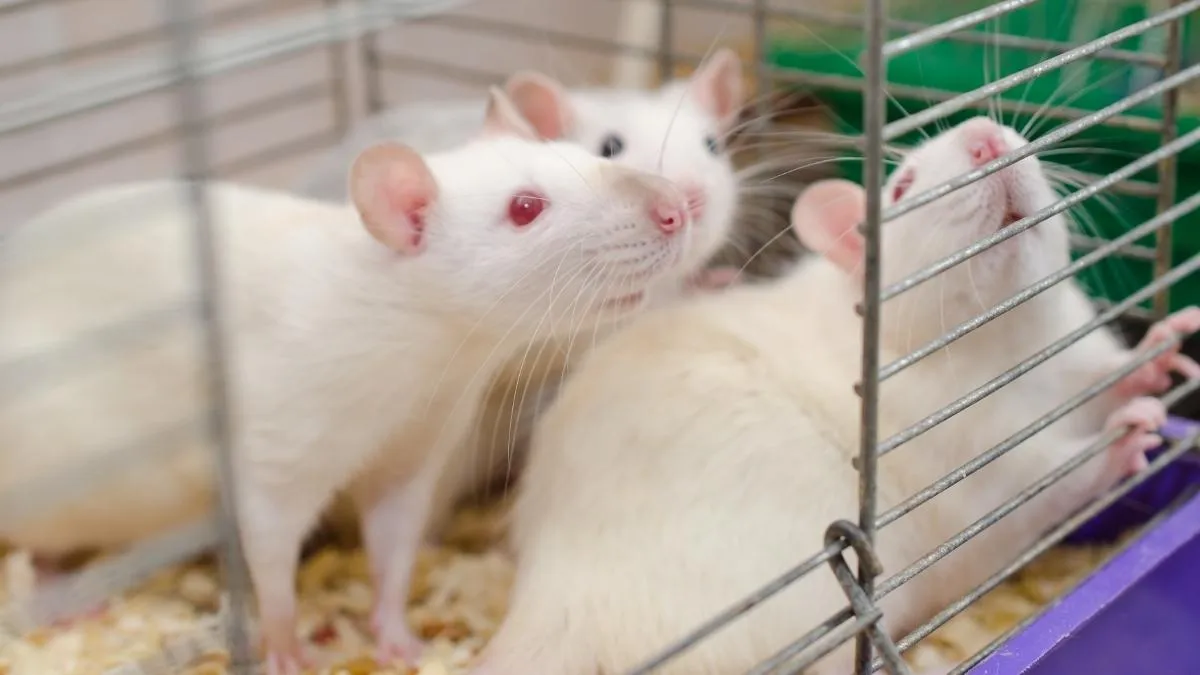
Have you ever heard quiet scratching sounds from within your walls? Then, you could be having a host of unwanted rodents, perhaps even mice specifically.
Now, what is a group of mice called formally in the English language? The term used by pest control personnel and wildlife experts for naming the group of rodents is a colony or nest. But the collective name for a group of mice is mischief.
Urban wildlife accounts and animal behavior studies indicate that these little rodents have complicated social setups which affect their rate of expansion in the residential environment.
Let’s understand in detail about all the collective nouns for a group of mice and the reason behind the terminology to brush up our grammatical knowledge of animals’ group names.
Why is a Group of Mice Called a Mischief?
There is a phrase, a mischief of mice, which dates back centuries in English literature and folklore. Language experts attribute the term to that phrase and the playful yet destructive behavior mice exhibit when living together.
When several mice co exist in an area their collective behaviors result in quick depletion of food resources, gnawing of wires, and destruction of insulation.
The name given to a collection of mice reveals their social character and propensity to cause silent mischief.
List of Collective Nouns for a Group of Mice
In scientific studies, mischief is not used by experts for the group. Rather, scientific literature classifies mice according to their habitat and living conditions as follows:
-
Colony of Mice: A structured group sharing a territory. It typically consists of one dominant male and multiple breeding females.
-
Nest of Mice: A localised family unit consisting of a mother mouse and her newborn pups.
-
Infestation of Mice: A pest control term used when indoor populations grow out of hand.
How a Group of Mice Socialise and Reproduce
Mice are highly social creatures that struggle to survive in total isolation. In the wild or inside homes, a mischief functions under a strict social hierarchy.
| Social Aspect | Natural Behavior in Mice |
| Group Structure | One dominant male protects a territory while females raise young in separate nest chambers. |
| Reproduction Rate | A single female can produce 5 to 10 litters per year with up to 12 pups per litter. |
| Maturation | Young mice mature in 5 to 8 weeks at which point young males leave to start new groups. |
| Communication | Mice interact using ultrasonic vocalizations, body language and scent trails. |
The gestation period of female house mice is about 19 to 21 days long. Young females become ready for reproduction within a couple of weeks. So a group of five mice may grow to several dozen mice in two months' time.
Which Other Group of Animals is Called a Mischief?
Mice are not the only creatures that carry this playful designation. In English grammar and zoological trivia a group of rats is also officially called a mischief of rats.
Just like the mice, the rats have earned this nickname by virtue of similar characteristics. Rats live near human settlements and as such end up causing destruction to structures when living in such close quarters.
Although rare, there are times where some animal related nicknames have been extended to refer to playful bands of otters or raccoons, with “romp” and “gaze” being their major nicknames.
What are the Collective Nouns for Other Rodents?
Apart from mice and rats, other rodent groups have unique collective nouns in the English language. The following is a list of the recognized collective nouns for various rodent species:
| Rodent Species | Primary Collective Noun | Alternative Group Term |
| Scurry | Dray (nest group) | |
| Beavers | Colony | Family |
| Porcupines | Prickle | Family |
| Guinea Pigs | Herd | Group |
| Hamsters | Horde | Colony |

Harshita Singh is an education and general knowledge journalist with over 5 years of experience in educational writing. Specializing in US affairs and GK, Harshita has a track record of breaking down intricate geopolitical and historical subjects into clear, digestible insights for learners. Her strong background in text analysis, coupled with a Bachelor of Arts (Hons) in English from the University of Delhi, helps her produce authoritative, thoroughly researched content that empowers readers to engage confidently with global current affairs. For inquiries or academic insights, you can reach out to her directly at harshita.singh@jagrannewmedia.com.

-1791214652060_t.webp)

-1791204928321_t.webp)