In chemistry, a chemical compound is a substance formed by the chemical combination of two or more elements. We all are made of chemicals, and everything around is made of chemicals.
Everything we hear, see, smell, taste, and touch involves chemistry and chemical reactions of matters. Chemistry is not limited to beakers and laboratories. Chemistry is present in every aspect of life.
There is chemistry behind why the sky is blue, the colours of vegetables and fruits, why ice floats on water, how sunscreen works, how pressure cookers work, or why cutting onions makes you cry.
Solids, liquids, and gases change state from one form to another when exposed to processes such as heating or cooling. A chemical reaction occurs when the reactants (the initial materials) undergo a rearrangement of their atoms to form new substances with different physical and chemical properties.
Different types of chemical reactions are combination reaction, decomposition reaction, displacement reaction, double displacement reaction, combustion reaction, redox reaction, precipitation reaction, and neutralisation reaction.
In this article, we will test your basic general awareness about the interesting facts related to chemistry, chemical compounds, and chemical reactions.
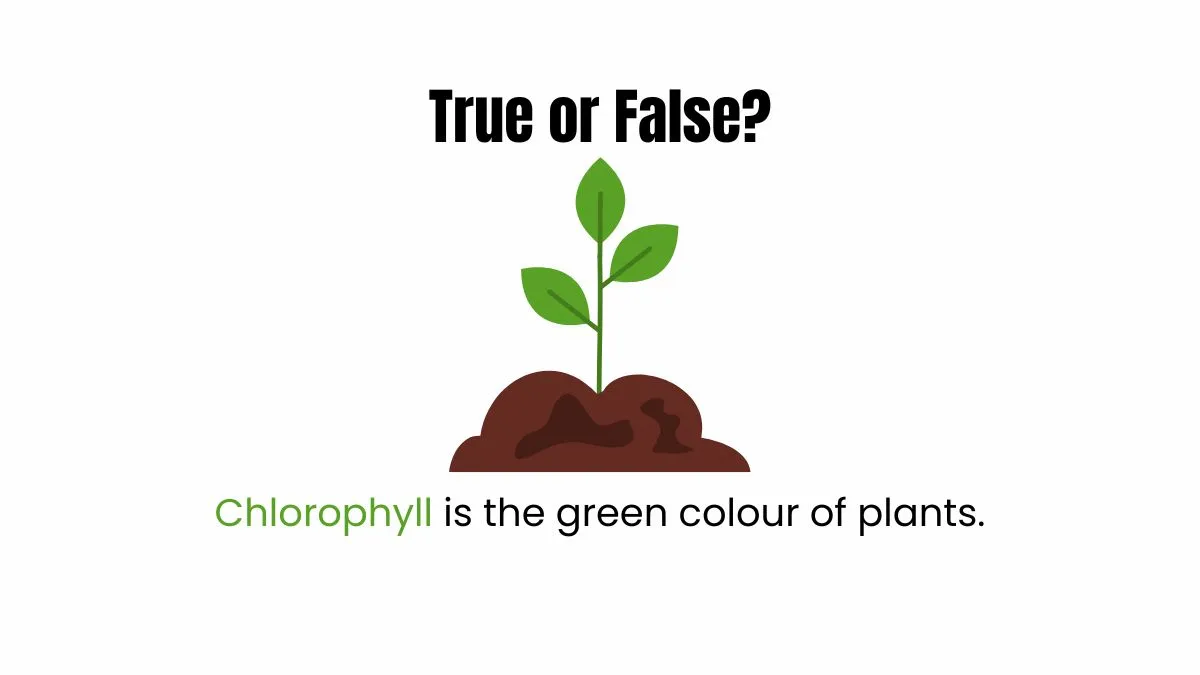
True or False: Chlorophyll Is The Green Colour Of Plants?
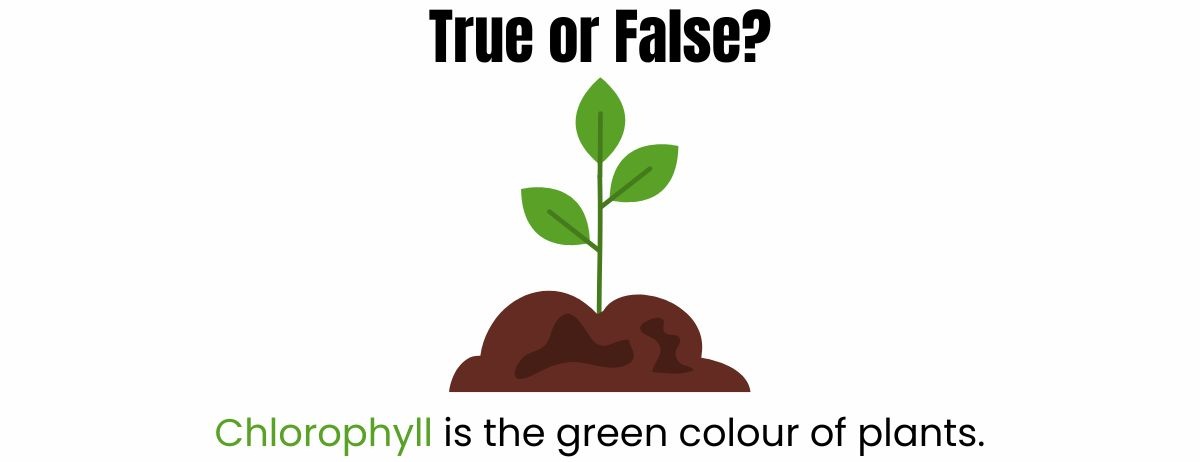
1. Chlorophyll is the green colour in plants. True or False?
Chlorophyll is the pigment responsibile for giving plants their green colour. It is essential for photosynthesis, a vital process where plants use sunlight to create energy for themselves.
2. Strawberries get their colour from anthocyanins. True or False?
True. Strawberries get their color from anthocyanins. The major anthocyanin present in strawberries is pelargonidin 3-glucoside.
3. Mars is red because it outer surface is covered with carbon monoxide. True or False?
False. The reddish hue on Mars is created due to the presence of iron oxide. Over billions of years, iron-rich minerals have reacted with small amounts of oxygen to create rust that blankets the planet.
4. Copper compounds are commonly used to produce red colour fireworks. True or False?
False. Copper compounds produce blue fireworks. Similarly, different metal salts ae used to create specific colours when heated. Strontium salts produce red, barium salts produce green, sodium produced yellow/golden, while magnesium and aluminium are used to create high-intensity white light.
5. Helium gas is even lighter than the air. True or False?
True. Helium has a lower density than the nitrogen-oxygen that makes up our atmosphere. Because helium is less dense, a helium-filled balloon float in air.
6. Technetium was discovered naturally in the Earth's crust. True or False?
False. Technetium does not occur naturally in the Earth's crust. In 1937, a group of scientists made technetium in a lab for the first time. It is the first synthetic element ever.
7. Spiderweb is produced as a liquid protein solution but solidifies into a silk thread as it comes in contact with air. True or False?
True. Spider silk is produced as a concentrated, liquid protein solution stored within specialised glands in the spider's abdomen. As the spider squeezes this liquid through its spinnerets, the physical stress and contact with air solidifies the silk into strong thread.
8. Rust forms when iron reacts with oxygen and moisture in the air. True or False?
True. Rusting is a chemical process where iron reacts with oxygen and moisture in the air to form iron oxide. This is a common oxidaiton reaction.
9. An electron is located in the nucleus of an atom. True or False?
False. Electrons orbit the nucleus, which contains neutrons and protons.
10. Ethyl acetate and acetone are used in nail polish removers. True or False?
True. Both acetone and ethyl acetate are commonly used as in nail polish removers to break down the film-forming agents in nail polish.
You may also like...
True or False: It Took More Than 20,000 Workers To Build The Taj Mahal?



Comments
All Comments (0)
Join the conversation