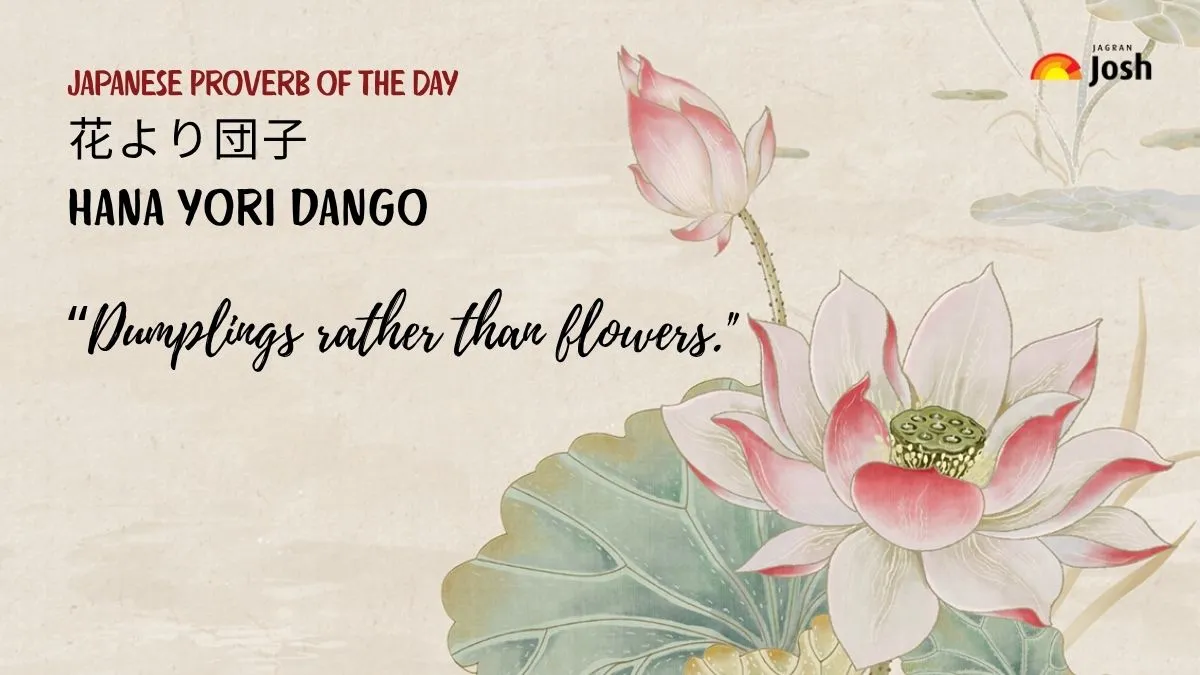
In an era defined by the curated glow of digital aesthetics, there is a recurring tension between what we admire and what we actually require. The Japanese proverb of the day, Hana yori dango (花より団子), literally "dumplings rather than flowers," strikes at the heart of this conflict with a classic, dry wit.
While the modern-day trend cycle often pulls you toward the ‘flower’ of high-status appearances, this proverb demands you acknowledge the ‘dumpling’ of functional necessity. It is a lexicographical reminder that while the ephemeral beauty of a cherry blossom may feed the eyes, it is the humble rice dumpling that fuels the journey. You are essentially choosing survival over spectacle, a mindset that is becoming the hallmark of the modern pragmatist.
Japanese Proverb of the Day
Japanese Proverb: Hana yori dango (花より団子)
Literal English Translation: "Dumplings rather than flowers."
What is the Meaning of Japanese Proverb "Dumplings rather than Flowers"?
To understand the proverb ‘Hana yori dango,’ one must appreciate the Japanese cultural tradition of Hanami (flower viewing). While the elite would gather to contemplate the transience of life through falling petals, the masses were often more interested in the food stalls.
-
The Flower (Hana): A metaphor for the aesthetic, the abstract, or the prestige factors of life.
-
The Dumpling (Dango): A metaphor for the practical, the physical, and the gainful.
This isn't merely a preference for snacks; it is a profound philosophical stance. It suggests that once the blossoms of a trend or a status symbol wither, as they inevitably do, only the dumplings (the core value or utility) remain. To live by this Japanese proverb is to reject the superficial in favor of the substantial.
Everyday Lessons from this Japanese Proverb in Modern-Day?
The 2026 landscape is increasingly skeptical of vaporware and aesthetic-only brands. Here is how this Japanese proverb manifests in your current decision-making:
| Context | The "Flower" (Status/Style) | The "Dumpling" (Utility/Substance) |
| Career Path | Chasing a Creative Lead title at a failing startup. | Securing a stable role with a clear path to equity. |
| Tech Adoption | Buying the newest foldable phone for the flex. | Investing in a high-capacity battery for remote work. |
| Social Life | Attending high-ticket events for the Instagrammable moment. | A quiet dinner with mentors who offer real guidance. |
| Home Life | Notoriously uncomfortable designer furniture. | Ergonomic, modular pieces designed for 12-hour comfort. |
What is the Origin History of this Japanese Proverb?
This proverb gained its sharpest cultural edge during the Edo period, a time of burgeoning merchant-class realism. It served as a satirical poke at the refined, often disconnected sensibilities of the aristocracy, who favored form over function.
"In the Japanese consciousness, the dango represents the honesty of the stomach. To prefer the dumpling is to admit a basic human truth: we cannot live on beauty alone." — Journal of East Asian Semiotics
It is also linked to the change from the strict aestheticism of the Muromachi period to the practical commercialism of the Edo period. It shows how the Japanese mind has changed from the samurai's poetic death to the merchant's real success.
Also Read - Chinese Proverb of the Day: "Crooked trees live out their full lives; straight trees are cut down first."
Why is "Hana yori dango" the 2026 De-influencing Mantra?
In 2026, de-influencing has evolved from a social media trend into a lifestyle standard. The Japanese proverb of the day perfectly encapsulates this rejection of the performative. Young professionals are increasingly identifying as Dango-seekers, individuals who bypass the hype (the flowers) to find the actual value (the dumplings) in products, relationships, and careers.
Did You Know?
The brilliance of this proverb lies in its alliteration and meter, which follow a standard Japanese rhythmic structure.
Hana (Ha-na): 2 morae
Yori (Yo-ri): 2 morae
Dango (Da-n-go): 3 morae
Linguistically, the word Dango (団子) uses the Kanji 団, which signifies a group, a circle, or something gathered together. It implies a sense of solidarity and completeness that the fragile 花 (Hana) lacks.
In Japanese grammar, using yori creates a definitive hierarchy, leaving no room for compromise: the dumpling is objectively more important in the moment of need.
Read More Japanese Proverbs and Their Meanings Here!
“Fall Seven Times, Stand Up Eight.”
"A Frog in a Well Knows Nothing of the Great Ocean."
"The Bamboo that bends is Stronger than the Oak that Resists."
"Even monkeys fall from trees."
The Japanese proverb of the day is a call to audit your priorities. In a world of falling petals, make sure you have your dumplings in hand. Return tomorrow as we decode more ancient wisdom for the modern professional.


-1777381970313_t.webp)

-1777379649512_t.webp)