India–New Zealand FTA from October 20 Explained: From Zero Duty, 5000 Visas to $20 billion Investment, Cheaper Goods
A crucial provision is New Zealand’s commitment to offer duty-free access for 100% of Indian exports from the day the deal is implemented. According to India’s Press Information Bureau, sectors slated to benefit include textiles, leather and footwear, engineering goods and processed agricultural products.
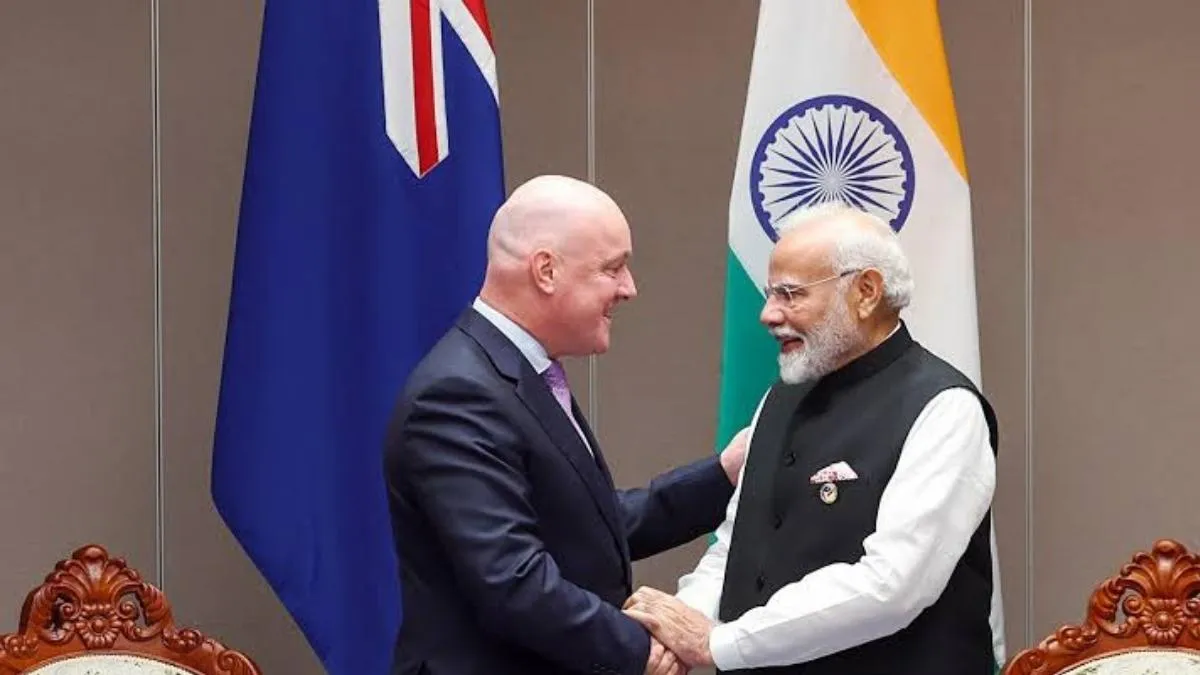
The India-New Zealand Free Trade Agreement (FTA) has been implemented on October 20, thus opening new trade, education and travel opportunities for businesses in both countries. The FTA features a $20 billion investment from New Zealand into India over 15 years, and aims at doubling bilateral trade in goods and services to Rs 35,000 crore by 2030.
The deal aims to bolster bilateral trade, expand market access and establish opportunities for exporters, students and professionals. However, not every imported product will become cheaper instantly, as some concessions are subject to quotas, minimum import prices and phased tariff removals.
Decoding the FTA Agreement
A crucial provision is New Zealand’s commitment to offer duty-free access for 100% of Indian exports from the day the deal is implemented. According to India’s Press Information Bureau, sectors slated to benefit include textiles, leather and footwear, engineering goods and processed agricultural products.
For New Zealand, India will dissolve or massively reduce tariffs on about 95% of New Zealand exports by value. Around 57% will become tariff-free instantly, while further products will secure preferential treatment as reductions chip in.
The deal also offers preferential quotas for apples, kiwifruit and albumin. Wine tariffs are slated to decline over a longer period.
Investment and Services Provisions
The pact extends beyond merchandise trade. New Zealand has committed to investing $20 billion in India over the next 15 years. The agreement also comprises provisions on services and mobility, including a framework directed to establish additional opportunities for students and workers.
The investment commitment is separate from tariff provisions and promotes deeper bilateral economic links.
Present Trade and Future Target
Two-way trade ties between India and New Zealand were worth about $2.3 billion annually in the year to June 2026. The two governments have established a goal to double bilateral trade in goods and services to around Rs 35,000 crore over the next four to five years.
New Zealand’s Parliament cleared legislation enforcing the deal on September 16, which was cleared with 93 votes in favour and 29 against, with the opposition Labour Party’s support.
Why FTA is needed now?
The FTA will be effective as trade grapples with uncertainty, and India is bolstering its network of trade deals. The development supports India’s bid to diversify export destinations amid revisions in US trade policies and wider tariff conflicts.
For Indian exporters, duty-free access to the New Zealand market eliminates tariffs across all export lines under its ambit. For New Zealand exporters, the agreement enables broader access to India through immediate and phased tariff concessions.
Which Items Get Cheaper for Indians?
Under the India-New Zealand FTA, several New Zealand products entering India will witness customs duties removed instantly from October 20. These include wood and forestry products, wool, sheep meat, coal and raw hides. Tariffs on several other goods will be lowered gradually over three, five, seven or 10 years. These include fish and seafood, wine, pharmaceuticals, polymers and selected aluminium, iron and steel products. The deal also provides preferential quota access for products such as apples, kiwifruit, Mānuka honey and albumins.

At Jagran Josh, she specialises in writing explainers and analytical stories on international news and current affairs. Over the years, she has developed strong expertise in leveraging digital and multimedia tools, along with SEO best practices, to enhance the speed, reach, and impact of her stories.