
A number system is a writing system for expressing numbers. A number system is a way to write and represent numbers using symbols (digits) and rules.
The Indian and international number systems differ in the way they group digits for large numbers. The Indian system groups the first three digits from the right, then in pairs, while the international system groups all digits in groups of threes.
Both systems start with ones, tens, hundreds, and thousands but move differently after that. Understanding the Indian and international number systems is very important in everyday life for students as well as common people.
Many students are asked questions in competitive exams that require them to convert a million into lakh. Professionals and common people also need to understand the basics of number systems so they can understand financial news and numbers easily.
In this article, we will find the answer to how many lakhs are in one million. Let us quickly understand the basics of the Indian number system and the international number system.
Indian Number System
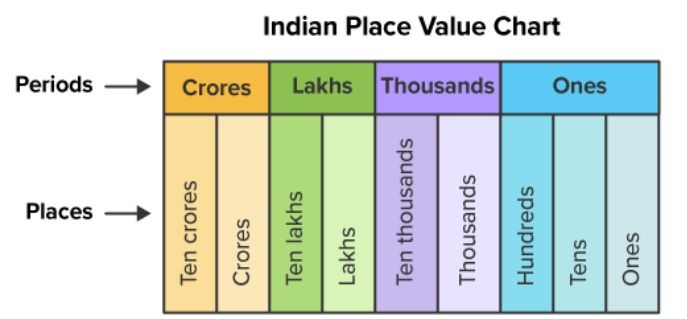
The Indian number groups digits in groups of 3 and 2 (ones, tens, thousands, lakhs, crores).
The Indian number system is used in India, Pakistan, Sri Lanka, Nepal, and Bangladesh to express large numbers. Common used quantities include lakh and crore.
Grouping: from the right: 3 digits then 2 digits, then 2 digits (e.g. 10,00,000)
Place value: Ones, tens, hundreds, thousands, ten thousands, lakhs, ten lakhs, crores, etc.
Example: 56,78,90,123 (Fifty-six crore seventy-eight lakh ninety thousand one hundred twenty-three).
International Number System
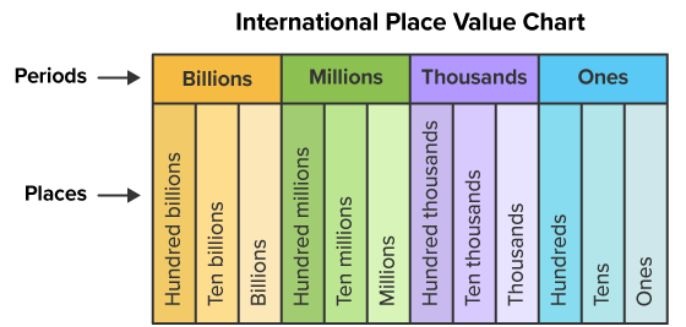
The international number system is a globa method for reading and writing large numbers by grouping digits in threes, separated by commas.
This number system is used worldwide for clear communication. In this system, each period has its own name (hundreds, tens, ones).
Grouping: from the right: 3 digits, then 3 digits, then 3 digits. (eg. 10,000,000)
Place value: Ones, tens, hundreds, thousands, ten thousands, hundred thousands, millions, ten millions, hundred millions, billions, etc.
Example: 567,890,123 (Five hundred sixty-seven million eight hundred ninety thousand one hundred twenty-three).
Let us now understand one million equals how many lakhs.
How many lakhs are in 1 million?
A million (or 1,000,000) is used in the international system. While in the Indian system, 1 million means 10 lakh, which is written as 10,00,000.
Explanation:
1 million = 1,000,000
10 lakhs = 10,00,000
1 million equals 1,000,000.
So, there are 10 lakhs in 1 million.



-1766159625283.jpg)
-1766128662526.jpg)

Comments
All Comments (0)
Join the conversation