Key Points
- Goa Liberation Day marks freedom from 450+ years of Portuguese rule.
- Operation Vijay led to Goa's liberation on December 19, 1961.
- The day honors freedom fighters and Indian Army's bravery.
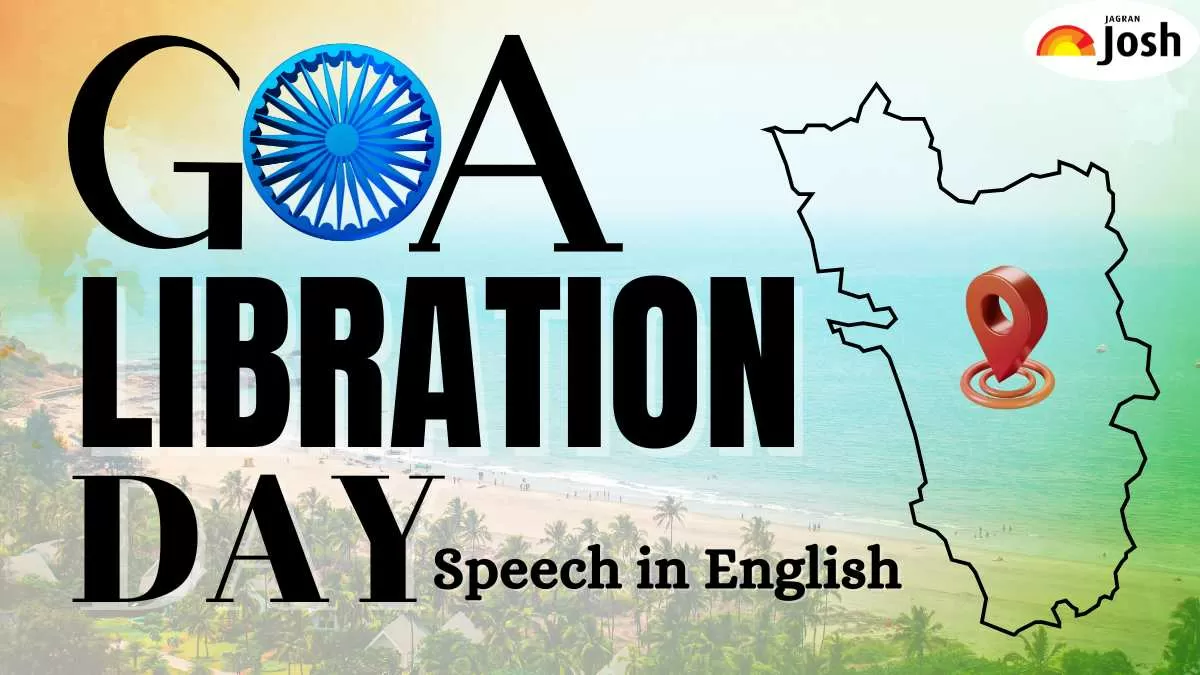
Goa Libration Day is celebrated on 19th December every year, marking a pivotal moment in India’s history. On this day in 1961, Goa, which was under Portuguese colonial rule for over 450 years, was finally liberated and became an integral part of India. This Day symbolizes the triumph of India’s struggle for freedom and justice, as the nation united to free Goa from foreign control.
The significance of Goa Libration Day goes beyond just the celebration of a historical event. It is a day of pride and remembrance, honoring the freedom fighters who played a key role in liberating Goa. The day also reminds us of the courage and unity shown by the Indian Army during Operation Vijay, which ultimately ended Portuguese rule. To read the full speech, please refer to the complete article below. Here, we have provided both short and long speeches, along with important points, to help students understand the significance of Goa Liberation Day.
Goa’s Liberation Day 2025 Theme
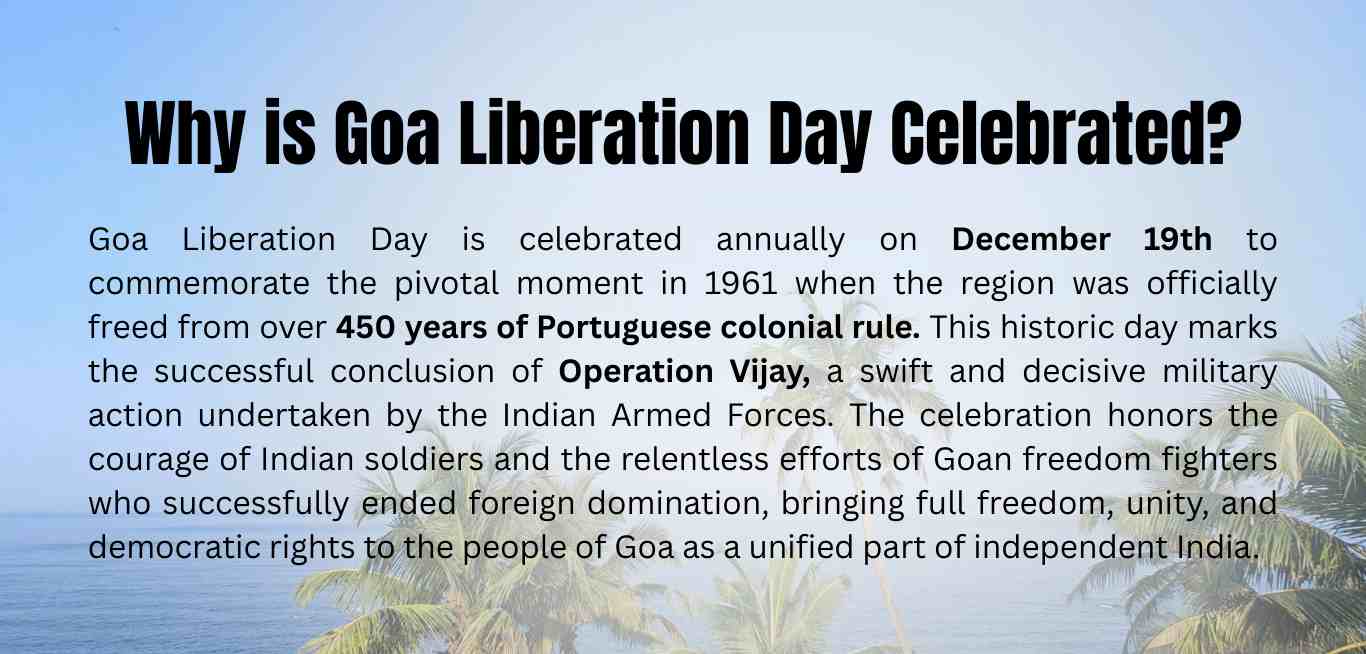
While an official overarching theme for Goa Liberation Day 2025 (December 19th) isn't widely out yet, celebrations focus on themes of freedom, heritage, unity, and honouring sacrifices.
10 Lines on Goa Liberation Day:
- Goa Liberation Day is celebrated on 19th December every year.
- The day marks the liberation of Goa from Portuguese rule in 1961.
- Goa was under Portuguese control for more than 450 years.
- Operation Vijay was the name of the military operation that freed Goa.
- Many freedom fighters like Dr. Ram Manohar Lohia and others played a vital role in the liberation movement.
- The day symbolizes the end of foreign colonial rule in India.
- It is a celebration of India's unity, as Goa became an official part of the nation.
- The Indian Army played a key role in the successful liberation of Goa.
- Goa Liberation Day is a day to honor the sacrifices of those who fought for Goa's freedom.
- It reminds us of the importance of independence, sovereignty, and unity in India.
Short Speech on Goa Liberation Day:
Speech 1:
Good morning respected Principal, teachers, and dear friends,
Today, we gather to celebrate Goa Liberation Day, which holds immense significance in the history of our nation. On 19th December 1961, Goa was liberated from Portuguese colonial rule after over 450 years of foreign dominance. This victory was achieved through the bravery of countless freedom fighters and the Indian Army’s Operation Vijay.
This day reminds us of the sacrifices made by many to bring Goa back to India. It was a victory not just for Goa but for all of India, as it strengthened our unity and the spirit of independence. Let us honor those who fought for Goa’s freedom and appreciate the values of justice, liberty, and sovereignty that this day represents.
Thank you.
Speech 2:
Good morning, everyone. Today, December 19th, is a date etched in golden letters in the history of our nation: Goa Liberation Day. We gather here not just to mark a holiday, but to honor a final, triumphant chapter in India's struggle for total freedom.
While the rest of India achieved independence in 1947, the beautiful state of Goa remained under the oppressive rule of the Portuguese for over four centuries—nearly 450 years. This long period of colonial control was marked by cultural suppression and the denial of fundamental democratic rights to the Goan people.
Honoring the Struggle
The path to liberation was paved by the sacrifices of countless Goan freedom fighters. They protested, they resisted, and they endured severe hardships for the dream of seeing Goa united with its motherland. Their non-violent movements and passionate appeals demonstrated the unwavering will of the people.
However, when diplomacy failed, India had to act decisively. This led to Operation Vijay in 1961. This swift, brilliant military action by the Indian Armed Forces secured the region's freedom in just 48 hours. It was the final nail in the coffin of European colonialism in India.
The Significance of December 19th
December 19, 1961, was the day the Indian Tricolor was finally hoisted over Panaji, marking the end of foreign dominion and welcoming Goa into the democratic family of India.
Why is this day important for us today?
-
Unity and Resolve: It reminds us that India’s identity is indivisible. The fight for Goa showed the world India’s commitment to achieving complete sovereignty and protecting every inch of its territory and its people.
-
Triumph of Democracy: It celebrates the moment when the people of Goa finally gained the rights of self-governance and democracy that the rest of the nation had enjoyed for 14 years.
-
Honoring Our Forces: We pay tribute to the bravery and precision of the Army, Navy, and Air Force personnel who executed Operation Vijay with minimal bloodshed, ensuring a successful liberation.
As we celebrate this day, let us not forget the courage required to achieve freedom and the responsibility required to preserve it. Let the spirit of the Goan freedom fighters and the valour of our Armed Forces continue to inspire us to work for a stronger, more united India.
Thank you. Jai Hind!
Long Speech on Goa Liberation Day:
Speech 1:
Respected Principal, teachers, and dear friends,
Good morning to one and all. Today, we are here to celebrate a momentous occasion in Indian history, Goa Liberation Day, which is observed on 19th December every year. On this day in 1961, after more than four centuries of Portuguese colonial rule, Goa was finally liberated and became an official part of India.
Goa's liberation was a result of years of struggle by freedom fighters like Dr. Ram Manohar Lohia, Vasco da Gama, and Laxmi Prasad, who fought tirelessly for Goa's independence. Despite being under Portuguese rule for over 450 years, the Goan people never lost their desire for freedom. Their brave efforts led to the Indian Army's Operation Vijay, which successfully freed Goa. The operation took place on the 18th and 19th of December, 1961, marking the end of Portuguese control.
The significance of Goa Liberation Day is profound. It reminds us of the sacrifices made by those who fought for the freedom of Goa. It is also a reminder that the struggle for independence was not limited to just one part of India, but it extended to every region that was under foreign rule. Goa Liberation Day is a day to celebrate our nation's unity, independence, and the values that make us proud to be part of this great country.
As we observe Goa Liberation Day, let us remember the freedom fighters who made this possible. Their courage and commitment to the cause of freedom will always inspire us. Today, Goa stands as a beautiful, vibrant part of India, thanks to their sacrifices. Let us honor their legacy by ensuring that we contribute to the prosperity, peace, and unity of our nation.
Thank you.
Speech 2:
Distinguished guests, revered teachers, and my fellow students, we stand here today to observe a day of profound historical resonance: the 65th anniversary of Goa Liberation Day, December 19, 1961. This date is not merely a regional holiday; it represents the powerful culmination of India's decolonization, marking the moment when the final vestiges of European rule were erased from our soil.
For over four and a half centuries—a staggering 451 years—Goa was held captive under the Portuguese Empire. When India gained independence in 1947, the nation’s joy was incomplete, knowing that our Goan brothers and sisters were still subjected to foreign control, denied the fundamental democratic rights enjoyed by the rest of the country.
The Era of Resistance: 1947 to 1961
The post-1947 period in Goa was defined by passionate resistance. While the Indian government initially sought a peaceful diplomatic solution, the local Goan populace refused to be silenced. Leaders and activists, inspired by the broader Indian freedom struggle, launched several movements:
-
Satyagraha Movements: Thousands of freedom fighters, both Goan and from other parts of India, crossed into Goan territory to stage non-violent protests, enduring brutal repression, imprisonment, and torture by the Portuguese authorities.
-
Nationalist Pressure: The political will within India grew stronger, fueled by the moral obligation to integrate Goa. The continuous diplomatic failures, met with Portuguese intransigence and the violent suppression of peaceful dissent, made military action unavoidable.
Operation Vijay: The Final Act of Freedom
By late 1961, with all diplomatic channels exhausted, the Indian government took the decisive step. On December 17, 1961, the Indian armed forces launched Operation Vijay (Operation Victory). This was a swift, synchronized, and strategically brilliant military campaign involving the Army, Navy, and Air Force.
Within just 48 hours, the military action achieved its objective. The combined forces decisively overwhelmed the colonial resistance. The climax came on December 19, 1961, when the Portuguese Governor-General finally signed the instrument of surrender. The immediate consequence was the restoration of self-rule and the welcoming of Goa, Daman, and Diu into the Indian Union.
Why This Day Inspires Us
Goa Liberation Day is a powerful lesson in nationhood and resolve:
1. The Primacy of Unity: It solidified the principle of India's territorial integrity. It demonstrated that the freedom achieved in 1947 was incomplete until every part of the country was liberated. The union of Goa with India highlighted that cultural diversity thrives best under the umbrella of national unity.
2. Honouring Courage: We remember the countless martyrs and Satyagrahis—both the political activists who spent years in colonial jails and the brave soldiers of the Indian Armed Forces who executed Operation Vijay. Their courage ensured that the transition was swift, decisive, and minimized further civilian suffering.
3. A Legacy of Transformation: Post-liberation, Goa flourished. The people gained the power to shape their own destiny, leading to dramatic progress in education, infrastructure, and democratic governance. The economic and cultural landscape was fundamentally transformed, reflecting the democratic ideals of modern India.
As we celebrate the unique Goan culture today—its spirit of resilience, its vibrancy, and its history of resistance—let us renew our commitment to the ideals of freedom, democracy, and national integrity. May the valour of the past continue to guide our efforts to build a truly Viksit Bharat.
Thank you. Jai Hind!






Comments
All Comments (0)
Join the conversation