Himalayas vs Western Ghats: India's Major Landslide Vulnerability Zones
The Himalayas and Western Ghats are India's most landslide-prone regions. Learn about their geological features, causes of landslides, key differences, vulnerable states, and mitigation measures.
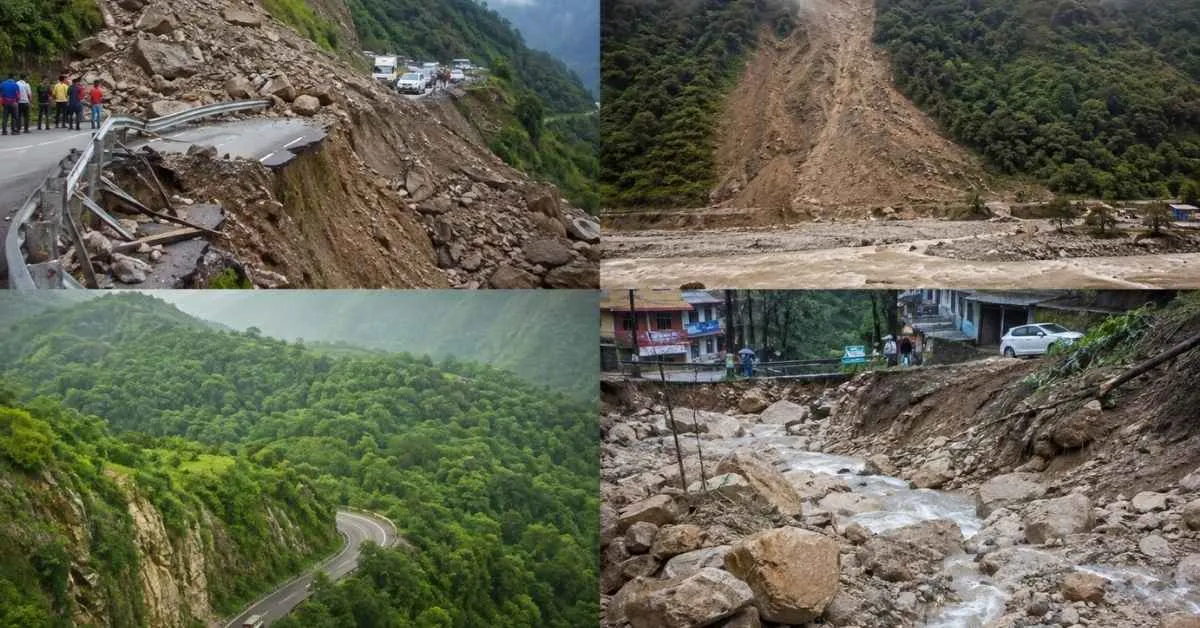
India is one of the most susceptible countries to landslides due to its varied topography, active tectonic zones, heavy monsoon rains, and the increased intervention of humans. Among regions, the Himalayas and the Western Ghats are the most prone to landslides.
Every monsoon season landslides become one of the most destructive natural disasters in India that kill people, destroy infrastructure and change landscapes. Despite having a heterogeneous terrain all over the country, two major areas of landslide risk. The Himalayas and the Western Ghats exhibit different patterns of landslide occurrence.
What Is a Landslide?
A landslide refers to the downward gravitational movement of rock, soil, man-made land, or debris. They are caused by natural events such as heavy rainfall, earthquakes and toe erosion. However, human activities such as cutting roads in an unscientific way or doing open-cast mining also cause landslides.
As per the National Disaster Management Authority (NDMA) about 12.6% of the total land area of India, excluding the snow-covered area, is prone to landslide activity.
Why Are Landslides Frequent in India?
Heavy rainfall during the monsoons Heavy precipitation in the mountains Seismically active regions and geological processes Deforestation and soil erosion Unscientific cutter operations and construction activities Urbanization plan change Slope modification due to illegal mining activities
Himalayas vs Western Ghats: Key Differences
| Feature | Himalayas | Western Ghats |
| Age | Young Fold Mountains | Ancient Block Mountains |
| Geological Activity | Highly Active (Seismic Zone IV & V) | Relatively Stable (Shield margins) |
| Major Trigger | Earthquakes + Short-Duration Cloudbursts | Prolonged Heavy Monsoon Downpours |
| Slope Stability | Low (fragile, dipping strata) | Moderate (weathered lateritic profiles) |
| Monsoon Impact | Significant in specific river valleys | Very High across entire windward slopes |
| Human Intervention | Roads, Tunnels, Hydropower Dams | Quarrying, Plantations, Hill Real Estate |
| Vulnerability Level | Extremely High | High |
The Himalayas: The Most Delicate Mountain Region in India
What Makes the Himalayas Susceptible to Landslides?
The Himalayas are the highest and youngest fold mountains of the earth. The presence of dynamically active tectonic plates, the Indian plate, and the Eurasian plate makes these mountains vulnerable to landslides. Because of the activity at this subduction zone, the rock strata are so fractured and deformed that they are unstable.
Causes of Vulnerability
-
Active Tectonics: The constant seismic activity that shakes the ground often leads to loosening of surface materials and slipping along faults.
-
Young and Weak Geology: The rock layers are made of soft and unconsolidated sedimentary rocks, shales and ancient moraines that erode quickly when saturated with water.
-
Heavy Rainfall: The northwestern and northeastern States of the Himalayas face sudden cloudbursts and concentrated rain spells.
-
Hasty Construction: Major projects such as widening Char Dham highway, construction of railway tunnels and building of hydropower plants alter natural slopes of the ground.
-
Motion of Glaciers: The quick melting of glaciers and thawing of permafrost creates unstable lakes and debris flow.
Major Landslide-Prone Himalayan States
| State | Vulnerability Level |
| Uttarakhand | Very High |
| Himachal Pradesh | Very High |
| Jammu & Kashmir | High |
| Ladakh | Moderate to High |
| Sikkim | Very High |
| Arunachal Pradesh | Very High |
| Meghalaya | High |
All About the Western Ghats: A Hotspot of Landslides Due to Rainfall
Reasons behind the Vulnerability of the Western Ghats: The Western Ghats is a chain of ancient and mature block mountains running parallel to the western coast of India, and it has been declared a UNESCO World Heritage Site. Despite having little tectonic activity in the region, the range faces serious vulnerabilities caused by climate change and land use changes.
Key Factors
-
Interception of Monsoon: The steep escarpments cause the southwest monsoon winds to bring heavy rain in a very compressed and localized manner.
-
Soil Saturation: The prolonged rainfall saturates the porous lateritic top layer which makes it lose its internal friction and shear strength in a very quickly.
-
Deep Soil Saturation: Extended rain showers saturate the porous layer of lateritic topsoil making the internal friction and shear strength decrease drastically.
-
Deforestation: Destruction of thick native rainforests removes the deep-root systems which are necessary to bind the upper soil layers.
-
Mining and Quarrying: Lack of regulations regarding commercial rock quarrying leads to destabilization of hillsides at fragile locations particularly in Maharashtra, Kerala and Karnataka.
-
Unplanned Urbanization: Occupation of the path of existing natural drainage plus hill-slope leveling for development in hospitality and real estate is increasing the chance of disasters.
Major Landslide-Prone Areas in the Western Ghats
| State | Vulnerability Level |
| Kerala | Very High |
| Karnataka | High |
| Tamil Nadu | High |
| Maharashtra | High |
| Goa | Moderate |
Which Region Is More Prone to Landslides?
The Himalayas receive a significantly high vulnerability rating due to several hazards, including active tectonism, recurrent high intensity earthquakes, weak sedimentary rock composition as well as fast glacial transformation. However, localised risk in Western Ghats has grown tremendously due to high population density close to escarpments and severe climate-related rains.
In view of both locations, it is vital to implement a focused region-based system rather than a generalized hills style management approach.
Consequences of Landslides
-
Human Cons: Deaths, injuries, community displacement and property destruction.
-
Economic Cons: Interruptions in supply chains, damages to highways and railways, as well as losses of crops and plantations.
-
Environmental Cons: Major topsoil loss, river basin silting-up, and creation of dams in streams, in addition to long-term deterioration of biodiversity.
Major mountain ranges in India face different threats due to their unique evolution. The tectonically young Himalayas face the risk of disaster from landslides and earthquakes.
On the other hand, the ancient Western Ghats are facing serious trouble due to human interference and an increase in rainfall. The solution to these problems is the implementation of policies that are based on scientific knowledge.

Manisha Waldia is a distinguished content strategist with 5 years of experience crafting premium educational content for UPSC and State PCS, with a focus on deep conceptual analysis across Polity, Geography, History, and Environment. She currently brings this expertise to Jagran Josh, where she covers major national and international events, current affairs, and static general knowledge. Over her career, Manisha's specialized insights have led her to curate high-impact materials and serve as a UPSC Mains answer-evaluator for India’s top institutes—including Drishti IAS, Shubhra Ranjan IAS, Study IQ, GS Score, and PWonlyIAS. She has also worked alongside leading NGOs like Oxfam India and Avani Kumaon.
Contact: manisha.waldia@jagrannewmedia.com




![[Out] UGC NET June 2026 Result Live: यूजीसी नेट रिजल्ट ugcnet.nta.nic.in जारी, डायरेक्ट लिंक से करें चेक](https://img.jagranjosh.com/images/2026/August/2782026/UGC-NET-Result-2026-Marksheet-link-pdf.jpg)