GK Questions and Answers on India's first Vice President, Dr. Sarvepalli Radhakrishnan
Quiz on Dr Sarvepalli Radhakrishnan 2026: Teacher's Day is celebrated across the country on 5th September to mark the birth anniversary of India's first Vice President Dr Sarvepalli Radhakrishnan. Try this interesting quiz based on his life, family, education, political career, etc.
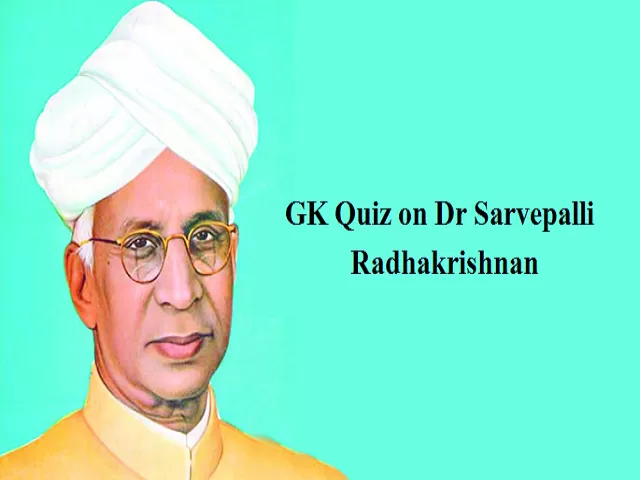
Dr. Sarvepalli Radhakrishnan Quiz Questions Answers 2026: Teachers' Day is celebrated in India every year on September 5 to commemorate the birth anniversary of Dr. Sarvepalli Radhakrishnan. Teachers play an important role in developing us. They give us the right direction and help in framing our future. Dr. Sarvepalli Radhakrishnan was an exemplary teacher, scholar, and politician. He dedicated his entire life to education and the youth of the country.
The 138th birth anniversary of Dr. Sarvepalli Radhakrishnan is celebrated on Teachers' Day 2026. This Teachers' Day (September 5, 2026). President Droupadi Murmu will give the National Teachers' Award 2026 to 48 outstanding teachers at Vigyan Bhawan in New Delhi.
Teacher's Day 2026 Quiz: Top 11 GK Questions & Answers On Shikshak Divas
1. In which year Dr. Sarvepalli Radhakrishnan was born?
A. 1880
B. 1884
C. 1888
D. 1890
Ans. C
Explanation: Dr. Sarvepalli Radhakrishnan was born on 5 September 1888 at Thiruttani, Madras Presidency, British India (now in Tamil Nadu, India)
2. In which year did Dr. Sarvepalli Radhakrishnan become the President of India?
A. 1960
B. 1962
C. 1964
D. 1967
Ans. B
Explanation: In 1962, he became the President of India. He served from 1962 to 1967. He was the second President of India.
3. When did Dr Sarvepalli Radhakrishnan was awarded the country's highest civilian honour, Bharat Ratna?
A. 1950
B. 1954
C. 1955
D. 1960
Ans. B
Explanation: Dr. Sarvepalli Radhakrishnan was awarded the country's highest civilian honour, Bharat Ratna in 1954.
4. Which of the following are the written works of Dr. Sarvepalli Radhakrishnan?
1. East and West: Some Reflections
2. The Philosophy of the Upanishads
3. An Idealist View of Life
4. Eastern Religions and Western Thought
Choose the correct option:
A. 1 and 2
B. 1,2 and 4
C. 2 and 3
D. 1,2,3 and 4
Ans. D
Explanation: Dr. Sarvepalli Radhakrishnan's written works include Indian Philosophy, 2 vol., The Philosophy of the Upanishads, An Idealist View of Life, Eastern Religions and Western Thought, and East and West: Some Reflections. He tried to interpret Indian thought for Westerners in his lectures and books.
5. In which year, Dr. Sarvepalli Radhakrishnan was elected as the chairman of UNESCO's executive board?
A. 1948
B. 1949
C. 1950
D. 1951
Ans. A
Explanation: He was elected chairman of UNESCO’s executive board (1948–49).
6. Consider the following statement about Dr. Sarvepalli Radhakrishnan.
1. He was named as Spalding Professor of Eastern Religions and Ethics at the University of Oxford in 1936.
2. He was elected as a Fellow of the All Souls College.
3. He was elected to the Constituent Assembly in 1946.
Which of the following above statement(s) is/are correct about Dr. Sarvepalli Radhakrishnan?
A. Only 1
B. 1 and 2
C. 1 and 3
D. 1, 2 and 3
Ans. D
Explanation: Dr. Sarvepalli Radhakrishnan was also named as Spalding Professor of Eastern Religions and Ethics at the University of Oxford in 1936. He was elected as a Fellow of the All Souls College. He was elected to the Constituent Assembly in 1946.
7. In which year Sahitya Akademi fellowship conferred the highest honour conferred by the Sahitya Akademi on a writer Dr. Sarvepalli Radhakrishnan?
A. 1963
B. 1965
C. 1968
D. 1970
Ans. C
Explanation: In 1968, the Sahitya Akademi fellowship was the highest honour conferred by the Sahitya Akademi on a writer Dr. Sarvepalli Radhakrishnan. He is the first Indian to get this award.
8. When was Dr Sarvepalli Radhakrishnan named as Spalding Professor of Eastern Religions and Ethics at the University of Oxford?
A. 1930
B. 1933
C. 1936
D. 1940
Ans. C
Explanation: He was appointed as a Spalding Professor of Eastern Religions and Ethics at the University of Oxford in 1936. HN Spalding made this position because he was impressed by Sarvepalli Radhakrishnan's lectures in London. He was also fascinated by his personality.
9. Consider the following statements regarding Dr. Sarvepalli Radhakrishnan.
1. He was elected chairman of UNESCO's executive board (1948-49).
2. From 1953 to 1962, he was chancellor of the University of Delhi.
3. He served as a professor of philosophy at Mysore (1918–21).
Which of the following statement(s) given above is/are correct?
A. 1 and 2
B. 1 and 3
C. 2 and 3
D. 1, 2 and 3
Ans. D
Explanation: He was elected chairman of UNESCO's executive board (1948-49). From 1953 to 1962, he was chancellor of the University of Delhi. Also, he served as a professor of philosophy at Mysore (1918–21).
10. When was the first Teacher's Day observed on his birth anniversary?
A. 1965
B. 1962
C. 1967
D.1964
Ans. B
Explanation: Teachers' Day has been celebrated annually on September 5th since 1962.
11. What birth anniversary of Dr. Sarvepalli Radhakrishnan will fall on Teachers' Day in the year 2026?
A. The 135th
B. The 136th
C. The 137th
D. The 138th
Answer: D
Explanation: Dr. Sarvepalli Radhakrishnan was born on September 5th 1888, which means that September 5th 2026 will be his 138th birth anniversary.
12. From 1949 to 1952, Dr. Sarvepalli Radhakrishnan was Indian Ambassador to which of the following countries?
A. United States
B. United Kingdom
C. Soviet Union (USSR)
D. France
Answer: C
13. Who was the very first Vice President of India?
A. Dr. Zakir Husain
B. Dr. Sarvepalli Radhakrishnan
C. V. V. Giri
D. C. Rajagopalachari
Ans. B
Explanation: Dr. Sarvepalli Radhakrishnan was the very first Vice President of India, holding office for two terms from 1952 until 1962.
14. Which organization appointed Dr. Sarvepalli Radhakrishnan Vice Chancellor in 1939?
A. University of Delhi
B. Andhra University
C. Banaras Hindu University (BHU)
D. University of Madras
Ans. C
Explanation: He was the Vice-Chancellor of Banaras Hindu University (BHU) from 1939 to 1948 after serving as Vice-Chancellor of Andhra University (1931–1936).
15. Which international recognition did Dr. Sarvepalli Radhakrishnan received in 1975 as the first non-Christian to do so?
A. Templeton Prize
B. Ramon Magsaysay Award
C. Nobel Peace Prize
D. Order of Merit
Ans. A
Explanation: Dr. Sarvepalli Radhakrishnan was honored with the Templeton Prize just a few days before passing from this world in 1975 for advocating God's understanding and practicing universal love and truth, donating the whole prize money to Oxford University.
Explanation: Dr. Radhakrishnan became Ambassador to Soviet Union (USSR) in 1949 till 1952 and later took over as Vice President of India.