Key Points
- DRDO successfully demonstrated Solid Fuel Ducted Ramjet (SFDR) technology.
- SFDR enables long-range air-to-air missiles, enhancing tactical advantage.
- SFDR uses atmospheric oxygen, extending range and maintaining high speed.
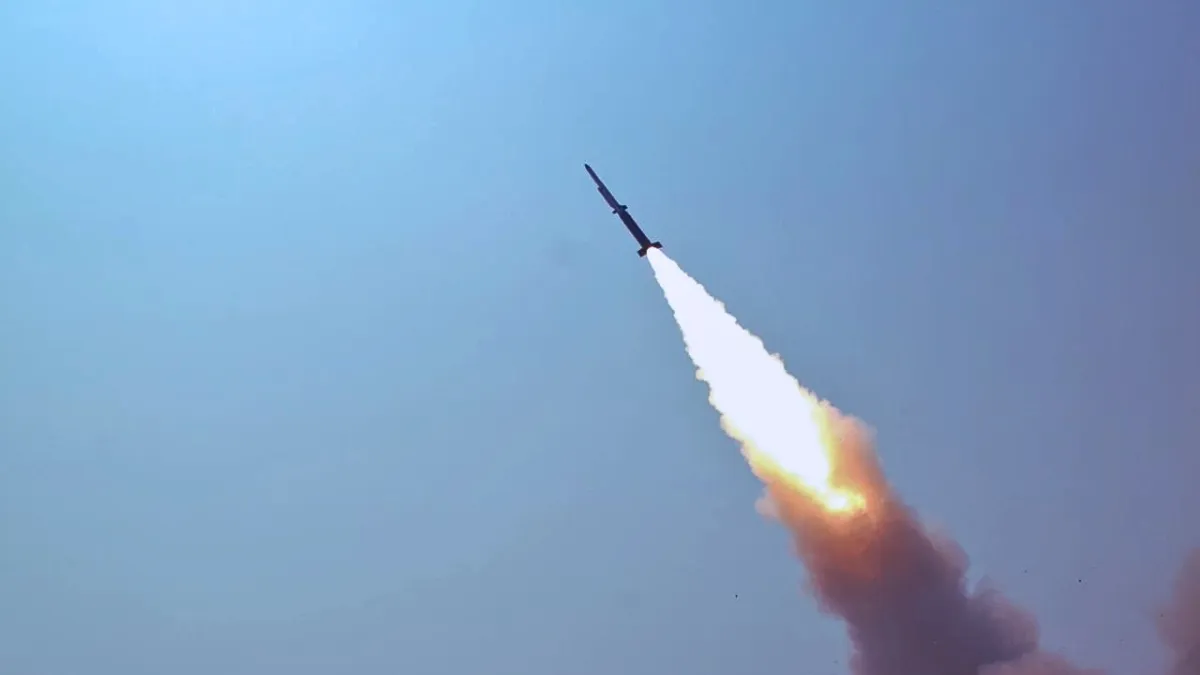
Defence Research and Development Organisation (DRDO) successfully demonstrated Solid Fuel Ducted Ramjet (SFDR) technology from the Integrated Test Range (ITR), Chandipur Coast Odisha. It is an advanced air-breathing propulsion system using a solid fuel gas generator.
The successful demonstration of SFDR places India into an elite league of nations possessing this technology that enables developing long-range air-to-air missiles to give tactical edge over the adversaries.
Key Features of Solid Fuel Ducted Ramjet Technology(SFDR):
-
It is Developed by Defence Research and Development (DRDO) Hyderabad Laboratory along with the DRDO laboratories.
-
It is a long-range air-to-air missile.
-
It has an Expanded No-Escape Zone by maintaining high velocity, making it almost impossible to detect the outmaneuver the interceptor for the enemy aircraft.
-
It has an advanced air-breathing propulsion system using a Solid Fuel Ducted Ramjet Motor. Fuel Flow Controller performed but initially propelled by a ground booster motor to the desired Mach Number.
-
It is a system simpler, safer and easier to store and transport.
Also Read: India-US Trade Deal: Check Latest Updates, Significance & Challenges for Indian Economy
How SFDR Missile Works?
Standard missiles carry both fuel and an oxidizer. SFDR technology, however, takes a more efficient approach by using atmospheric oxygen.
-
Booster/Initial Phase: A ground-based booster motor launches the missile and accelerates it to supersonic speeds (Mach numbers).
-
Ramjet Activation: Once at the required speed, the air intakes open. The missile scoops up air from the atmosphere, compresses it, and mixes it with the fuel from the gas generator.
-
Sustained Propulsion: This "air-breathing" process allows the missile to maintain high speeds for a much longer duration than conventional motors.
Difference B/W SFDR and Conventional Aircraft
| Feature | Conventional | SFDR Technology |
| Oxidizer | Carried internally (Heavy) | Uses atmospheric oxygen (Lightweight) |
| Range | Limited by fuel/oxidizer weight | Significantly extended |
| Terminal Velocity | Decelerates in final phase | High sustained speed until impact |
| Maneuverability | Low at long ranges | High throughout the flight path |
What is the Significance of the SFDR Missile?
The successful test of the Solid Fuel Ducted Ramjet (SFDR) marks a paradigm shift in India's missile capabilities like fuel rapidly and lose energy toward the end of their flight, SFDR technology allows for sustained high speeds with
-
Expanded No-Escape Zone: It can maintain high velocity until the moment of impact, the missile significantly increases its "No-Escape Zone," making it nearly impossible for enemy aircraft to outmaneuver the interceptor.
-
Technological Sovereignty: With this successful test, India joins a select group of nations (including Russia and certain European countries) that can manufacture air-breathing missile systems.
-
Countering Aerial Threats: This technology is specifically designed to neutralize high-value aerial targets at long ranges, providing the Indian Air Force (IAF) with a formidable "first-look, first-shoot" advantage.
DRDO successfully demonstrated Solid Fuel Ducted Ramjet (SFDR) technology from Chandipur, Odisha. This advanced air-breathing propulsion system enables long-range air-to-air missiles, significantly boosting India's defence capabilities. The SFDR technology provides an expanded 'No-Escape Zone' and places India among an elite group of nations possessing this crucial missile development expertise, ensuring a tactical edge.
Also Read: Which State IS the Renewable Energy Powerhouse Of India?


-1770209243204.jpg)

-1767595273360.jpg)
Comments
All Comments (0)
Join the conversation