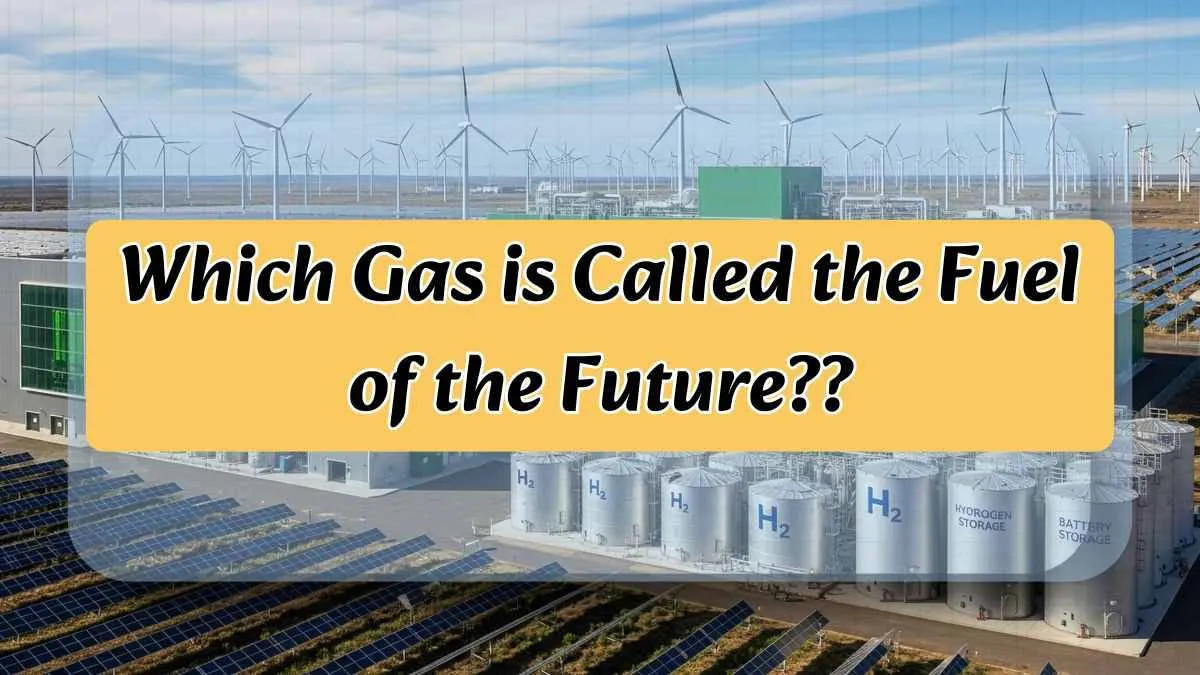
Fuel of the Future: As the world races against climate change and the depletion of fossil fuels, scientists, policymakers, and industries are turning their attention to cleaner and more sustainable energy sources. In this global transition, one gas is repeatedly being hailed as the “Fuel of the Future” Hydrogen. From powering vehicles to running industries and storing renewable energy, hydrogen is gaining momentum as a key solution for a low-carbon future.
For school students, this topic is especially important as it is frequently asked in science exams, Olympiads, and competitive tests like NTSE and JEE Foundation, where questions such as “Which gas is called the fuel of the future?”are common. Understanding hydrogen today helps students connect classroom learning with real-world energy solutions.
With countries like India, the US, and members of the EU launching national hydrogen missions, this colourless gas is now at the centre of the clean energy revolution.
Which Gas is known as the Fuel of the Future?
Hydrogen: The Gas Known as the Fuel of the Future
Hydrogen is the lightest and most abundant element in the universe. On Earth, it is usually found combined with other elements, such as in water (H₂O) and hydrocarbons. When used as a fuel, hydrogen reacts with oxygen to produce energy, and the only by-product is water making it a zero-emission fuel at the point of use.
That is why in school-level science textbooks, hydrogen is widely referred to as the Fuel of the Future.
Why Is Hydrogen Called the Fuel of the Future?
Hydrogen stands out among alternative fuels for several important reasons:
-
Zero Carbon Emissions: Produces only water vapour.
-
High Energy Density: More energy per kilogram than petrol or diesel.
-
Abundant Availability: Can be produced from water and renewable sources.
-
Versatile Use: Suitable for transport, power, and industries.
-
Future-Ready Fuel: Supports clean and sustainable development goals.
These points are often highlighted in Class 8 to Class 12 chemistry and environmental science chapters, making hydrogen a key concept for students.
How Hydrogen Is Used as a Fuel?
Hydrogen can generate energy in two main ways:
1. Hydrogen Fuel Cells: Fuel cells convert hydrogen into electricity through a chemical reaction. This method is efficient and is used in hydrogen cars and buses.
2. Combustion of Hydrogen: Hydrogen can be burned like natural gas to produce heat and energy, especially in industries.
Both methods are discussed in higher secondary science curricula to explain alternative energy sources.
Types of Hydrogen: Green, Blue, and Grey
Based on production methods, hydrogen is classified into:
-
Green Hydrogen: Made using renewable energy; cleanest form.
-
Blue Hydrogen: From natural gas with carbon capture.
-
Grey Hydrogen: From fossil fuels without emission control.
Among these, green hydrogen is considered the true fuel of the future and is increasingly featured in school projects and science exhibitions.
Hydrogen in Transport and Industry
Hydrogen is already being used in:
-
Hydrogen cars, buses, and trains
-
Steel and chemical industries
-
Power plants for energy storage
-
Future aviation and shipping fuels
Such real-life applications help school students understand how science concepts are applied beyond textbooks.
India’s Push Towards Hydrogen Energy
India’s National Green Hydrogen Mission aims to make the country a global hub for green hydrogen. For students, this is an important current affairs topic often linked with science and geography syllabi and school quizzes.
Why Should Students Learn About Hydrogen?
For school students, hydrogen is not just an exam answer but a window into future careers in science, engineering, and clean energy. Learning about hydrogen helps students:
-
Understand renewable and non-renewable energy
-
Connect chemistry with environmental studies
-
Prepare for competitive exams and science fairs
-
Develop awareness about sustainable development
Challenges in Using Hydrogen as Fuel
Despite its promise, hydrogen faces challenges like:
-
High production cost
-
Storage and transportation issues
-
Limited infrastructure
-
Energy losses during conversion
These challenges are also discussed in higher-level science education to promote critical thinking among students.
Future Scope of Hydrogen Energy
Experts believe hydrogen will play a major role in meeting global energy needs by 2050. With innovation and investment, hydrogen is expected to become affordable and widely available, shaping the energy landscape that today’s students will inherit.
Hydrogen is rightly called the Fuel of the Future due to its clean nature, high energy content, and wide applications. For school students, it remains one of the most important topics in science education and competitive exams. As the world moves towards greener energy solutions, hydrogen stands out as a symbol of hope and progress. Understanding hydrogen today prepares students to become the scientists, engineers, and leaders who will power tomorrow’s sustainable world.




-Answer-Keys-2026_-Download-Class-wise-OMR-Sheet-PDF-1766142098617.jpg)
Comments
All Comments (0)
Join the conversation