Delhi University CES 2026 Admissions Open: Check Who Can Apply, Fees, Eligibility and Admission Rules


Delhi University CES 2026 admissions are open. Check who can apply, eligibility, Rs 6,100 fee per paper, number of papers, admission rules and certificate details.
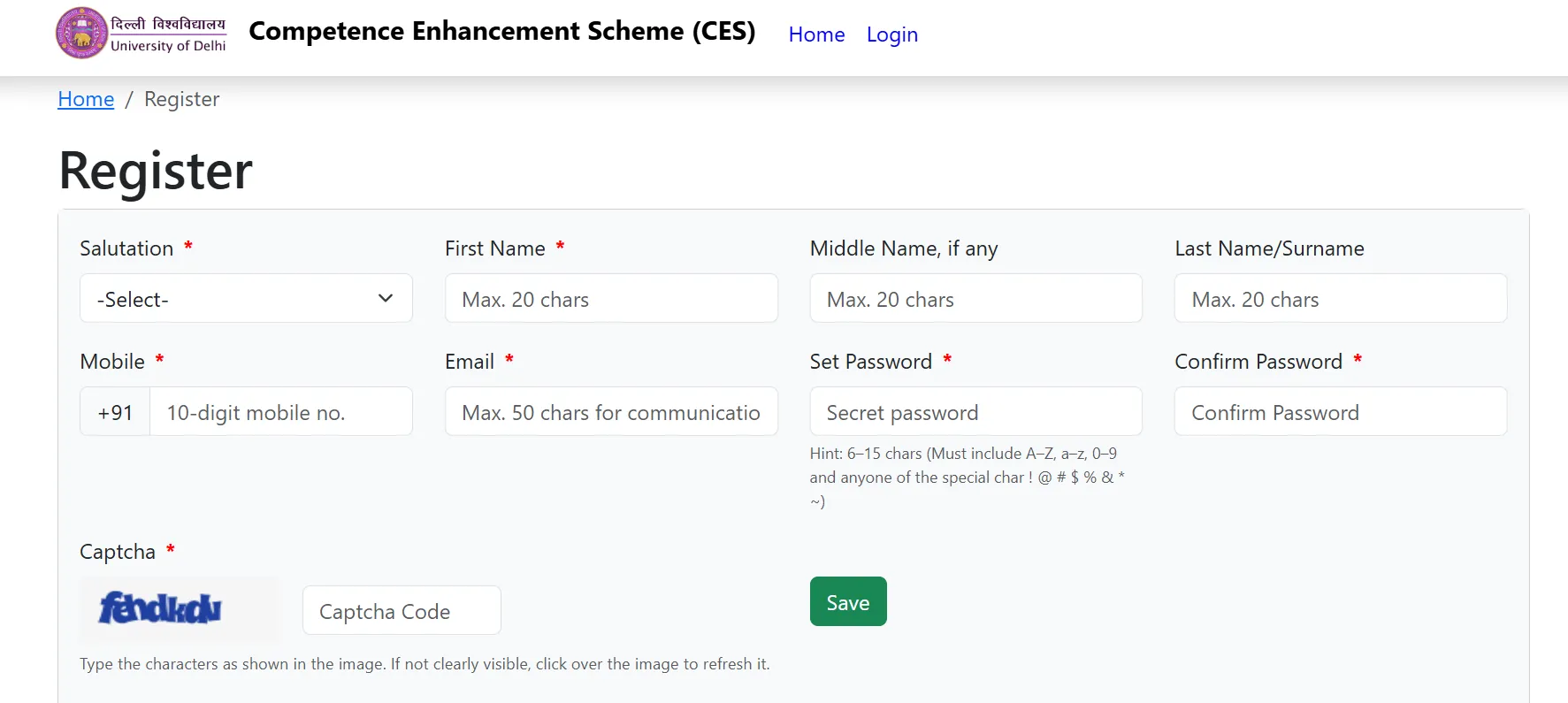
The University of Delhi has opened applications under the Competence Enhancement Scheme (CES) 2026, allowing learners from different age groups and professional backgrounds to study selected papers alongside regular students. The initiative is aimed at promoting flexible and lifelong learning opportunities in line with the National Education Policy (NEP) 2020.
Interested candidates can register through the official CES portal and check the available papers, eligibility conditions and admission requirements before applying. The university has positioned the initiative around the idea of “Any Course, Any Age”, making it an option for professionals, alumni, senior citizens and other learners looking to continue their education.
DU CES 2026: Who Can Apply?
Candidates who meet the minimum eligibility criteria and prerequisites prescribed for an existing course can apply for individual papers, subject to seat availability. The scheme is open to working as well as non-working learners. Working professionals may apply by submitting a No-Objection Certificate (NOC) from their employer, wherever applicable.
DU alumni who have completed their studies can also apply. However, students who are currently enrolled in a Delhi University programme are not eligible for admission under CES. Candidates already studying at another university or institution may also be required to submit an NOC, as applicable.
DU CES 2026 Registration: Direct LINK
Delhi University CES 2026: Number of Papers Allowed
Under the CES 2026 scheme, candidates can register for a maximum of two papers or eight credits in one semester. The selected papers must be from the same discipline. Admission will depend on the availability of seats and fulfilment of the prescribed eligibility requirements. CES seats are considered supernumerary seats and are capped at 10 per cent of the sanctioned strength of a class or six seats, whichever is lower.
DU CES 2026 Admission: How is Selection Done?
Admission under CES is based on merit. For eligible applicants, the university considers factors including the candidate's age and percentage of marks obtained in the qualifying degree. Since the number of seats available under the scheme is limited, candidates are advised to register at the earliest.
DU CES 2026 Fee Details
| Particular | Details |
| Scheme | Competence Enhancement Scheme (CES) |
| University | University of Delhi |
| Fee | Rs 6,100 per paper |
| Maximum papers | 2 papers |
| Maximum credits | 8 credits per semester |
| Admission basis | Merit |
| Seat availability | Subject to availability |
| Classes | Same mode and medium as regular students |
What Certificate Will Students Receive?
Candidates who successfully complete their selected paper and meet the required attendance and evaluation criteria will receive a certificate from the university. The credits earned through the scheme will also be deposited into the candidate's Academic Bank of Credits (ABC) account.
Apeksha Agarwal is an Education Journalist with over 3.5 years of experience. She covers a wide range of topics, including school board examinations, entrance tests, admissions, results, scholarships, and higher education updates. Over the years, she has closely tracked major examinations such as JEE Main, NEET UG, CUET, and various state-level entrance exams, helping students stay informed throughout their academic journey. Apeksha has a Master's degree in Journalism and Mass Communication and a certificate in Digital Journalism. She is passionate about transforming complex educational developments into clear, accessible, and useful information. Her reporting focuses on providing students, parents, and educators with accurate updates and practical insights on examinations, results, and policy changes. She believes that quality education journalism can make a meaningful difference by helping students make informed decisions about their future.


