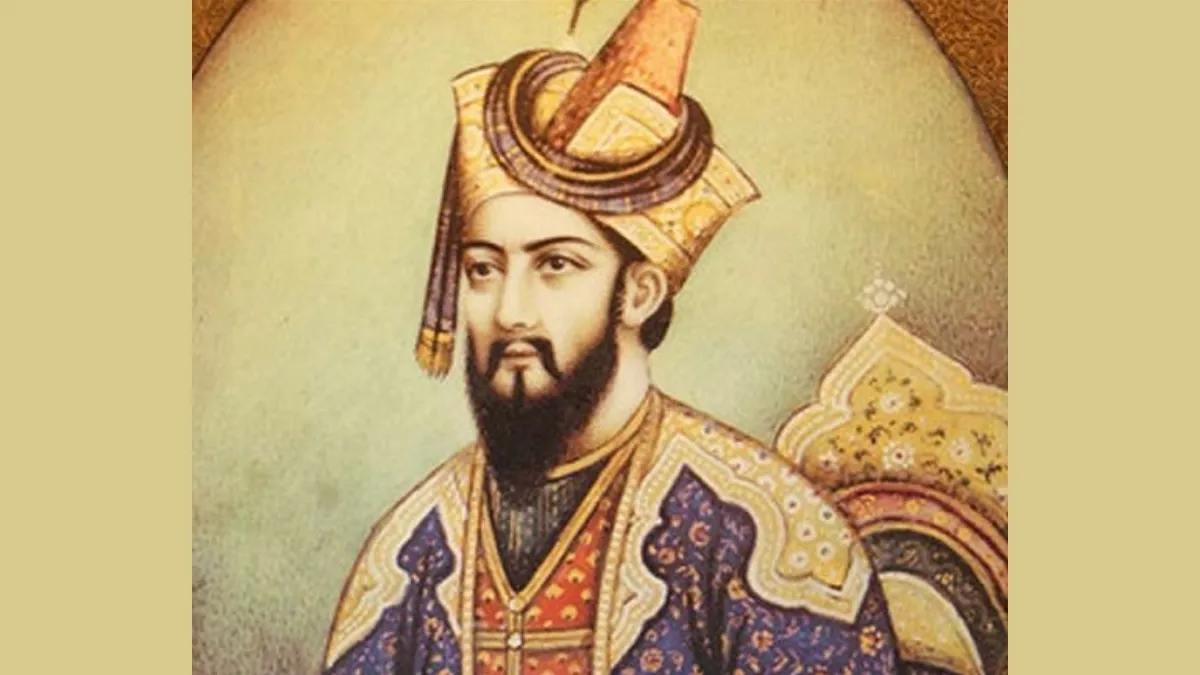
Babur was the first emperor in the Indian subcontinent who established the Mughal Dynasty in 1526 after defeating the last Delhi Sultan king, Ibrahim Lodi, in the first battle of Panipat, 1526.
Early life of Babur
Babur ascended the throne at Farghana in Transoxiana in 1494 at the age of twelve after the death of his father. The situation in Central Asia was not stable, and Babur had to face a lot of resistance from the nobility itself. Although he was able to capture Samarqand, very soon he had to retreat because of the desertion of some of his nobles. He also lost Farghana to the Uzbeks.
The early years of Babur’s rule in Central Asia were tough. During this whole period he had plans of moving towards Hindustan. And finally, from 1517 onwards, he made decisive moves towards India. A few developments in India at that time also helped him to act on plans of invading India.
Full Name: Zahiruddin Muhammad Babur
Birthplace: Andijan, Fergana Valley
Dynasty: Descendant of Mongol Emperor Genghis Khan and Timur (Timurid Prince)
Do you know how Babur entered India?
The unstable political situation in India after Sikandar Lodi’s death convinced him of political discontentment and disorder in the Lodi Empire. Meanwhile, there was conflict between some Afghan chiefs and Ibrahim Lodi. Prominent among them was Daulat Khan Lodi, the governor of Punjab. The Rajput king of Mewar, Rana Sanga. He was also asserting his authority against Ibrahim Lodi and was trying to increase his area of influence in North India. Both of them sent word to Babur to invade India. Invitations from Rana Sanga and Daulat Khan Lodi might have encouraged Babur’s ambitions.
Advent of Babur (1526-30)
Babur was successful in capturing Bhira (1519–1520), Sialkot (1520), and Lahore (1524) in Punjab. Finally, Ibrahim Lodi and Babur’s forces met at Panipat in 1526. Babur’s soldiers were fewer in number, but the organisation of his army was superior. Ibrahim Lodi was defeated in the battle of Panipat. Babur was thus able to take control of Delhi and Agra and got the rich treasure of the Lodis.
Origin of the Mughal Empire in India
The battle of Panipat, though, formally established Mughal rule in India. It was the first among the series of battles in the years to come. For example, to secure this triumph, it was equally important to overcome Rana Sanga of Mewar and the chieftains in and around Delhi and Agra. Another important opponent in eastern India was the Afghans. To add to this, problems were mounting within his own nobility.
War fought by the Babur in India
| Battle | War Year | Location | Key Opponent | Outcome of the War |
| First Battle of Panipat | 1526 | Panipat, Haryana | Babur vs. Ibrahim Lodi (Sultanate of Delhi) | Babur's decisive victory, in which Ibrahim Lodi was killed, established the Mughal Empire in India |
| Battle of Khanwa | 1527 | Khanwa, near Fatehpur Sikri, Rajasthan | Babur vs. Rana Sanga (Rajput Confederacy) | Babur won, consolidating his power in North India & weakening Rajput resistance |
| Battle of Chanderi | 1528 | Chanderi, Madhya Pradesh | Babur vs. Medini Rai (Rajput ruler of Malwa) | Babur's victory captured the fortress of Chanderi & annexed the Malwa region |
| Battle of Ghaghra | 1529 | Banks of the Ghaghara River, Bihar | Babur vs. Afghan chiefs (Mahmud Lodi, brother of Ibrahim Lodi & Sultan Nusrat Shah of Bengal) | Babur won, secured control over eastern India, & ended major Afghan resistance (Lodhis). |
Famous Book On Babur
Baburnama (Tuzuk-i-Baburi): It was Babur's autobiography written by Babur himself, which provided valuable insights into his life, times, and administration of his empire.
-
Baburnama is also known as the Memoirs of Babur, written in Babur's mother tongue, Turkish.
-
Baburnama is known for its historical details on Babur's military campaigns and its vivid descriptions of the people, cultures, flora, and fauna of the lands he encountered.
-
It also talks about 16th-century Central Asian and Indian history.
Babur's Death and Succession
Babur died in 1530 CE in Agra due to an unknown illness at the age of 48. Initially he was buried in Agra, India, and later reburied in Kabul by his son Humayun.
Babur was succeeded by his son Humayun. Humayun became the next emperor of the Mughal Empire in 1530.



-1764939644739.jpg)
Comments
All Comments (0)
Join the conversation