Palace architects were architects and designers in addition to being builders. Ancient palace architects created both magnificent buildings but also architecture that reflected the culture, society, and climate of their kingdoms.
Some prehistoric palaces were known for their size, others for their aesthetics, and some for the unique features of their designs; however, one prehistoric palace stands out as being architecturally ingenious because of its remarkable ability to allow airflow to penetrate and circulate throughout its interior to help maintain an ambient temperature within its walls even during the height of summer.
Over time, this palace has taken on a well-deserved nickname that pays homage to its effusive airiness. Today, the palace continues to draw tourists and visitors from around the globe and is a major historic Indian landmark.
Check Out: List of Top 7 Largest Palaces in India
Which Palace Is Called the Palace of Winds?
Source: Britannica
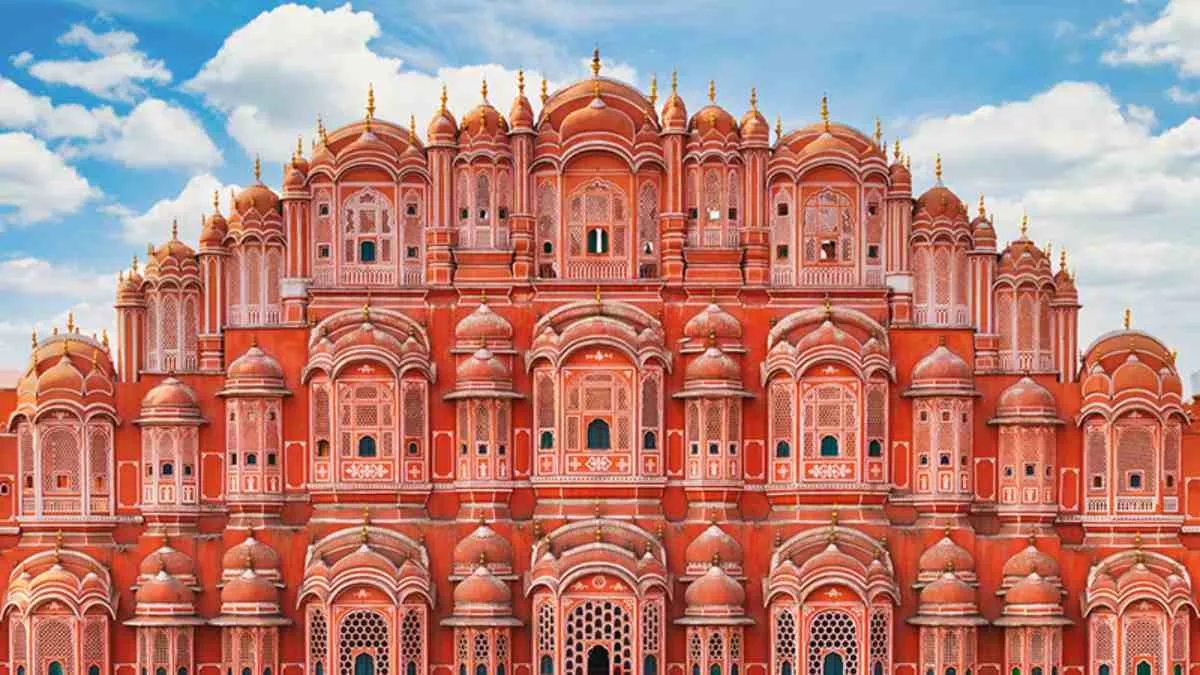
Hawa Mahal is situated in Jaipur, Rajasthan, India.
The palace was built in 1799 by Maharaja Sawai Pratap Singh as a prime example of traditional Rajput architecture.
Hawa Mahal forms an integral part of the City Palace complex and is constructed out of red and pink sandstone.
Hawa Mahal's façade is distinctive for being honeycomb-shaped with 953 small windows or jharokas, making it a five-story building.
The jharokas or small windows were originally built to allow royal women to watch the street festivals while staying hidden from sight, thus allowing them to fulfill their religious obligations to observe the festivals without actually being seen.
Today, Hawa Mahal is one of the most popular tourist destinations in Jaipur, and many residents consider it a landmark.
Why Is Hawa Mahal Called the Palace of Winds?
1. Hundreds of Small Windows
There are many little windows, called jharokas, in the façade of the Hawa Mahal.
The 953 jharokas are set out carefully and allow for continuous airflow into the palace while providing minimal amounts of direct sunshine into the building.
Thus keeping the inside cooler during the day by allowing natural air conditioning.
2. Natural Cooling System
Hawa Mahal is an example of a natural air conditioning system.
When wind flows through the jharokas, a cooling effect occurs inside the Hawa Mahal.
This system was used during the hot summers of Jaipur, so the royal family had a cool and comfortable environment without modern day technologies.
3. Unique Honeycomb Architecture
The Hawa Mahal has a unique honeycomb look, which is appealing to the eye but also serves a purpose.
The honeycomb design is used to create an increase in the surface area of the walls of the building by repeating the patterns of the wall.
As a result, air can flow through the building efficiently, while at the same time providing privacy and maintaining the architectural beauty of the building.



-1770106590108.jpg)

Comments
All Comments (0)
Join the conversation