Which is the Grand Canyon of India? Location, River and Key Facts
Which place is known as the Grand Canyon of India. Learn about Gandikota's location, the Penna River, history and key facts
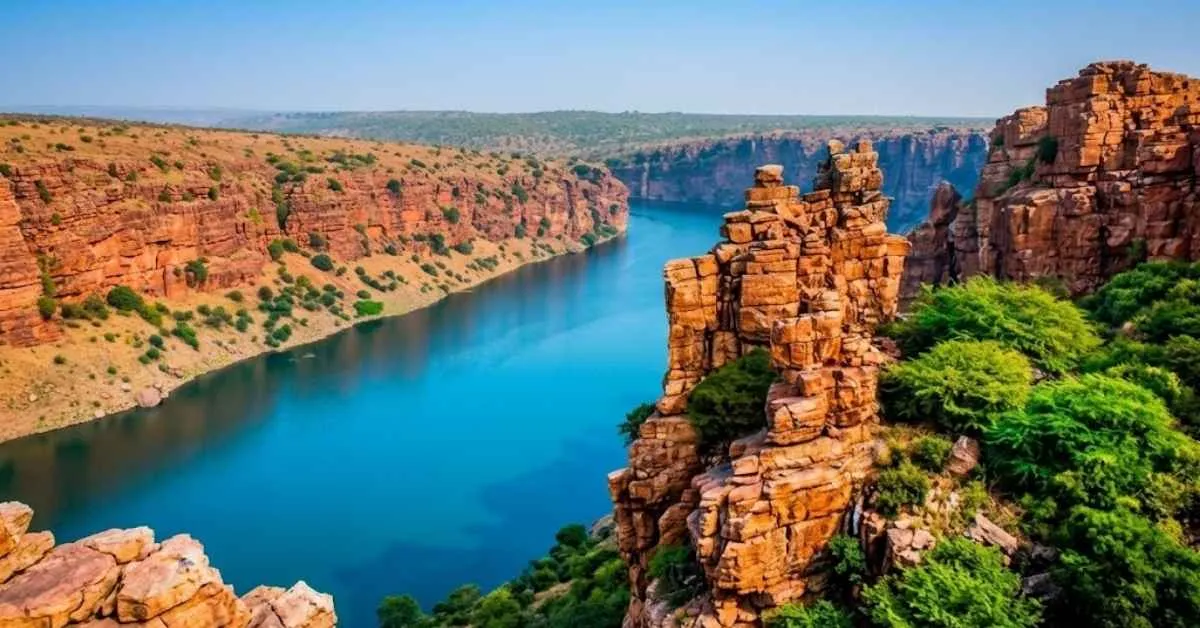
India is home to diverse geographical landscapes, ranging from snow-capped Himalayan peaks to expansive river valleys. Among these natural marvels, Gandikota Canyon, situated in the Kadapa (YSR) district of Andhra Pradesh, holds a special place.
It is globally known as the "Grand Canyon of India’’. This gorge was sculpted over centuries by the Penna River cutting through the rugged red quartzite formations of the Erramala Hills.
| Parameter | details |
| Popular Title | Grand Canyon of India |
| Site Name | Gandikota Canyon / Gorge |
| location | Kadapa / YSR District, Andhra Pradesh |
| River Responsible | Penna River also called Pennar River |
| Mountain/Hill Range | Erramala Hills (Erramala Range) |
| Rock System | Gandikota Quartzite (Sedimentary / Cuddapah group) |
| Etymology | Gandi (Gorge) and Kota (Fort) in Telugu |
| Prominent Fort | Gandikota Fort (Founded 1123 AD by Kapa Raja) |
Geographical Location and Formation
The gorge of Gandikota is located nearly fifteen kilometers away from the Jammalamadugu town, in the Rayalaseema area of Andhra Pradesh. Located about three hundred feet above sea level the gorge has been formed.
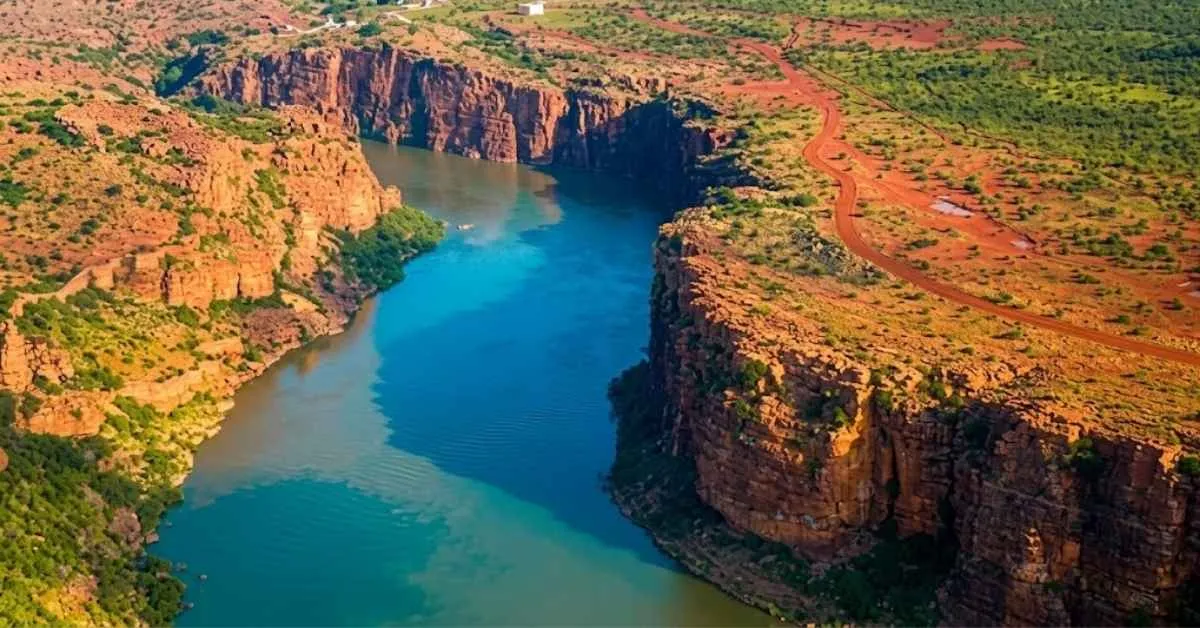
The Penna River contributed with its natural movements and flow over the years. Forming a deep gorge through the full-grown and solid red quartzite rocks by eroding them. This formation has resulted in the emergence of steep and high cliffs alike to the well-known Grand Canyon in America.
Geologically, the area consists of sedimentary rocks of the Cuddapah Supergroup known as the Chitravati Group. The rocks present in the area are known as Gandikota Quartzite.
Historical Significance and Monuments
- The term Gandikota describes the geography of the place using the Telugu words meaning gorge (gandi) and fort (kota). The Penna River gorge acted as a great natural barrier for the protection of the fort from the northern and western sides.
- The fort of Gandikota was built at in around 1123 AD by Kapa Raja as a sand/mud fort. Gradually, the fort expanded as a big stone structure with the help of Pemmasani Nayakas.
- It was ruled by many dynasties such as Kakatiyas, Vijayanagara Empire, Golconda Sultanate and the Mughals.
- There are Ranganatha Swamy Temple and Madhava Temple in the fort complex representing the ancient culture of South Indian temples featuring excellent architectural artwork.
- Jamia Masjid is another important historical mosque built during the time of Golconda Sultanate which has tall and elegant minarets close to ancient Hindu temples.
- Mini Charminar and Granary are some other notable architectural constructions within the fort compound.
Frequently Asked Questions (FAQ's)
Q1: Which of the following rivers is responsible for forming the Gandikota Canyon in the southern part of India?
(a) Cauvery
(b) Manjira
(c) Pennar
(d) Tungabhadra
Answer: (c) Pennar
Explanation: The Gandikota Canyon, which is also known as the "Grand Canyon of India," has been created due to the erosion by the Pennar (Penna) River which has cut through the various layers of sedimentary red quartzite rocks in the Erramala hill range located in the Kadapa District of Andhra Pradesh.
Q2: Gandikota Fort and canyon is located in which of the following hill or mountain range?
(a) Nallamala Hills
(b) Erramala Hills
(c) Seshachalam Hills
(d) Veligonda Hills
Answer: (b) Erramala Hills
Explanation: The fort is located on the tops of Erramala Hills which is defined as a hill range that passes through region of Rayalaseema in Andhra Pradesh. All leads to the gorge of River Pennar. All other alternatives discussed are surrounding hill ranges of eastern Ghats.
Q3: What is the predominant rock group found in the Gandikota canyon?
(a) Gondwana System
(b) Cuddapah system (sandstone/quartzite)
(c) Deccan Trap system
(d) Dharwar system
Answer: (b) Cuddapah system (sandstone/quartzite)
Explanation: The Gandikota canyon area belongs to the Cuddapah supergroup which is to say it is part of the Chitravati Group and the Gandikota Quartzite.The unusual stepped reddish cliffs made of quartzite and thick sandstone minimize erosion and create the vertical cliffs seen in the canyon.
Q4: In which Indian state is the natural feature known as the "Grand Canyon of India" located?
(a) Karnataka
(b) Tamil Nadu
(c) Andhra Pradesh
(d) Kerala
Correct Answer: (c) Andhra Pradesh
Explanation: Gandikota is a village near Jammalamadugu and is located in the Kadapa district of Andhra Pradesh. It is known as the "Grand Canyon of India" mainly because it resembles the original Grand Canyon located in the United States.

Manisha Waldia is a distinguished content strategist with 5 years of experience crafting premium educational content for UPSC and State PCS, with a focus on deep conceptual analysis across Polity, Geography, History, and Environment. She currently brings this expertise to Jagran Josh, where she covers major national and international events, current affairs, and static general knowledge. Over her career, Manisha's specialized insights have led her to curate high-impact materials and serve as a UPSC Mains answer-evaluator for India’s top institutes—including Drishti IAS, Shubhra Ranjan IAS, Study IQ, GS Score, and PWonlyIAS. She has also worked alongside leading NGOs like Oxfam India and Avani Kumaon.
Contact: manisha.waldia@jagrannewmedia.com


![[OUT] EMRS Tier 2 Result 2026 Live: Download PRT, TGT and PGT Result PDF at nests.tribal.gov.in](https://img.jagranjosh.com/images/2026/August/3182026/EMRS-Tier-2-Result-2026.jpg)