
Continent of Science: While each continent is different from the others in regard to various millennial reasons, there is one continent that stands out from the rest because of the tremendous amount of scientific data that comes from this continent's thousands of research projects, and the unique environmental conditions that scientists study through their science projects give the world a better understanding of the world's environment.
Unlike other continents, it has no permanent human inhabitants, has no towns and cities, and has no industrial economies but is nearly entirely dedicated to researching environmental issues through scientific studies.
In this article, we will learn which continent is known as the continent of science and why.
READ | Which Continent Is Known As The New World?
Which continent is known as the Continent of Science?
Antarctica is known as the Continent of Science. Scientists from across the globe travel to this frozen land to study climate patterns, space phenomena, marine life, glaciers, and Earth’s geological history.
The continent serves as a natural laboratory, offering conditions that cannot be replicated anywhere else in the world.
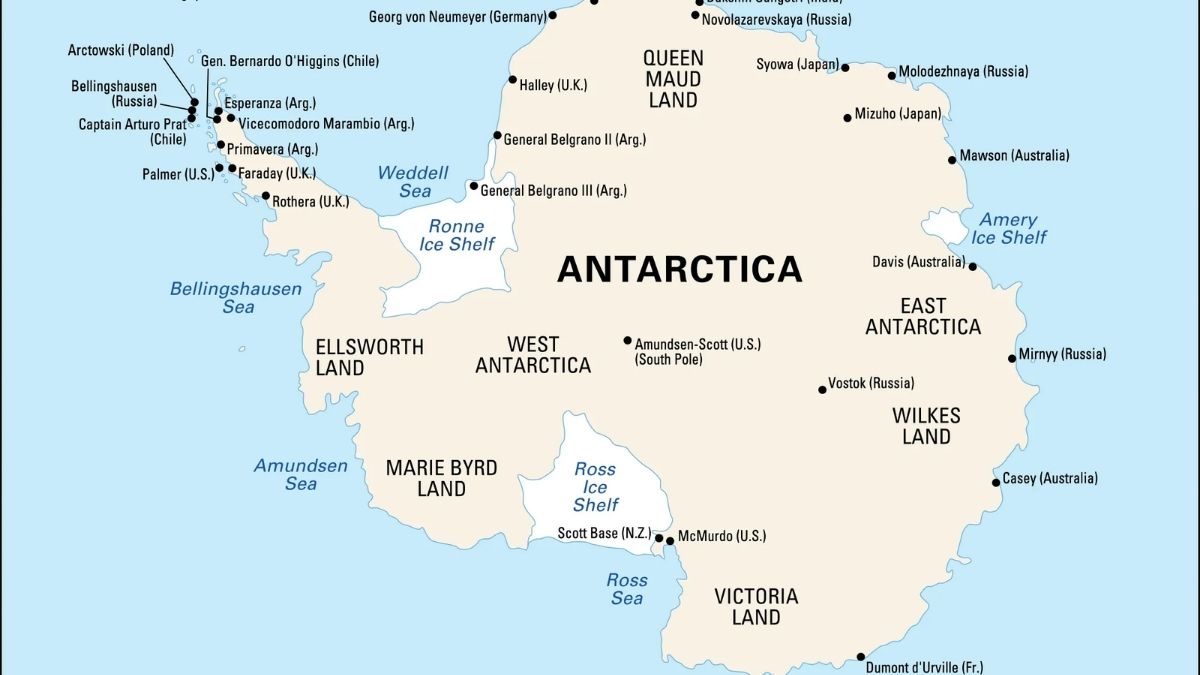
Source: Britannica
Why Antarctica is Called the Continent of Science
Antarctica has earned this title because it is only used for peaceful, scientific purposes.
The Antarctic Treaty was signed in December 1959; today, most nations support the Antarctic Treaty System, which reserves Antarctica only for research purposes and protects the environment.
Military operations, mineral exploitation, or nuclear testing are all prohibited in Antarctica.
As the only continent that is fully regulated by international cooperation and scientific purposes, Antarctica is unique.
The extreme conditions found in Antarctica offer scientists opportunities to research topics that are not available in other locations on Earth. In addition, the thickness of the ice in Antarctica contains climate data over the last several hundred thousand years.
Major Scientific Research in Antarctica
Many countries, including India, the United States, Russia, China, Australia, and many European nations, operate research stations in Antarctica.
It is used for many different areas of research, such as
-
Climate Science: The climate of Earth and the effect that human activity has had on it; how climate change and sea level rise can be seen from Antarctica's study.
-
Glaciology: Antarctica holds the majority, approximately 70%, of the world's freshwater in the form of ice, so studying glaciers helps researchers predict/understand fluctuations in global sea level.
-
Astronomy and Space Science: The Antarctic region is ideally suited for space observation due to its clear skies and low atmospheric interference; the South Pole Telescope is used to study Cosmic Microwave Background Radiation/Cosmic Origins.
-
Biology and Marine Biology: Even with its extremely harsh living environments, Antarctica has some of the Earth's most unique living organisms; understanding how living organisms adapt to harsh environments and why some survive where others do not may be a huge advantage to every species.
-
Geology: Studying rocks and rock formations can provide an understanding of the history of the Earth and how it has moved over time.
Many nations use several research stations, and several have established long-term commitments to study different types, methods, and technologies to explore and better understand Antarctica.
So, the scientific research conducted in Antarctica benefits the entire world. Data collected from this continent is shared internationally and contributes to global policy decisions on climate change, environmental conservation, and disaster preparedness.
Recommended Reading:





Comments
All Comments (0)
Join the conversation