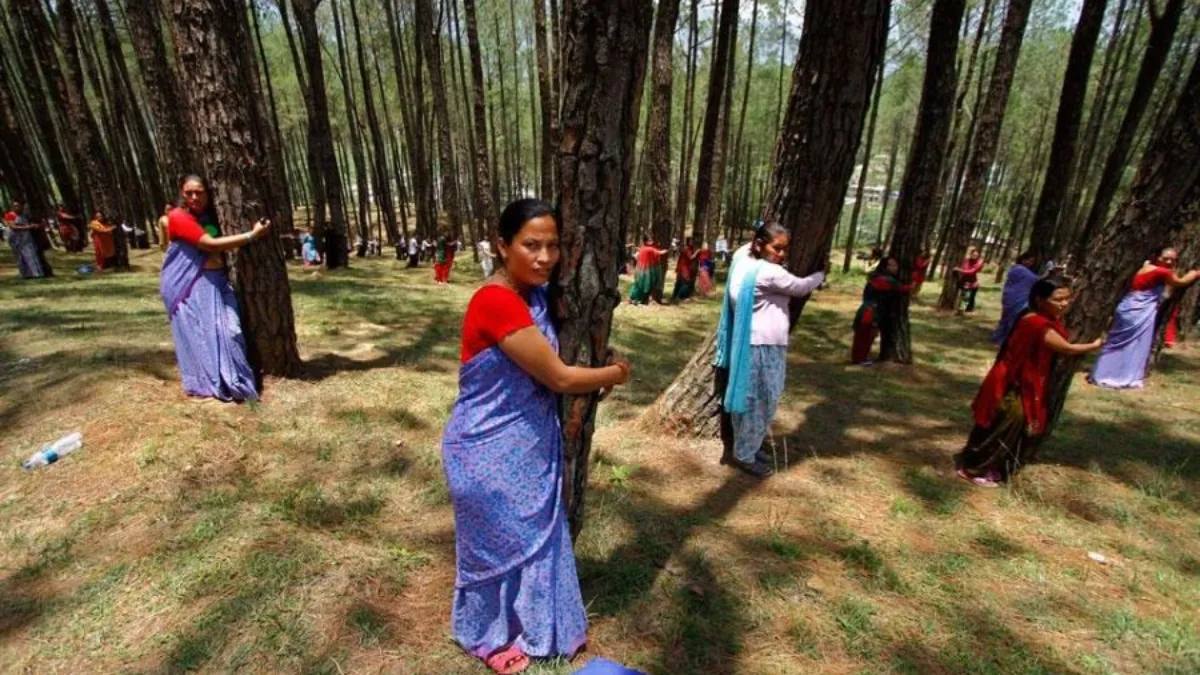
In September 1983, in Western Ghats, Karnataka, villagers started the Appiko Movement by literally embracing trees to prevent commercial logging, inspired by the landmark eco-protest called Chipko.
Under the leadership of Panduranga Hegde, this ground level movement conserved biodiversity hotspots that were important to the livelihood of the locals and led the way in sustainable forestry in South India.
Read along to know more about the Nonviolent tactics, policy victories and contemporary applicability.
How Did the Appiko Movement Start?
According to Cultural Survival, the forests of the Uttara Kannada district of Karnataka suffered wild deforestation during the 1970s-80s by timber mafia. State contracts favored monoculture emerald plantations, and export pressure on natural teak/rosewood supplies.
This washed soil, withered streams, and famished villagers with fuelwood, fodder, and woodland goods, were reflections of Himalayan menaces that spawned Chipko a decade ago.
The governance policies gave precedence to revenue at the expense of the ecology, and they preconditioned the community upheaval.
Who Started the Appiko Movement?
The fire for this movement was ignited on September 8, 1983, in the Salkani village (Sirsi taluk). The locals found out that there were deals to cut more than 12,000 trees in the Kalase forest.
Panduranga Hegde, an IIT dropout who became an activist inspired by Sunderlal Bahuguna organized 200+ men, women and children in human chains around trunks chanting folk songs in Kannada language (Appiko means embrace).
The 38 days of nonviolent satyagraha compelled the government to cancel contracts and it developed into three phases; protection, regeneration and policy advocacy in 13 districts.
What were the Strategies & Who Participated?
Gandhian nonviolence was mixed up with local culture: tree-hugging stayed axes, street plays taught about ecological chains, young people were planting native saplings on bare hills.
The frontline was made up of women, which resonated with the eco-feminism, with the Green Brigade organized by Hegde that led marches covering a million hectares.
The peaceful core was not marred with any arrests as sustainable alternatives to the plantations such as mixed cropping were emphasized.
What was the Environmental Impact of this Movement?
In the biodiversity hotspot of the UNESCO-listed Western Ghats, Appiko conserved more than 1 million hectares of biodiversity-important rain forests, and ensured that these lands were not turned into monoculture plantations, which degrade soil and biodiversity and instead were converted to mixed native forests as a source of sustainable fuels and fodder.
It mitigated landslides, replenished watersheds and modeled community-based conservation which affected the policy of National Forest in India.
What is the Difference Between Appiko vs. Chipko Movement?
Core Comparison: Appiko vs. Chipko
| Feature | Chipko Movement | Appiko Movement |
| Year / Region | 1973; Uttarakhand (Himalayas) | 1983; Karnataka (Western Ghats) |
| Primary Goal | Stop landslides & commercial felling. | Stop monoculture & protect biodiversity. |
| Method | Emergency "hugs" to stay axes. | Hugs + Folklore, plays, & re-planting. |
| Philosophy | Direct survival / Eco-feminism. | Sustainable use & long-term regeneration. |
Although both movements employed iconic tree-hugging to oppose deforestation, Appiko (1983, the Western Ghats of Karnataka) went beyond direct protection to highlight ecological awareness campaigns, regeneration of native trees and policy advocacy in the folk media such as street plays.
Chipko (1973, Uttarakhand Himalayas) was less structured regeneration and more so focused on stopping landslides through emergency hugs by charismatic leaders such as Sunderlal Bahuguna, and was not diluted into a non governmental organization (NGO) as Chipko would be later; Appiko was apolitical and youth oriented.
What was the Role of Women in the Appiko Movement?
The human chains at the front line of the 38 days of stand-off by Salkani were made up of women villagers including figures of Gaura Devi, eco-feminism as the main forest custodians against the contractors at point-blank.
They were there to symbolize cultural respect of mother earth and the media coverage and solidarity of the villages such as Chipko.
Hegde is in 70s and actively heads afforestation efforts of Green Brigade which has planted thousands of saplings annually and Appiko principles are manifested in the 2006 Forest Rights Act in India which provides tribal management rights. It shapes the current eco-tourism and anti-mining movements in the Western Ghats with the threat of climate.




Comments
All Comments (0)
Join the conversation