New Driving Licence and Vehicle Safety Rules Soon: Check Date, Key Mandatory Changes From 75% Marks, 0 Fee to Automatic Brakes, Crash Tests
Licensing authorities would review if applications to change licence details within 15 days, giving reasons for rejection. Also, the Ministry of Road Transport and Highways (MoRTH) has proposed new colour-coded driving licences for Indian and foreign nationals.
Recently, the Ministry of Road Transport and Highways (MoRTH) has proposed tighter driving licence rules, including raising the safe-driving tutorial test pass mark from 60% to 75%. Under the draft changes in Central Motor Vehicles Rules, the tutorial must last about 30 minutes. The ministry has also proposed waiving fees for select online licence services using Aadhaar authentication and eliminating charges for updating personal details, including names and addresses.
Licensing authorities would review if applications to change licence details within 15 days, giving reasons for rejection. Also, the Ministry of Road Transport and Highways (MoRTH) has proposed new colour-coded driving licences for Indian and foreign nationals.
Beside stricter driving license rules, India is also readying for a massive switch in vehicle safety standards, with the MoRTH laying down latest requirements for automatic braking, steering systems and lane-keeping technology.
All About Vehicle Safety Rules 2026 to be Introduced
This move aim to enhance road safety, lower collisions and bring Indian vehicles closer to global safety norms. However, the changes will be unveiled in phases, and car buyers will not see every feature becoming mandatory instantly.
1. Automatic Emergency Braking to Become Mandatory
The biggest proposed amendment is the launch of Advanced Emergency Braking Systems (AEBS) in passenger cars. The technology utlises cameras, radar or other sensors to detect possible collisions and automatically apply the brakes if the driver fails to respond in time.
Under the draft proposal, AEBS would become compulsory for latest passenger-car models from October 1, 2030. The requirement would encompass to all covered models from October 1, 2032.
The system is developed to prevent accidents to dimnish the severity of crashes when a collision cannot be prevented.
2. New Standards for Vehicle Steering Systems
The proposed rules also launch latest standards for steering effort. From October 1, 2027, covered motor vehicles would need to comply with the relevant Automotive Industry Standard, AIS-193.
The goal is to forge consistent safety requirements for steering systems and bolster vehicle control. Motorcycles, invalid carriages and three-wheelers without steering wheels are among those exempted.
3. Lane-Keeping Technology in Focus
Emergency Lane Keeping Systems (ELKS) can prevent a vehicle from unintentionally leaving its lane by offering warnings or corrective steering help.
Under the proposal, vehicles boosting of these systems would need to adopt AIS-191 (Part 1). The draft also proposes making lane-keeping and automatic command steering features compulsory for passenger vehicles registered as transport vehicles from October 1, 2029.
This could have special importancefor taxis and other commercial passenger vehicles.
4. More Safety Upgrades for Commercial Vehicles
Commercial vehicles are also witnessing stringent safety mechanisms. Present government moves provide for upgraded emergency braking systems in medium and heavy vehicles, alongside elevated braking standards.
Meanwhile, Electronic Stability Control (ESC) is expected to become mandatory for covered trucks from October 1, 2027. The technology helps drivers sustain control during sudden manoeuvres and braking.
5. Maximum Focus on Driver Assistance
The proposed revisions showcase a wider bid towards advanced driver assistance systems (ADAS). Technologies that survey dangers, assist steering and caution drivers of can offer an extra layer of safety.
6. Crash Tests to become Tough
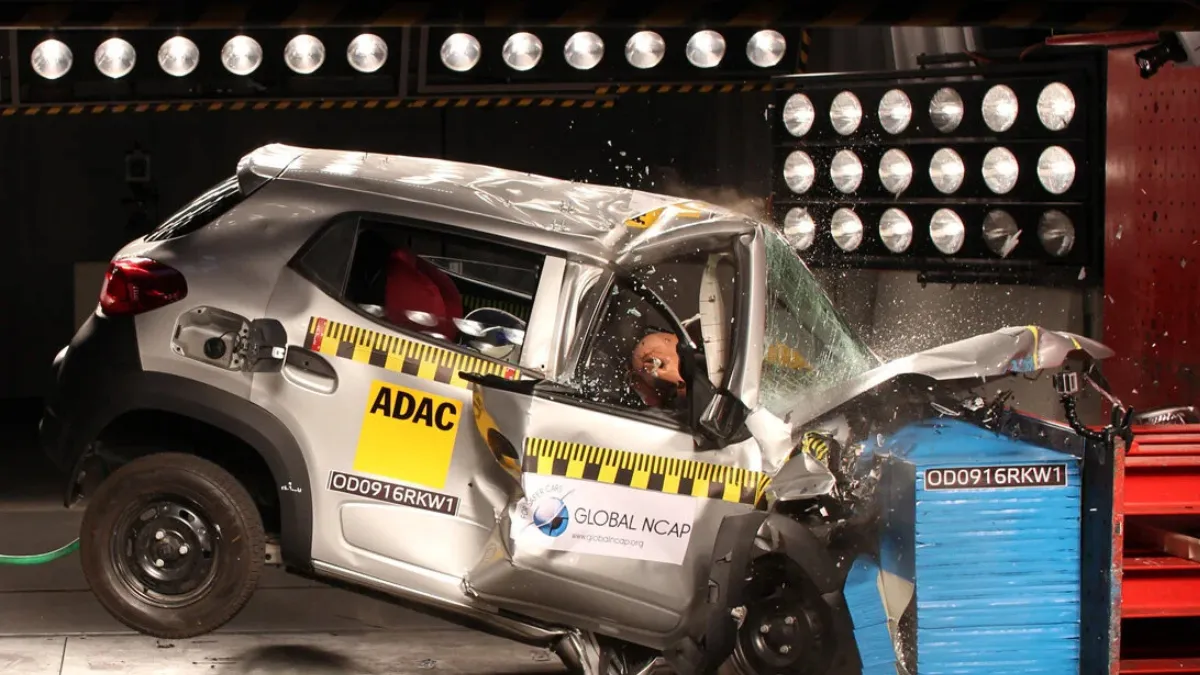
These rules will be executed alongside the government's voluntary programme, Bharat NCAP, which rates cars – in a scale of one to five stars – on safety standards. Bharat NCAP 2.0, a tougher and comprehensive set of crash-tests, is also set to be effective from October 2027.
New Car Safety Rules 2029 for Petrol and EV cars
The changed Automotive Industry Standard AIS-101 will lay rules for fuel systems following a rear-impact crash test. Under this, liquid-fuel systems must not develop more than slight leakage, while continuous leakage must not exceed 30 grams per minute.
The fuel system must also be developed so that a fire cannot be sustained following the impact. These rules prevent the risk of fuel escaping and catching fire after a rear-end collision.
The change rules will also apply for electric vehicles, thus boosting battery retention and protection against electrical dangers during and after a crash.

At Jagran Josh, she specialises in writing explainers and analytical stories on international news and current affairs. Over the years, she has developed strong expertise in leveraging digital and multimedia tools, along with SEO best practices, to enhance the speed, reach, and impact of her stories.