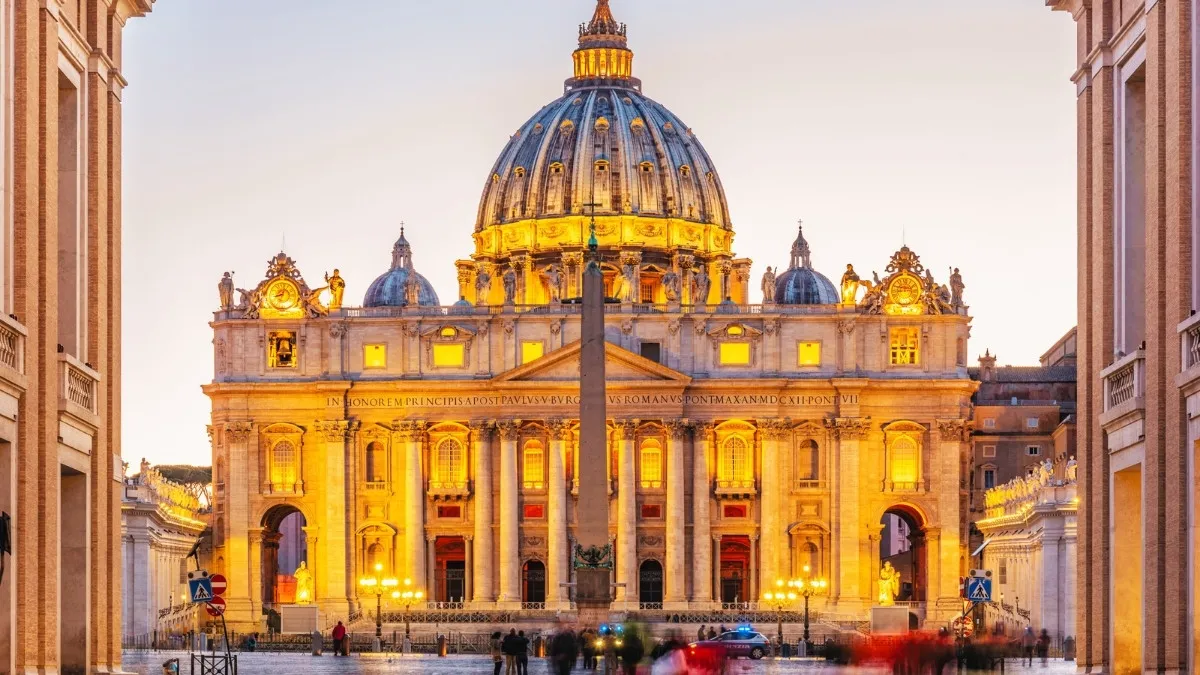
Vatican City is often described as the smallest country in the world, both in size and population. It officially became an independent state on February 11, 1929, after the signing of the Lateran Treaty between Italy and the Holy See. The treaty granted Vatican City full sovereignty, making it a distinct territory under the authority of the Pope. Today, Vatican City is recognized by most countries and international organizations as a sovereign entity, despite its tiny size and unique status.
Is Vatican City a Country or Not?
Yes, Vatican City is a country. It is an independent city-state, governed by the Pope and the Holy See. Vatican City is recognized as a sovereign state under international law and maintains its own government, laws, and institutions. The Lateran Treaty of 1929 formalized its independence from Italy, ending decades of political dispute over the Pope’s temporal authority.
What is the Capital of Vatican City?
The capital of Vatican City is Vatican City itself. As a city-state, the entire territory serves as its own capital. The city is located within Rome, Italy, and is home to important religious and cultural landmarks, including St. Peter’s Basilica and the Vatican Museums.
Why is Vatican City Famous?
Vatican City is famous for being the spiritual and administrative center of the Roman Catholic Church. It is home to the Pope, the Sistine Chapel, and some of the world’s most renowned art and architecture. The Vatican’s unique status as a sovereign state and its historical significance make it a major tourist and religious destination.
What is the meaning of the Vatican City flag?
The Vatican City flag features two vertical bands: yellow and white. The white side bears the papal coat of arms, which includes the keys of Saint Peter, symbolizing the spiritual and temporal authority of the Pope. The yellow and white colors represent the unity of church and state, while the keys signify the power to bind and lose, a reference to Saint Peter’s role in the church.
What is the Vatican City Population in 2025?
As of 2025, Vatican City’s population is estimated to be around 800 residents. The majority of the population consists of clergy, Swiss Guards, and other staff members who work for the Holy See. Vatican City does not have a native civilian population and its citizens are usually those employed by the Vatican or married to citizens.
When did the Vatican become a country?
Vatican City became a country on February 11, 1929, when the Lateran Treaty was signed between Italy and the Holy See. This treaty ended the "Roman Question," a dispute over the Pope’s temporal power, and established Vatican City as an independent state under the Pope’s authority.
What is the main currency of the Vatican City?
The main currency of Vatican City is the Euro. Vatican City mints its own coins, which are legal tender and feature the Pope’s image. These coins are highly collectible and are used within the Vatican and throughout the Eurozone.
Conclusion
Vatican City is a unique sovereign state, recognized worldwide as the smallest independent country. Its status, history, and role as the center of the Catholic Church make it a fascinating subject of international interest and respect.




Comments
All Comments (0)
Join the conversation