Key Points
- ITA announced Feb 2026: Structural realignment integrates Indian manufacturing into the U.S. supply chain.
- Zero-duty access granted for generic drugs, processed diamonds, and silk in the U.S. market.
- Tariffs capped at 18% for textiles, machinery, and broader goods, boosting Indian exports.
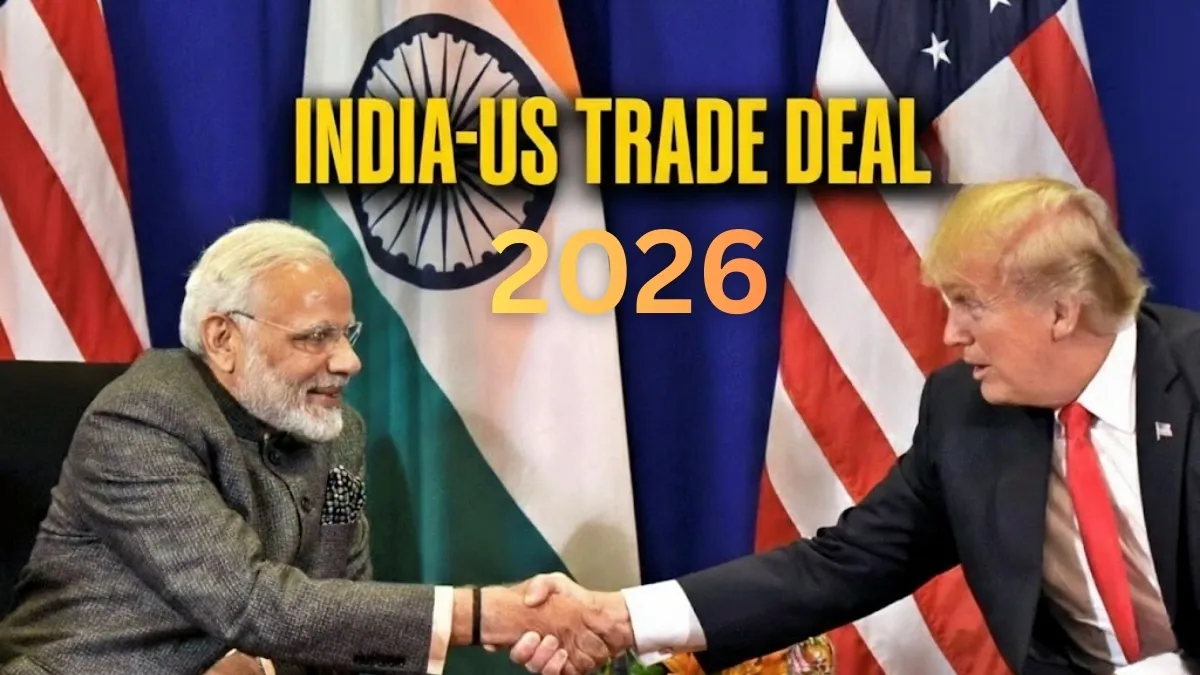
India-US Trade Deal: Both countries' announced Interim Trade Agreement (ITA) on February, 2026, has sent a wave of relief through the Indian corridors of power. After nearly a year of trade friction, the "reset" is here. This deal is not merely a reduction in taxes; it is a structural realignment that integrates Indian manufacturing into the heart of the U.S. supply chain.
The India–U.S. Bilateral Trade Agreement marks a major milestone in India’s global trade engagement, securing sustained preferential access for Indian exports in the U.S. market valued at over $30 trillion. The agreement delivers comprehensive tariff rationalisation, zero-duty access across large product categories, enhanced digital and technology cooperation, and a carefully calibrated framework to safeguard India’s farmers, MSMEs and domestic industry.
Top India Sectors Will Get Benefit the Most
1. Textiles & Apparel: Indian garment exporters faced a daunting 50% tariff, making "Made in India" products prohibitively expensive. Tariffs are now capped at 18% where with silk securing 0% duty access in a USD 113 billion U.S. market. This puts India at a distinct advantage over China (35%) and even slightly ahead of Bangladesh (20%) and Vietnam (20%). Expect a 20-25% surge in order volumes for the 2026 holiday season in the U.S.
2. Pharmaceuticals: India is Guarding the "Pharmacy of the World", the U.S. has granted zero-duty access for generic drugs and essential antibiotics. It will the Benefit broader goods face 18%, critical medicine exports will pay 0%. This move is intended to de-risk the U.S. healthcare system from reliance on non-aligned nations. Indian pharma giants with large FDA-approved facilities stand to see immediate margin expansion.
3. Gems & Jewellery: Surat and Mumbai's diamond hubs have struggled with high entry costs. The 2026 deal completely removes tariffs on processed diamonds and lab-grown stones. 0% duty on value-added jewellery, targets the high-margin U.S. luxury market, where India already holds a 30% global market share.
4. Auto Ancillaries: India has secured a Preferential Tariff Rate Quota (TRQ) for automotive components, particularly for the burgeoning Electric Vehicle (EV) sector. A guaranteed volume of parts can enter the U.S. at sub-10% rates, with the remainder capped at 18%. As the U.S. pulls back from Chinese-sourced batteries and sensors, Indian engineering firms are now the preferred tier-2 suppliers for Detroit.
5. High-Tech & Data Infrastructure: The "Tech Pivot" is the hidden engine of this deal. India has committed to purchasing $500 billion in U.S. energy and tech over five years. Reciprocal easing on the export of Graphics Processing Units (GPUs) and server hardware to India. This fuels India’s domestic AI growth, allowing local data centers to scale with the latest American silicon at lower costs.
6. Manufacturing Sector: The agreement provides a significant boost to India’s machinery and parts sector by improving access to one of the largest industrial markets in the world. Tariffs on machinery exports have been reduced from 50% to 18%, opening enhanced opportunities in the U.S. machinery market valued at USD 477 billion.
7. Zero Duty Access for Agricultural Exports:The US will apply zero additional duty on Indian exports worth USD 1.36 billion. Key products include spices, tea and coffee and their extracts such as copra and coconut oil, vegetable wax, nuts, fruits and vegetables, cereals, bakery products, juices and jams. Within this agricultural products valued at USD 1.035 billion have been assured zero Reciprocal Tariff to avoid uncertainty, providing stability and predictability to Indian farmers and exporters.
| Sector | Old Tariff (2025 Peak) | New Tariff (Feb 2026) | Status |
| Generic Pharma | 50% | 0% | Top Priority |
| Gems & Jewellery | 25% | 0% | Massive Win |
| Aircraft Parts | 25% | 0% | Strategic Access |
| Textiles & Apparel | 50% | 18% | Restored |
| Leather & Footwear | 50% | 18% | Competitive |
| Machinery | 25% | 18% | Growth Path |
Also Read: India-US Trade Deal: US Slashes Tariffs to 18% Check Full Details





Comments
All Comments (0)
Join the conversation