India Sees One of World’s Fastest Poverty Declines With 496 Million Lifted Out in 12 Years: World Bank; What Caused This? Why Earning Gap Still Widens?
The World Bank also recorded a massive dip in the population living below the lower-middle-income poverty threshold of $4.20 per day, measured at 2021 purchasing power parity (PPP). The figure fell from 57.7 per cent in 2011 to 16.1 per cent in 2023.
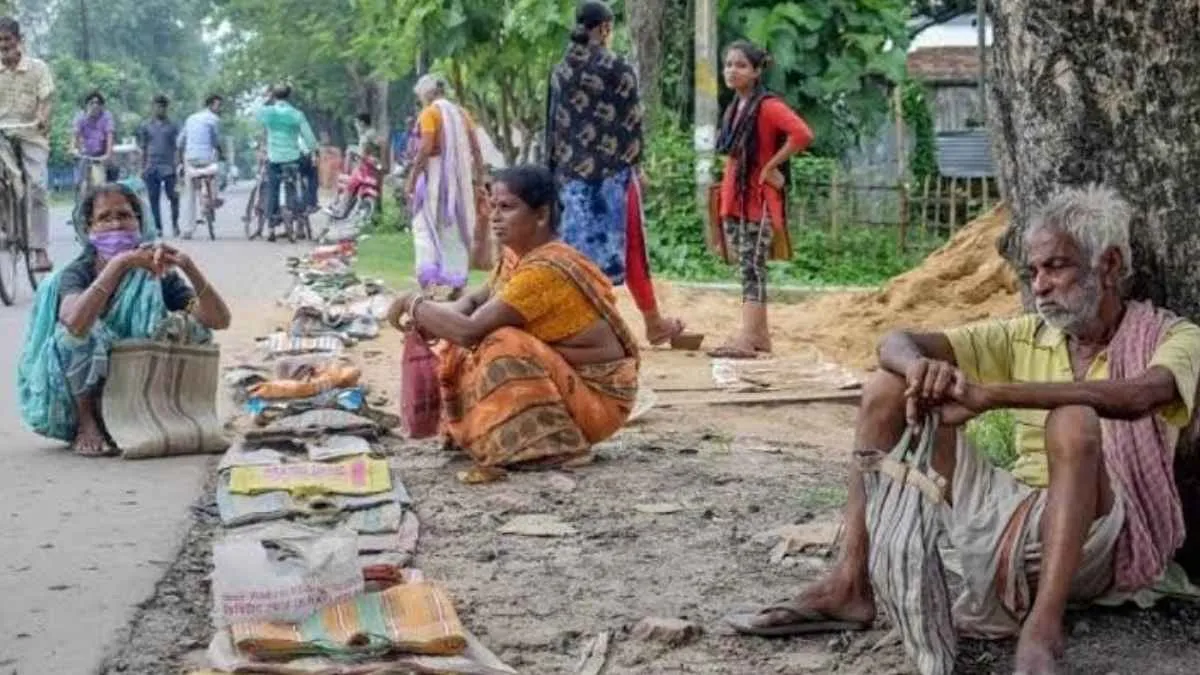
India has secured a substantial reduction in extreme poverty over the past 12 years, with the percentage of people below the extreme poverty line declining from 27.1 per cent in 2011 to 2.6 per cent in 2023, with an an estimated 496 million people moved out of poverty during this period, according to the World Bank's October 2026 Poverty and Equity Brief.
The report regarded India's progress as one of the fastest poverty reductions in the world, thus underscoring strides in household consumption, employment opportunities and access to government welfare programmes.
The World Bank also recorded a massive dip in the population living below the lower-middle-income poverty threshold of $4.20 per day, measured at 2021 purchasing power parity (PPP). The figure fell from 57.7 per cent in 2011 to 16.1 per cent in 2023.
What Helped India Reduce Poverty?
The report determined three primary reasons behind the improvement: strong consumption growth, increasing employment, especially among women, and expanded social welfare support, including food subsidies.
Employment rose by approximately 134 million people between 2017 and 2023, nearly twice the growth in the working-age population. A massive portion of this rise came from rural women entering paid employment, thus enhancing household financial state.
India has also made strides in reducing multidimensional poverty, which analyses deprivation beyond income, including access to education, healthcare and basic services.
According to the Oxford Poverty and Human Development Initiative's Multidimensional Poverty Index, poverty fell from 53.8 per cent in 2005-06 to 16.4 per cent in 2019-21. The World Bank's own multidimensional poverty measure stood at 15.5 per cent in 2022-23.
Why Regional Inequality and Unemployment Remain Concerns in India?
Despite the achievements, poverty remains concentrated in some regions in India. Around 57 per cent of India's poor population lives in areas extending from Uttar Pradesh to West Bengal.
The report also emphasised issues over employment quality and earnings. Real wages have stayed widely unchanged, while much of the employment growth has been limited to low-productivity activities.
Youth unemployment also rose from 14.6 per cent to 15.9 per cent between the first quarters of FY26 and FY27, with rural young women especially impacted.
World Bank Predicts Further Poverty Reduction
The World Bank expects poverty levels to dip further, although at a slower pace. Its forecast signalsthat the poverty rate at the $4.20-a-day threshold could drop from 14.2 per cent in 2026 to 12.1 per cent by 2028.
World Bank Shocking Findings: Top 10 % Indians Earn 13 Times More than Bottom 10
The World Bank's finding on the wage gap uncovers the vast contrasting gap in earnings between workers at the two ends of the income levels.
The report added that median earnings among the top 10% of workers were around 13 times those of the bottom 10% in 2023.
Thus, if a worker at the median of the bottom 10% earned Rs 1,000, a worker at the median of the top 10% would earn around Rs 13,000. This is an illustration of the ratio, not the actual figures recorded by the World Bank.
The comparison is between the median earnings of the two groups. It does not mean that every worker in the top 10% earns exactly 13 times more than every worker in the lowest 10%.
This is why the Gini index and the 13-times wage gap can coexist. The Gini index measures inequality across the final distribution, while the wage gap compares the median earnings of two relevant groups.
The World Bank also warned that its household surveys may not fully explain consumption among wealthier households and are may understate inequality.

At Jagran Josh, she specialises in writing explainers and analytical stories on international news and current affairs. Over the years, she has developed strong expertise in leveraging digital and multimedia tools, along with SEO best practices, to enhance the speed, reach, and impact of her stories.