Hindu Succession Act Clarified by SC: Son Has No Right On Father's Inherited Property; What About a Daughter? Inheritance Rules Explained
A bench of Justices Augustine George Masih and Sunita Agarwal passed the verdict on November 6, 2026, while dismissing an appeal filed by a man seeking half of a property granted to his father after the partition of his grandfather’s estate.
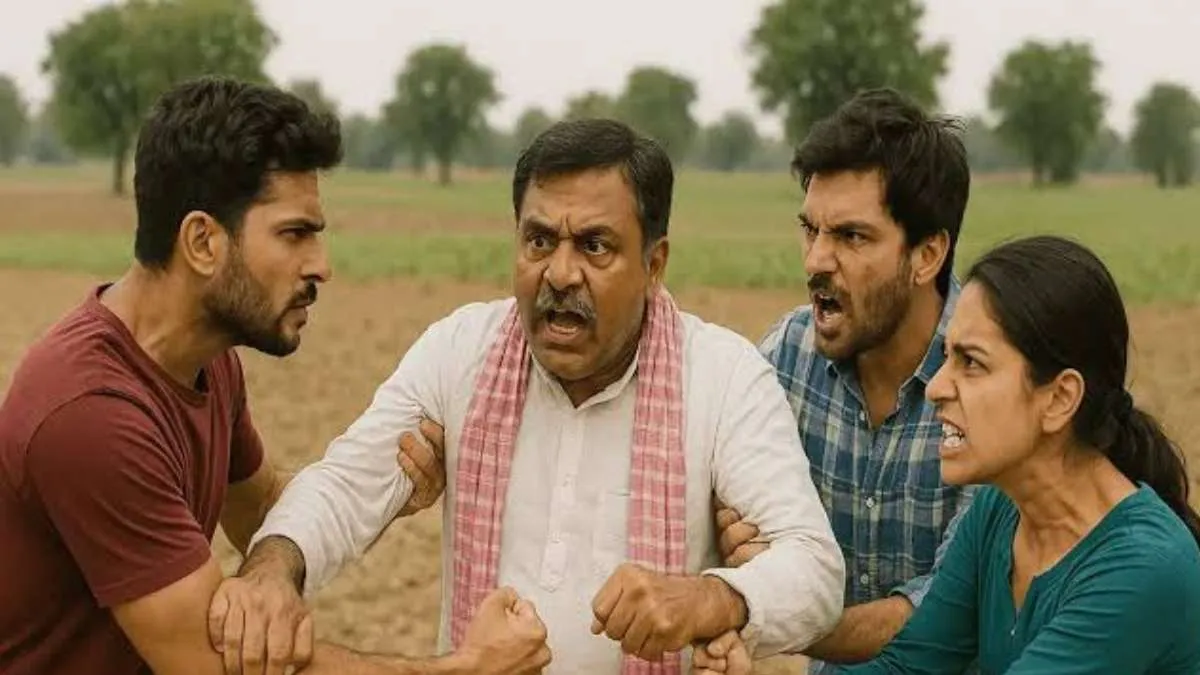
In a big verdict, the Supreme Court of India has clarified that a grandson cannot automatically claim a share in his grandfather’s property if the estate has already been divided among the grandfather’s legal heirs and the grandson’s father has secured an individual share. The ruling underscores a vital distinction between ancestral property and property inherited under the Hindu Succession Act, 1956.
A bench of Justices Augustine George Masih and Sunita Agarwal passed the verdict on November 6, 2026, while dismissing an appeal filed by a man seeking half of a property granted to his father after the partition of his grandfather’s estate.
What was the property dispute about?
The case concerned a 1,811-square-foot property in Chennai that originally belonged to the appellant’s grandfather, N Ramakrishnan.
In 1993, the grandfather’s daughter filed a partition suit wanting division of the estate. A compromise decree passed in February 1994 which granted the disputed property to the appellant’s father.
The grandson, who was born in January 1994, later argued that he had secured coparcenary rights in the property by birth. In 1997, his father sold the land to two buyers.
The grandson, who was a minor at the time, filed a lawsuit through his mother, demanding partition and ownership of half the property. A trial court initially adjourned in his favour. However, the appellate court reversed the judgement, and the Madras High Court upheld that order.
Why did the Supreme Court reject the grandson’s claim?
The Supreme Court invoked Section 8 of the Hindu Succession Act, 1956, which governs the distribution of property when a Hindu male dies without leaving a will.
Under the rule, property passes to Class I legal heirs, including the deceased’s widow, sons and daughters. These heirs get their respective shares simultaneously. A grandson whose father is alive is not independently entitled to inherit directly from the grandfather under this order.
The bench further reasoned that property inherited by a son under Section 8 becomes his individual property and does not naturally becomes joint Hindu family property for his own children.
The court also referred to its previous judgment in CWT v. Chander Sen, which stated that inheritance under Section 8 gives the heir possession in a personal capacity.
What does the ruling mean for property rights?
The court enforced that once the grandfather’s estate was divided and partitioned, the joint coparcenary ends. Each legal heir became the sole owner of the property given to them.
It also dismissed debates based on Section 6 of the Hindu Succession Act and Section 29A of the Tamil Nadu amendment, finding that these provisions did not apply to the situation of the case.
The Supreme Court added that the grandson had not contested the 1994 partition decree or the related sale deeds.
Does this mean children have no rights in ancestral property?
The judgment does not rejects children's rights in actual coparcenary property, where applicable. The legal stance is based on how the property was inherited, whether it has its joint-family nature and a valid division took place.
The primary takeaway is that property inherited by a father under Section 8 does not automatically grant his son a birthright.
Supreme Court Clarifies Women's Inheritance Rights Over Agricultural Land
Besides the son’s rights, the Supreme Court had also clarified that a Hindu woman's restricted ownership of inherited agricultural land can become absolute under Section 14(1) of the Hindu Succession Act, 1956. In the case of Sultan Singh vs Financial Commissioner, Government of NCT of Delhi, the court stated that a widow who inherited agricultural land before the Delhi Land Reforms Act, 1954, could become its full owner under the 1956 law. The court added that succession must be determined by her ownership status at the time of death, thus bolstering women's property rights and inheritance claims.

At Jagran Josh, she specialises in writing explainers and analytical stories on international news and current affairs. Over the years, she has developed strong expertise in leveraging digital and multimedia tools, along with SEO best practices, to enhance the speed, reach, and impact of her stories.