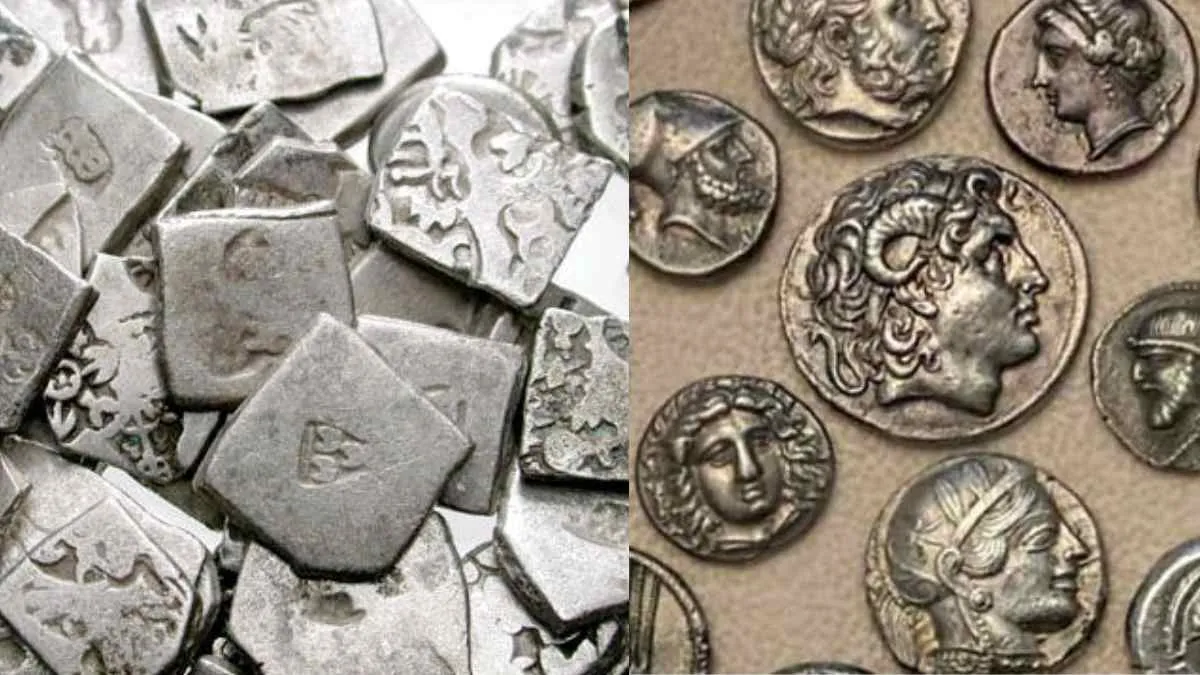
Coins have played a major role in every human civilization as a means of trade and as an indicator of power, control, and culture in a society. For example, in India the use of coins has existed for over two and a half thousand years, providing insight into the economic and political development of this ancient nation. As coins provided an easier way for leaders to control trade, collect taxes, and demonstrate their authority, the introduction of coins represented a milestone in India's history.
The first coins were made by the ancient kingdoms known as Mahajanapada, which produced the earliest punch-marked coins. Later, during the period of the medieval rulers, Sher Shah Suri was one of the first rulers to develop a more standardized silver currency with the creation of silver coins called 'Rupiya'. By exploring the history of coins, one can gain a better understanding of how India evolved as a nation and eventually developed its government, economy, and monetary systems.
Check Out: Who Was the First King to Build a Planned Capital City in India?
The Earliest Coins in India: Punch-Marked Coins
The earliest coins in India, known as Punch-Marked coins, were developed during the 6th to 5th Century BCE period. Punch-Marked Coins were created by the Mahajanapadas, and were created by several kingdoms in ancient India such as Magadha and Kosala. Punch-Marked Coins were made mostly from silver and did not conform to any shape or size. The punch marks on these coins represented the types of authority, religious symbols or trade guilds.
Although Punch-Marked Coins were not standardised in the way that modern coins are, Punch-Marked Coins played a vital role in creating trade and commerce as well as taxation in ancient India.
Sher Shah Suri's First Coin: The Rupiya
Although Punch-Marked Coins were the first coins in India, Sher Shah Suri introduced the first standardised silver coin in India. The Rupiya was introduced in the year 1540 - 1545 CE by Sher Shah Suri, who was the first Emperor of the Mughal Empire.
The Rupiya weighed 178 grains of silver. The Rupiya provided a basis for the modern Indian rupee, as well as provided a standardised monetary system throughout his empire, making it possible to easily conduct trade and collect taxes.
Conclusion
The first kings to issue coins in India were the Mahajanapada Kings. They were also the first to introduce punch-marked coins during the 6th-5th centuries BCE. Nevertheless, the first standardised silver coin has been credited to Sher Shah Suri, who established the Rupiya as currency in the 16th century CE. Appreciating the way that coinage documents the evolution of economics, governance, and culture in India and the significance this legacy continues to have today.





Comments
All Comments (0)
Join the conversation