Ajanta Caves vs Ellora Caves: Which Is Better For Rock-Cut Architecture Study? Explain Here
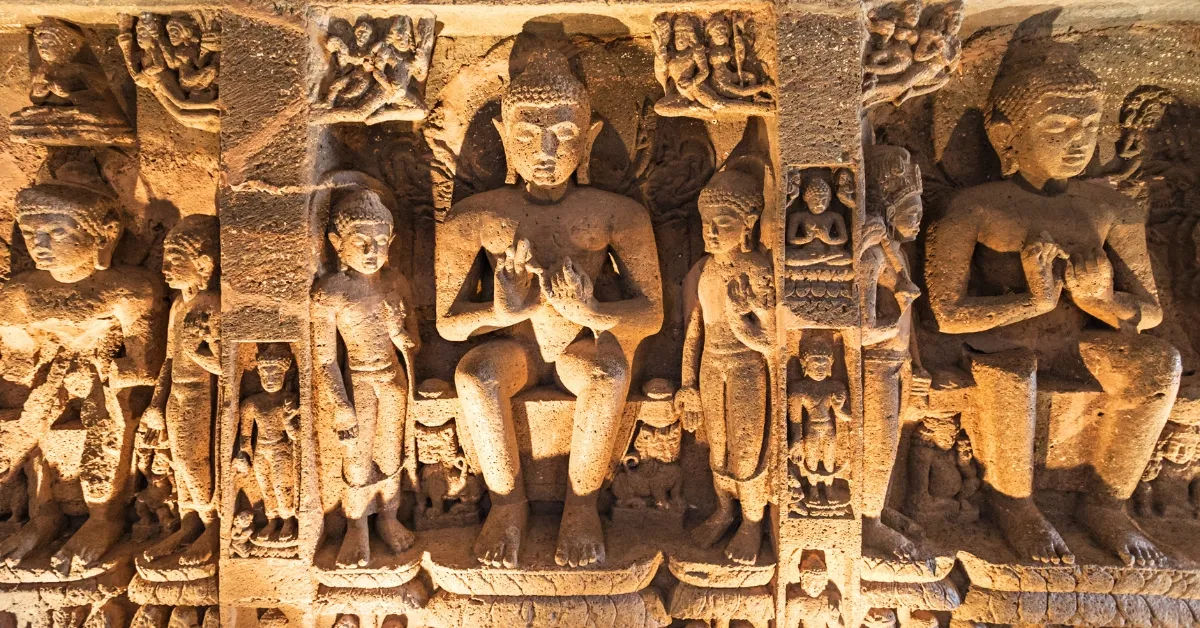
Ajanta Caves focus exclusively on ancient Buddhist rock-cut architecture, intricate Chaityas, and stunning murals. The Ellora Caves showcase structural diversity with monolithic marvels like the Kailash Temple across Buddhism, Hinduism, and Jainism. Ellora provides broader architectural studies, while Ajanta excels in classical Buddhist art.
Key Points
- Ajanta & Ellora Caves constructed 2nd Century BCE - 10th Century CE in Maharashtra.
- Ajanta: Buddhist monuments & ancient paintings; Ellora: Multi-faith, advanced structures.
- Both UNESCO sites since 1983; Ellora's Cave 16 is world's largest monolithic excavation.
Ever wondered how ancient people managed to construct massive temples from solid rocks? No machine was available, yet some amazing constructions were constructed. These are the famous Ajanta and Ellora Caves. The caves are situated in the district of Chhatrapati Sambhajinagar (earlier known as Aurangabad), Maharashtra, India.
These caves were constructed between the 2nd century BCE and the 10th century CE by various dynasties. The caves are an iconic representation of ancient Indian rock-cut architecture. In this article, we will compare and contrast some important aspects and decide which cave gives you the ultimate lesson in rock-cut architecture.
Ajanta Caves vs Ellora Caves: Which Is Better For Rock-Cut Architecture Study?
The Ajanta Caves are dominated by 30 Buddhist monuments carved out of rocks that emphasise interior designs, pillared halls, and ancient paintings. The Ellora Caves, on the other hand, comprise 34 large caves representing Hinduism, Buddhism, and Jainism.
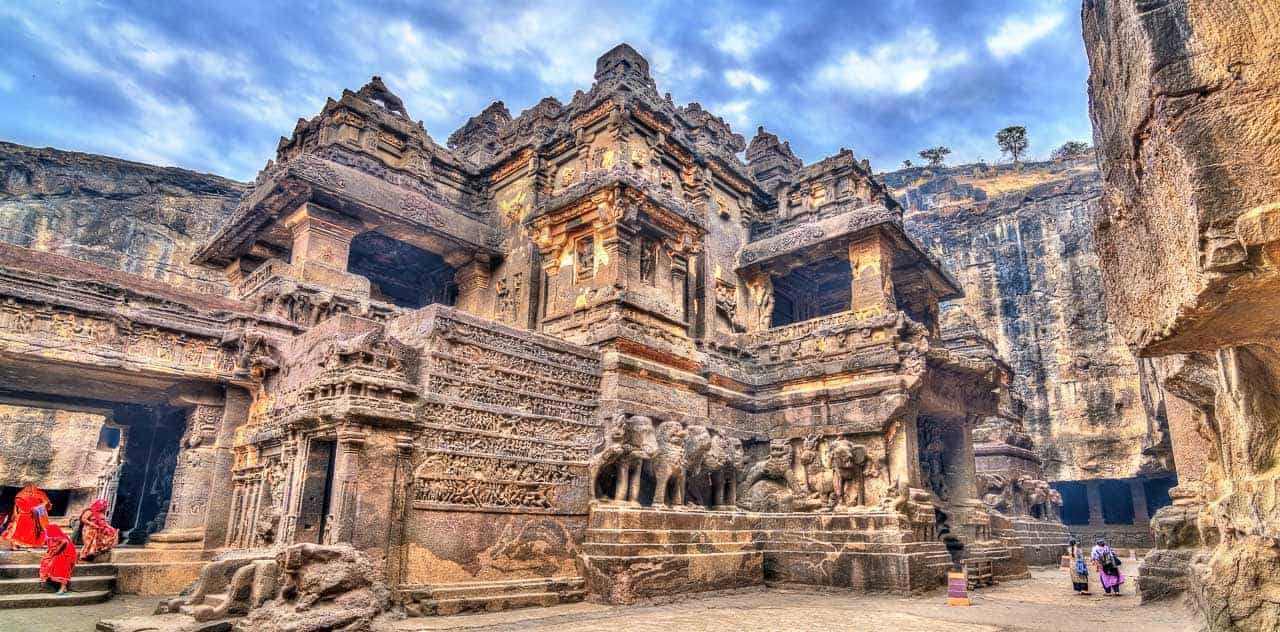
The Ellora reveals advanced structural cuttings, multistoried buildings, and extensive excavations from top to bottom, such as the Kailash Temple.
| Feature | Ajanta Caves | Ellora Caves |
| Total Major Caves | 30 caves (5 Chaityas, 25 Viharas) | 34 caves open to the public (out of 100+) |
| Religious Focus | 100% Buddhist | Multi-religious (17 Hindu, 12 Buddhist, 5 Jain) |
| Time Period | 2nd Century BCE to 6th Century CE | 6th Century CE to 10th Century CE |
| Key Architectural Highlight | Vaulted prayer halls, rock stupas, and wall paintings | Monolithic excavations and multi-storeyed structural temples |
| UNESCO Inscription Year | 1983 (Criteria i, ii, iii, vi) | 1983 (Criteria i, iii, vi) |
| Carving Style | Horizontal cut into horseshoe ravine cliff | Top-down vertical cutting & sloping basalt hill cuts |
In case you want to focus on engineering aspects related to rock-cut architecture, then Ellora Caves would be a better option.
Whereas Ajanta is globally renowned for its ancient wall paintings, Ellora is truly a wonder of architecture. In Ellora, the artists have worked by directly cutting through volcanic basalt rock. Cave number 16 at Ellora is considered the world’s largest monolithic rock excavation.
More than 200,000 tonnes of solid rock were removed from the top to the bottom of the mountain range. You will be able to see entire free-standing temples, bridges, balconies, and staircases cut out of a single rock.
Conclusion
Both Ajanta and Ellora are the best examples of Indian artistry in ancient times, receiving millions of tourists each year. If you want to examine ancient Buddhist art, cell designs, and colours that have been preserved for two thousand years, Ajanta is the place to visit.
For technical study alone, however, with its stone excavation techniques and massive structure, Ellora wins out. Its world-famous top-down technique of rock carving and its multi-faith temples make it the ultimate textbook of rock engineering.

Kriti Barua is a skilled digital journalist and communications professional with 4+ years of experience, currently writing for the General Knowledge section at Jagran New Media. She has established herself as a subject matter expert in History, Geography, Trending National and International News, Sports, Science, and Defence, producing clear, reliable, and search-optimised content that connects with readers worldwide.
Kriti holds a BA degree from Delhi University and a one-year diploma in TV Production and Journalism, an academic background that adds research depth and strong storytelling instincts to her writing. Her experience spans brand writing, content marketing, and digital media, giving her a sharp understanding of what makes content both helpful to readers and visible in search.
At Jagran New Media, she applies this expertise to national and international news coverage, query-based articles, and in-depth pieces across her specialist subject areas. Her content is defined by easy language, factual accuracy, strong keyword strategy, and reader-friendly storytelling.





![[लाइव] UPTET Result 2026: इंतजार खत्म! यूपी टेट रिजल्ट upessc.up.gov.in पर होगा घोषित, कैंडिडेट्स ऐसे कर सकेंगे चेक](https://img.jagranjosh.com/images/2026/August/782026/up-tet-result.jpg)