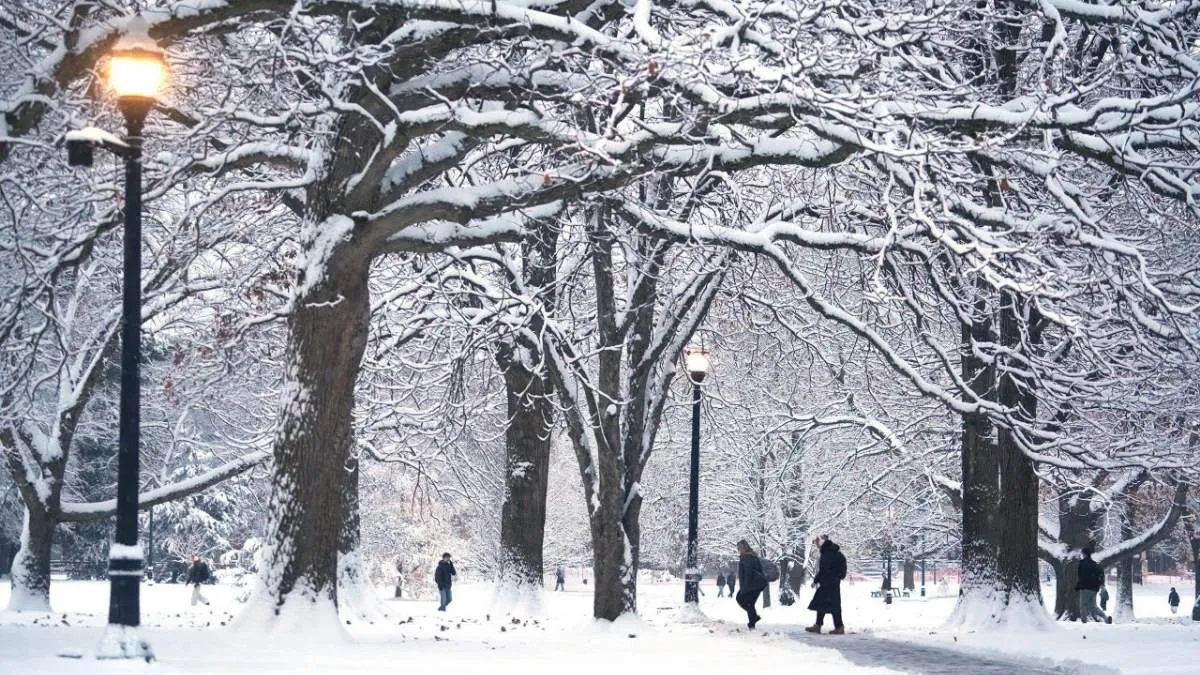
Each winter, millions of Americans face dangerous weather as snow, ice, and Arctic blasts sweep across the country. Most recently, the National Weather Service (NWS) issued winter storm advisories for six states: Alaska, Wyoming, Michigan, South Carolina, and Virginia. It forecasted up to 12 inches of snow between Sunday, December 7, and Monday, December 8, 2025.
Moreover, authorities warned residents to “be prepared for rapid changes in weather, visibility, and road conditions.” From Midwest lake-effect snow to powerful Northeast nor’easters, winter storms can shut down roads, cut power, and create life-threatening conditions. Through this guide, learn what winter storms are, where they hit hardest, and what Americans should do before, during, and after severe winter weather.
What Is a Winter Storm?
If you want to know what a winter storm is, then read about the weather system that brings a combination of heavy snow, strong winds, freezing rain, sleet, or dangerously low temperatures. In the U.S., winter storms can vary dramatically depending on the region:
-
Midwest & Great Lakes: This region is known for lake-effect snow and whiteout conditions
-
Northeast: The region is home to powerful northeasters that can shut down entire cities
-
Rockies & Plains: It often experiences blizzards with extreme cold and high winds
-
Western and Alaskan regions: The region gets frequent heavy snow, strong wind gusts, and mountain hazards
How Winter Storms Form in the U.S.?

(Credits: ABC News)
American winter storms typically develop when Cold Arctic air pushes south from Canada. Further, the moisture from the Atlantic, Great Lakes, or Pacific fuels snow and ice. This makes the Low-pressure systems intensify, and increases snowfall rates and wind speeds. Nor’easters, Alberta Clippers, and Pacific systems all influence U.S. winter weather patterns, making storms common from December to March.
List of 10 States Most Vulnerable to Winter Storms
Northern and mountainous states typically face the highest snow totals and coldest temperatures. While winter weather can strike almost anywhere, these states experience the most severe storms each year:
| State | Why It’s Vulnerable to Winter Storms? |
| Alaska | Highest snow totals and extreme cold and it repeatedly tops snow-risk lists. |
| Maine | Very high annual snowfall in parts of the state and strong nor’easter exposure. |
| New Hampshire | Mountainous terrain (Mount Washington) and heavy snowfall concentrations. |
| Vermont | Frequent heavy snow and ski-area accumulations; appears in snowiest-state lists. |
| Minnesota | Part of “Blizzard Alley”; heavy snow and extreme cold in the Upper Midwest. |
| North Dakota | Regular Arctic outbreaks and blizzard conditions across the Plains. |
| South Dakota | Frequent blizzards across the Plains; often grouped with ND/MN in storm-risk analyses. |
| Wisconsin | Lake-effect and heavy inland snow; highlighted in snowfall and storm-damage analyses. |
| Michigan | Major lake-effect snow belts and frequent heavy localised totals. |
| New York | Upstate NY sees heavy snow due to lake-effect storms and nor’easter impacts. |
Source: World Population Review, and Wikipedia
How to Prepare for a Winter Storm in the U.S. with Essential Safety Tips?
Every American should take steps as power can be shut off, travel can be haulted, and create dangerous conditions, during a winter storm:
| Before a Winter Storm | During a Winter Storm | If You Must Travel |
| Stock food, water, medications, and essentials | Stay indoors unless necessary | Keep an emergency car kit with blankets, snacks, water, scraper, and shovel |
| Prepare an emergency kit with flashlights, blankets, and batteries | Avoid driving in low visibility or icy conditions | Check official state road updates (511 systems) and weather alerts |
| Winter-proof your home (insulate pipes, seal drafty windows) | Keep devices charged in case of power outages | Tell someone your route and expected arrival time |
| Keep vehicles fueled and winter-ready | Use generators safely (never indoors) | Drive slowly; avoid sudden braking |
Winter Storm Warnings in the U.S. by NWS
The National Weather Service (NWS) issues warnings when storms could endanger lives. Recently, warnings were activated in Alaska, Colorado, Illinois, Iowa, Wisconsin, and Wyoming, with snow totals reaching up to 20 inches and winds up to 65 mph.
-
Alaska: Hyder 16–20 inches; Skagway & Haines 12–18 inches; winds up to 50 mph
-
Wisconsin & Iowa: Heavy snow moving east, slippery roads, low visibility
-
Wyoming: Sierra Madre & Snowy Ranges; outdoors could be life-threatening
Record-low temperatures are expected across the Midwest, Ohio Valley, and Mid-Atlantic, increasing risks of frostbite, hypothermia, and power outages.
You may also like to read: What the Moon will lool like on December 7, 2025?
Therefore, regardless of location, winter storms pose consistent risks each year. This makes preparedness essential, specifically in the U.S. Recognise NWS warnings, and follow preparation steps to protect lives and property. Stay informed, stay stocked, and stay safe.




Comments
All Comments (0)
Join the conversation