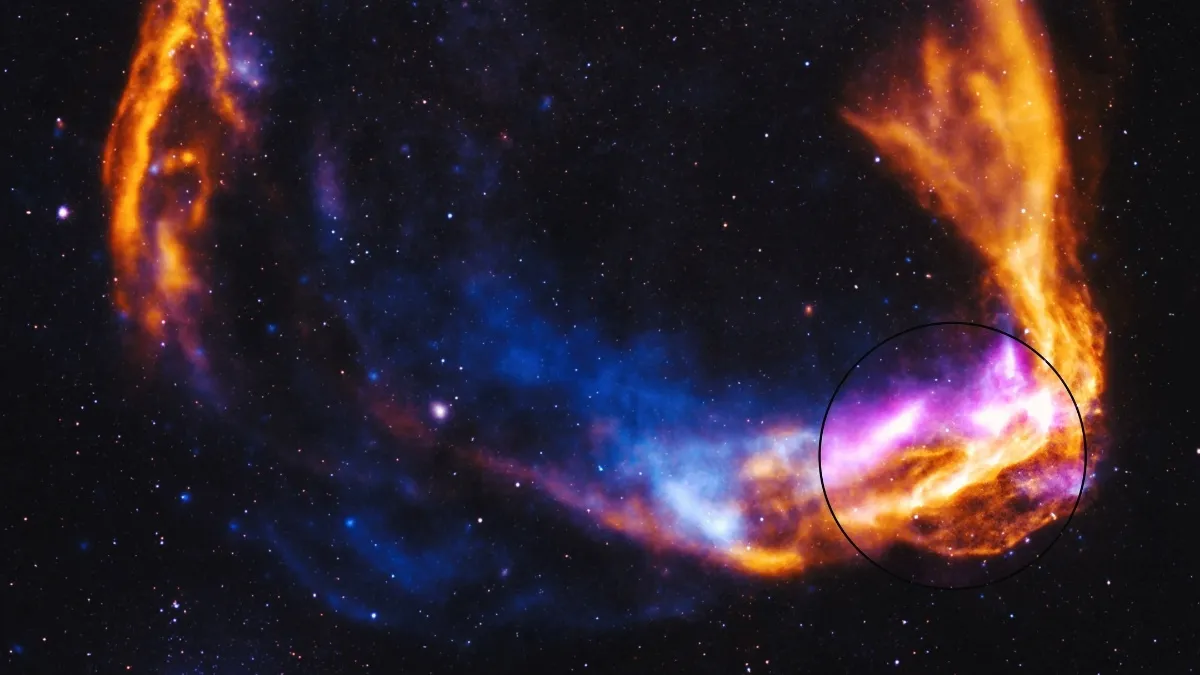
NASA's XRISM mission has revealed spectacular X-ray details of a 2,000-year-old supernova remnant, as announced on March 27, 2026.
This has rewritten our understanding of stellar explosions. NASA and JAXA's telescope, 330 miles above Earth, has used its Resolve telescope to observe RCW 86, the glowing shell of a supernova.
What makes it exciting is that it helps scientists study element creation in supernovas, crucial for life.
X-ray images penetrate through the dust, helping scientists detect temperatures ranging from 1 to 2 million degrees Kelvin. This helps scientists refine supernova evolution, especially in the space race of 2026.
Space Breakthrough: NASA’s X-Ray Mission Unlocks Mysteries of Ancient Supernova
XRISM's Resolve spectrometer has imaged the chaotic gas in RCW 86, and it's revealed the presence of silicon and sulfur in the outer shock of the blast.
The Chinese records of 185 AD first mentioned the guest star, now identified with this 150 light years wide nebula.
The mission's 6-eV resolution, five times better than Chandra's, is celebrated by astronomers as capable of deciphering the chemical signs of the exploded massive star.
Check: Trump: US Doesn’t ‘Have to Be There for NATO’
RCW 86: The Ancient Supernova's Story
RCW 86 is a vast expanse in the Australia sky, and its glowing filaments shine in X-ray light like a cosmic web.
NASA’s new view bears the characteristics of Type Ia explosions, in which a white dwarf star exploded through a merger of a companion star.
Iron K-alpha lines indicate nucleosynthesis, in which the material is slamming into the interstellar medium at 1,200 km/s, supporting computer simulations of the expanding remnant.
XRISM's Tech and Future Impact
The newly launched XRISM explores extreme worlds like black holes and galaxy clusters in unprecedented detail.
With its microcalorimeter cooling to 0.1 Kelvin, it will conduct precise spectroscopy to reveal plasma dynamics. Initial data also suggests remnant ages were underestimated, implying RCW 86 developed faster than thought.
More releases are planned, sparking new research on supernovae.
Read: NASA Astronaut Lost Ability to Speak in Space
The NASA look at an ancient star's death in X-rays sparks awe at new questions about the universe and rebirths of stars.



Comments
All Comments (0)
Join the conversation