
A series of stages are created as the Moon completes another cycle through its orbit. These stages provide alternating areas of light and dark on the Moon and are a result of the varying angles at which sunlight strikes the surface of the Moon. Over the lunar cycle of 29 and a half days, the Moon progresses through six separate stages. The Moon starts with a new phase, then progresses through the waxing crescent, first quarter, waxing gibbous to reach its fullest point of illumination (full Moon), before moving back down through the waxing gibbous, last quarter to new again.
All lunar phases have significance beyond mere observations. They provide the basis for many historically, culturally, and astrologically important dates. For instance, they continue to influence the calendar and many cultural events that occur either through human observation or referral to lunar phases.
Check Out: The History of Black Friday: How It Became America’s Biggest Shopping Day?
What are the different moon phases?
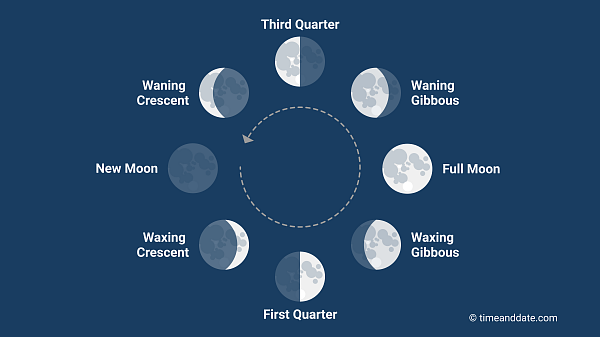
The eight main phases of the moon during the moon's 29.5-day cycle are as follows:
The moon revolves around the earth; thus, when the light from the sun hits, we see some of the illuminated half. Therefore, we refer to the phases of the moon.
1. The new moon is when the moon is positioned between the earth and the sun. The elumination (lighting) is hidden from the view of the Earth.
2. Waxing crescent - An illuminated sliver on the right of the moon is now present.
3. First Quarter - The moon looks like a full half circle illuminated on the right half of the moon
4. Waxing gibbous - The moon is more than a half-circle illuminated and close to a full circle, lit on both sides.
5. Full Moon - The entire face of the moon is illuminated and bright.
6. Waning gibbous - The lighting begins to lessen after full illumination.
7. Last quarter (third) is half-lit and illuminated on the left side.
8. Waning crescent - Only a small sliver of light remains; then the new moon reappears.
The full moon will repeat the above eight phases every month to give us the monthly routine.
What is today’s moon phase?
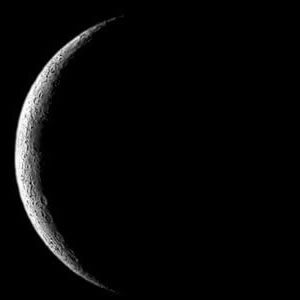
The Moon's current position (December 5) is in the Waning Crescent phase. The illuminated portion of the Moon will continue to decrease until it reaches the New Moon.
As the Moon transitions into this state, it will show up in the early morning hours as a thin crescent, becoming dimmer with each passing day.
This phase represents an opportunity for self-reflection and letting go of anything that no longer serves you in preparation for the next lunar cycle or New Moon.
When is the next full moon?
New Year (January 3, 2026), will mark the first full moon of 2026, also referred to as the "Wolf Moon." When this full moon rises, it will be completely illuminated and will appear very bright. The full moon will be visible immediately after sunset and will remain illuminated for the rest of the night.
Conclusion
Each year has a unique cycle of the Moon's phases, which adds to the beauty of the night sky through its own distinct rhythm. December might contain a supermoon, or it may completely lack one. However, regardless of a particular year's December phase and supermoon cycle, the Moon will continue to travel gracefully through the sky each evening, regardless of what happens within the December cycle.


-Don-Shula,-Bill-Belichick,-Chuck-Noll-1764934473361.jpg)

Comments
All Comments (0)
Join the conversation