Show Key Points
You must have heard about what Popular sovereignty is, being a citizen of the United States of America.
The main principle is the power and legitimacy of a government, which comes directly from its people. In short, it means the people are the ultimate authority, and leaders rule only with their consent.
This idea was deeply rooted in Enlightenment philosophy, and emphasises that citizens hold supreme power instead of the monarchs or elites. To learn more about the typically exercised practice through voting, representatives, and constitutional frameworks, keep reading the article.
What is the Meaning of Sovereignty?
Sovereignty means that it is the supreme authority to govern a community or nation. When paired with the word “popular,” it underscores that this authority comes from the people themselves, rather than a ruler or external power.
Check Out: What is the U.S. Senate?
What are the Key Principles of Popular Sovereignty?
The key principles of the Popular Sovereignty are given below:
-
Consent of the Governed: Governments are legitimate only if people approve their decisions.
-
Source of Power: Citizens are supreme, and the political leaders are public servants.
-
Active Citizenship: People exercise sovereignty by voting, holding representatives accountable, and participating in civic life .
Source: U.S. National Archives
What is the History of Popular Sovereignty?
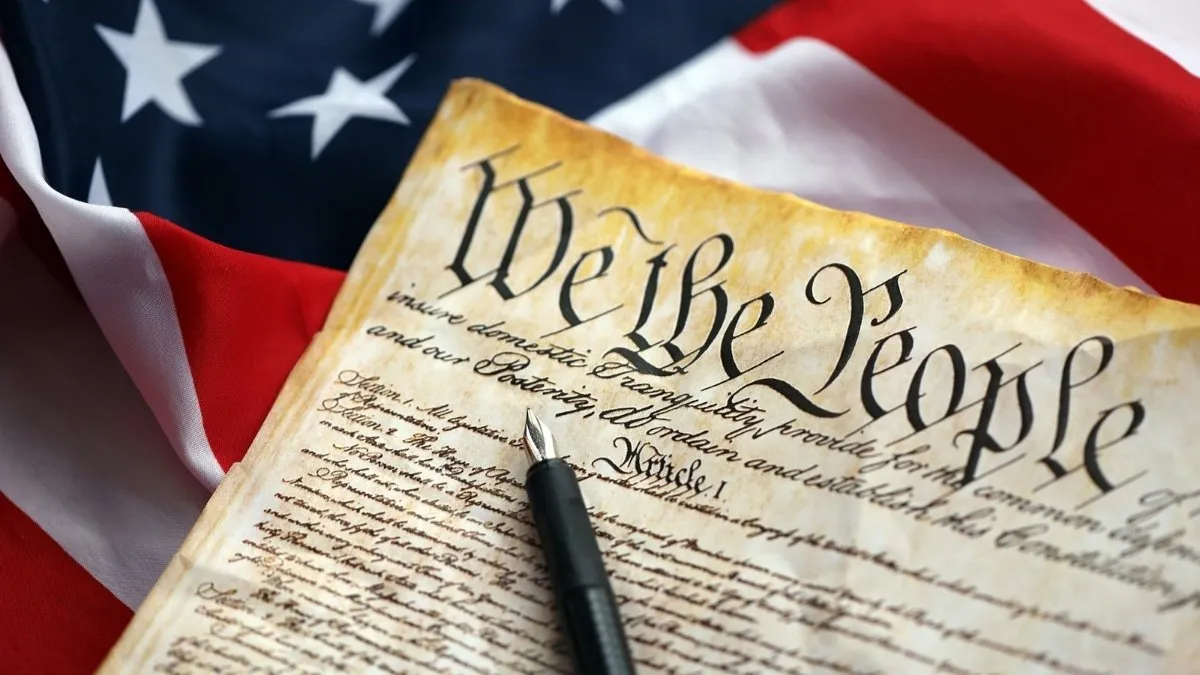
Popular sovereignty has a rich history in the United States. The U.S. Constitution famously begins with “We the People”.
The idea reflects the idea that the government draws power from its citizens. In the 19th century, the doctrine took a turning point with the concept of “squatter sovereignty”.
This allowed the settlers in new territories to decide on the legality of slavery, as per the Encyclopaedia Britannica, 2026.
A key example was the Kansas-Nebraska Act of 1854 was proposed by Senator Stephen A. Douglas. It repealed restrictions on slavery north of latitude 36°30′ and allowed residents to vote on whether slavery would be permitted.
The resulting conflict is known as Bleeding Kansas, which highlighted both the potential and the limitations of popular sovereignty as a method for resolving moral and political disputes.
What is the Significance of Popular sovereignty?
Popular sovereignty serves as a check against authoritarianism. By placing ultimate authority in citizens’ hands, it ensures governments remain responsive and accountable. However, it also comes with challenges. Decisions based purely on majority opinion can risk infringing on minority rights, so legal frameworks and constitutions are essential to balance power.
A simple sentence to use:
“Popular sovereignty ensures that the government rules only with the consent of the people.”
Conclusion
To conclude, popular sovereignty is the backbone of democracy. It links the citizens directly to the power and legitimacy of their government.
Check Out: What is the Nationalized Voting?
Its history, from Enlightenment philosophy to the U.S. political system, shows both its potential and its pitfalls. Through this concept, modern citizens can better appreciate the role of voting, civic participation, and public accountability in shaping society.