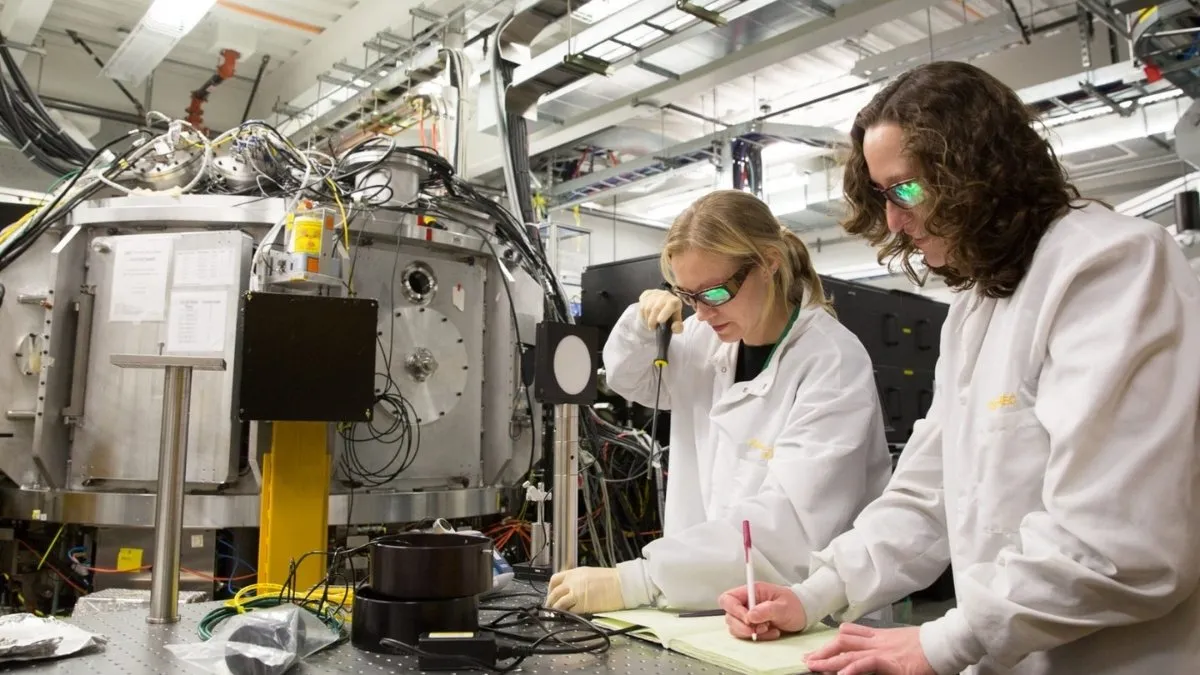
If you have ever wondered about the role of the U.S. Department of Energy National Laboratories, the answer lies at the heart of American science and innovation.
The United States Department of Energy National Laboratories are a system of 17 federally funded research institutions overseen by the United States Department of Energy (DOE).
These DOE laboratories tackle some of the country’s biggest scientific and technological challenges. From clean energy and climate research to nuclear security and advanced computing, everything falls under the operations of these national labs.
According to the DOE, the national laboratory system conducts research aligned with national priorities in energy, national security, environment and fundamental science.
How Many DOE National Laboratories Are There in the USA?
There are 17 DOE national labs across the United States. Sixteen operate as federally funded research and development centres (FFRDCs). These are managed by private contractors under DOE oversight. One lab, which is the National Energy Technology Laboratory (NETL), is operated directly by the DOE.
The system was established after World War II, building on the scientific infrastructure of the Manhattan Project.
Check Out: Where is the World War II Memorial?
What Is the Core Role of DOE Laboratories?
The role of DOE labs can be grouped into five key areas:
1. Scientific Research and Innovation
The DOE is the largest federal supporter of physical sciences research in the U.S. DOE national laboratories conduct long-term research in:
-
Clean energy and energy efficiency
-
Climate science
-
Materials science
-
Particle physics
-
Artificial intelligence
2. National Security
Three major security labs include the Los Alamos National Laboratory and Sandia National Laboratories. It supports the nuclear deterrence, nonproliferation and energy-related security missions.
3️. Technology Translation
DOE labs bridge the gap between early-stage research and commercial innovation. Many breakthroughs in batteries, advanced materials and grid technologies began in national laboratories before entering the private sector.
4️. Unique Scientific User Facilities
The labs operate world-class facilities such as:
-
Supercomputers
-
Particle accelerators
-
X-ray light sources
-
Neutron scattering centres
More than 30,000 researchers annually use these facilities, according to DOE Office of Science data.
5️. Environmental Stewardship
Labs such as NETL focus on carbon management, sustainable energy systems and environmental clean-up efforts.
Where are the 17 National Laboratories Located?
DOE labs are spread nationwide. A few examples include the following:
| Laboratory | Location |
| Oak Ridge National Laboratory | Tennessee |
| Argonne National Laboratory | Illinois |
| Lawrence Berkeley National Laboratory | California |
| Idaho National Laboratory | Idaho |
Together, they form an integrated national laboratory system serving academia, industry and government.
Why Are National Laboratories Important to the United States?
The DOE national labs are considered “big science” institutions. They manage infrastructure too large or complex for universities or private firms alone. Their work strengthens:
-
Energy independence
-
National defence
-
Climate resilience
-
Scientific leadership
Without these national laboratories in the USA, many large-scale research projects simply wouldn’t be possible.
Check Out: What is the role of the U.S. State Department?
How are DOE laboratories funded?
They are federally funded through Congressional appropriations to the Department of Energy.
In a nutshell, the U.S. Department of Energy National Laboratories serve as the backbone of American scientific research. From nuclear security to clean energy innovation, the DOE labs continue to drive discoveries that shape the nation’s future.



Comments
All Comments (0)
Join the conversation