
The state of Texas is famous for its large land area, significant historical significance, and distinct cultural and historical identity; however, many people are surprised when asked how many different cities have served as capital cities of Texas.
A direct answer to this question would be complicated due to the multiple sources of authority that have governed Texas over the years, including Spain, Mexico, the Republic of Texas, and finally, the United States.
Therefore, during its entire period of existence as an independent republic of Texas, there have been changes in the location of the capital; from the time of the establishment of the Republic of Texas until today, Austin has served as the official and permanent capital of Texas.
Below you will find an overview of each of the major capitals of Texas throughout its entire existence.
Check Out: List of Top 7 Famous Americans Who Studied at Stanford University
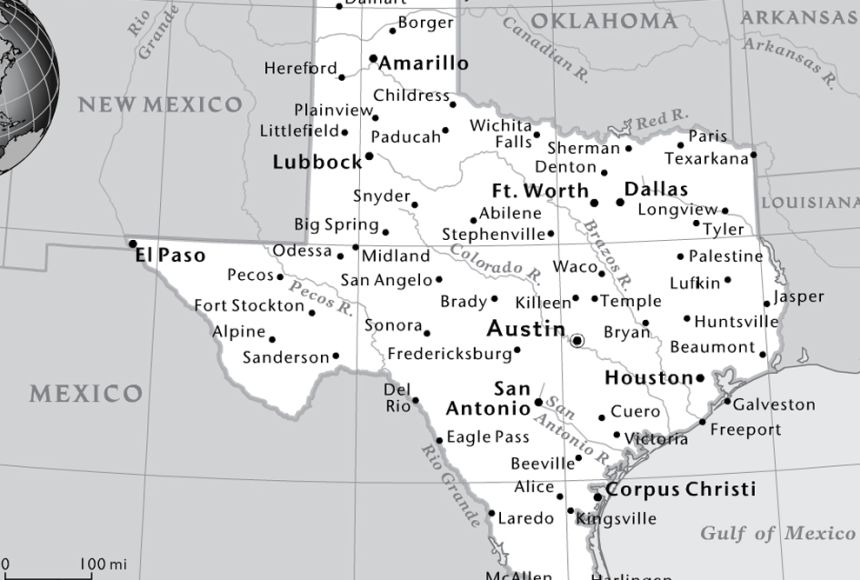
How many capitals does Texas have?
Source: National Geographic
Texas has had many capitals in its history. The Republic of Texas had at least seven different capitals, while there were also nine or more capitals used by Spanish and Mexican authorities when they occupied parts of Texas.
The current capital of Texas is Austin. Here are the total 8 capitals of Texas in history explained in detail below:
| Capital Name | Years / Period |
|---|---|
| Los Adaes | 1721-1772 |
| San Antonio | 1772-1824 |
| Saltillo | 1824-March 9, 1833 |
| Monclova | March 9, 1833-1835 |
| San Felipe de Austin | 1835-March 1, 1836 |
| Washington-on-the-Brazos | March 1-March 17, 1836 |
| Harrisburg | March-April 1836 |
| Galveston | April 1836 |
| Velasco | April–September 1836 |
| Columbia (West Columbia) | October 1836-April 1837 |
| Houston | April 19, 1837-1839 |
| Austin | 1839-Present |
Top 5 Major Capitals in Texas History
Here are the top 5 Major Capitals of Texas throughout history explained in detail:
1. San Antonio
San Antonio was a major hub for government from the time of Spanish rule until the Mexican government took over. It was also the largest and most important city in what is now Texas from the time it was founded until the year 1824.
San Antonio had control over military, political, and religious matters as well as law and order throughout the area it governed, from the southern portion of New Mexico (Zacatecas), through most of what would become Texas, and into the Gulf of Mexico.
2. Saltillo
In 1824, the Mexican Constitution brought Coahuila and Texas together under one capital Saltillo. In the years that Saltillo was capital, many of the first laws passed by the Mexican Congress to regulate and control the settlement of Texas, including Land Grants, Immigration Rules, and Lawmaking and Political Decisions.
3. Washington-on-the-Brazos
Washington-on-the-Brazos has been referred to as the "Birthplace of Texas" in 1836 because it is where, during the Texas Revolution, the delegates assembled to sign the Texas Declaration of Independence, creating the Republic of Texas.
4. Houston
The city of Houston, Texas became the Capital of the Republic of Texas following the War of Independence from 1837 to1839. Sam Houston, President of the Republic, chose Houston because he wanted to provide a better organized and stable government for the Republic.
In addition to being named after Sam Houston, Houston became the center of overall diplomatic activity for the Republic.
5.Austin
Austin became the Permanent Capital of Texas in 1839 due to its location in Central Texas, with the potential for growth. The village was first called Waterloo (meaning "Waterplace") and was selected to be the Capital by President Mirabeau B. Lamar, who believed it to be an ideal location for a growing Republic of Texas.
Conclusion
The evolution of Texas’ capital cities represents an on-going transformation from a colonial outpost to an independent republic, and now a territory within the United States. The capital city of Austin continues to serve as Texas’ permanent seat of government today.
Earlier locations across Texas mark periods of political trials, growth and development which contribute to the richness of Texas and provide insight into its complicated past. All capitals have contributed to the identity of Texas as it relates to its history and what Texas is today.



Comments
All Comments (0)
Join the conversation