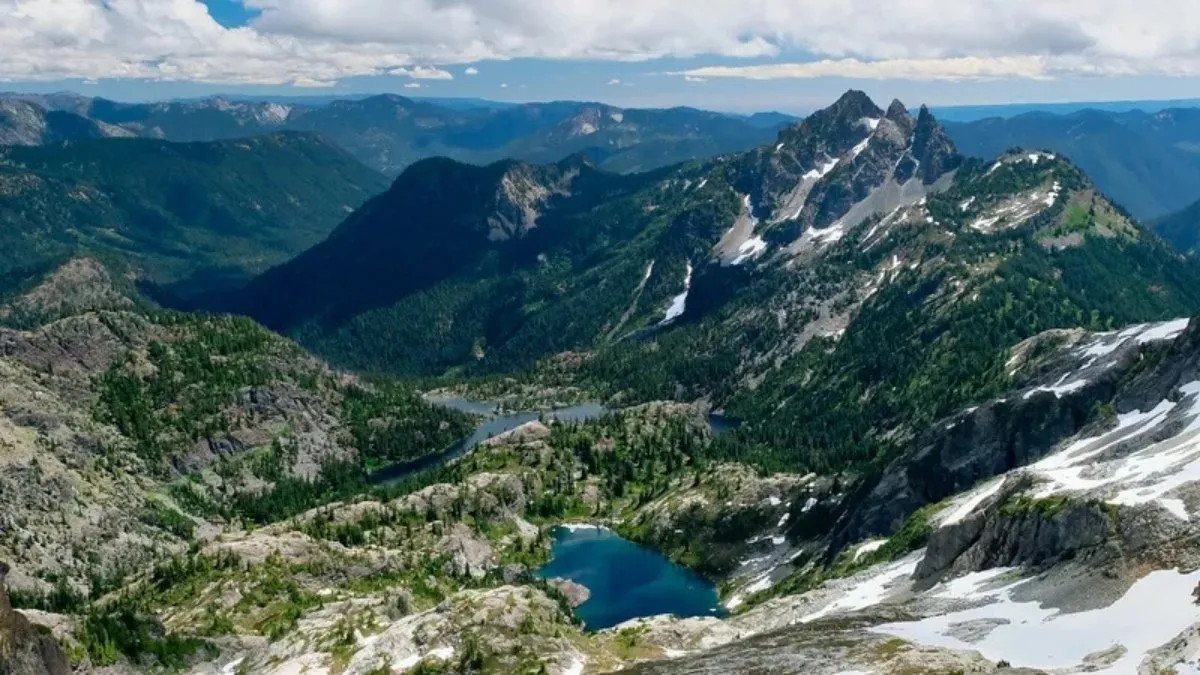
Do you know that the Cascade Range is also known as the Cascade Mountains or Cascadian Mountains?
It extends for more than 1,100 kilometres and stretches from southern British Columbia through Washington and Oregon and into Northern California.
You might not know that it is a major mountain system in western North America. Let us dive deep into the article to know about the renowned snow-covered volcanic peaks. The Cascade Range shapes the geography, climate, and ecosystems of the Pacific Northwest.
Where are the Cascade Mountains?
The Cascade range lies roughly 160 to 240 kilometres inland from the Pacific Ocean. It runs east of the Puget Sound Lowland in Washington and the Willamette Valley in Oregon.
It forms a natural barrier between the moist coastal regions and the drier interior. On a map of the Cascade Range, the mountains appear as a continuous north–south chain linking Canada’s Coast Mountains in the north with California’s Sierra Nevada to the south.
How the Cascade Range Was Formed?
The Cascade Range is largely volcanic in origin. It was formed by the subduction of the Juan de Fuca Plate beneath the North American Plate, which is a tectonic process that continues today.
This activity situates the Cascades within the Pacific Ring of Fire, a region renowned for its frequent earthquakes and volcanoes. Geologically, the range is divided into two main sections.
The High Cascades are dominated by large volcanic cones, while the North Cascades consist of older, highly eroded, non-volcanic rock, creating some of the most rugged terrain in the United States.
What are the Major Peaks and Volcanoes?
The Cascade Range contains some of the most recognisable mountains in North America. Mount Rainier, the highest peak in the range at 4,392 metres, towers over western Washington. Other notable peaks include Mount Hood in Oregon, Mount Baker, Mount Shasta, and Mount St. Helens.
The 1980 eruption of Mount St. Helens dramatically reshaped the landscape and remains one of the most significant volcanic events in modern U.S. history. While most Cascade volcanoes are currently dormant, the region remains geologically active.
Climate, Rivers, and Ecosystems
When it comes to the climate, it has a much drier climate. The western slopes of the Cascade Mountains receive heavy rainfall, which supports dense forests of Douglas fir, cedar, and hemlock. In contrast, the eastern side lies in a rain shadow.
The range also serves as a vital watershed with rivers such as the Columbia, Willamette, and Sacramento originating in or fed by the Cascades. These supply water for cities, agriculture, and hydroelectric power.
Why is the Cascade Range so Important?
The Cascade Range has long held cultural and spiritual significance for Indigenous communities. Today, large areas are protected within national parks and forests, including Mount Rainier, North Cascades, Crater Lake, and Lassen Volcanic National Parks. These protected areas preserve biodiversity while supporting recreation, research, and conservation.
You may also like to read: https://www.jagranjosh.com/us/explainers/salinas-valley-california-1860002230





Comments
All Comments (0)
Join the conversation