Key Points
- Denver International Airport is the largest US airport by land area.
- Dallas/Fort Worth is the second largest by acreage.
- Land size does not always mean busiest flights or passengers.
Air travel in the United States is enormous. There are dozens of major hubs and connecting cities and continents. But when we talk about size by land area, one airport stands well above the rest in the United States.
Let us learn through this article, which airport is the biggest in the U.S. by area, why it's so significant, and how others compare.
Which Airport Is the Biggest in the U.S. by Area?
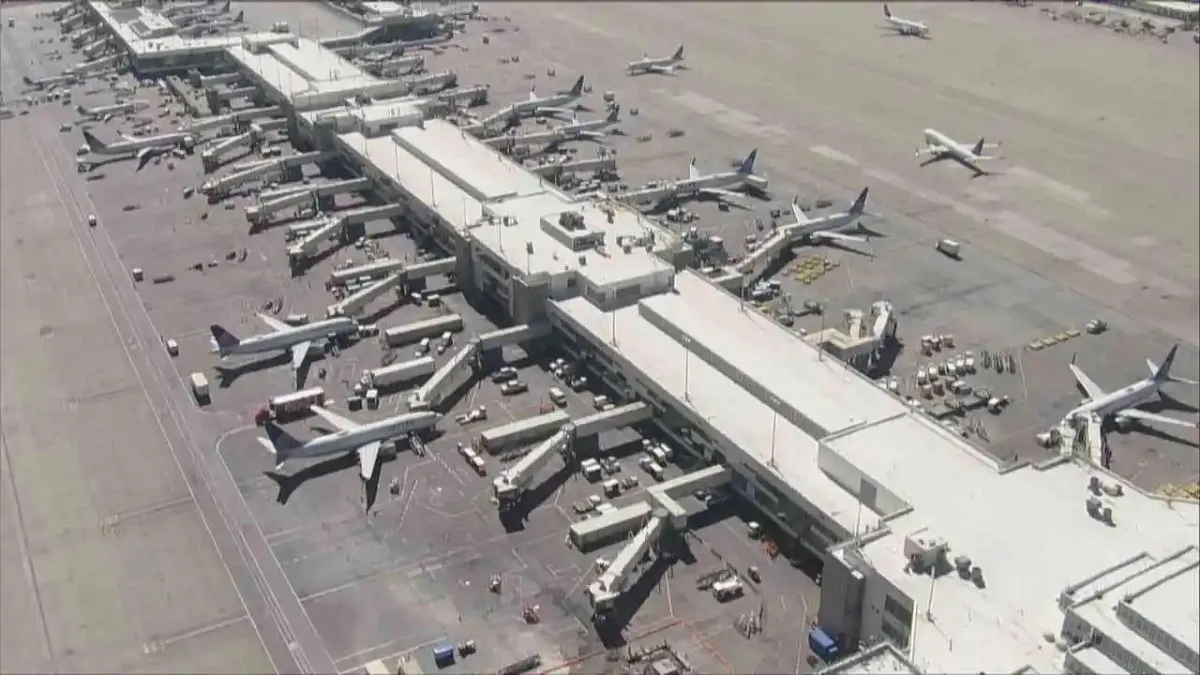
The biggest airport in the United States by land area is Denver International Airport (DEN) in Colorado. It covers a vast 33,531 acres, which is more space than many towns and far larger than any other American airport.
This makes Denver International Airport not only the largest in the U.S. but one of the largest in the world by property footprint.
Why is the Airport Area So Significant?
People often think of airports in terms of passenger numbers, but land area plays a different and important role:
-
Room for expansion: More space means future terminals, runways and services can be added.
-
Operational flexibility: Large airports can manage many aircraft and cargo operations simultaneously.
-
Buffer zones: Noise, safety and environmental buffers benefit surrounding communities.
List of Top 10 Largest U.S. Airports by Area
Here’s how the biggest airports in the United States compare by land size. The figures are from recent aviation data and airport rankings for 2025.
| Rank | Airport | Location | Approx. Area |
| 1 | Denver International Airport (DEN) | Colorado | 33,531 acres (52.4 sq mi) |
| 2 | Dallas/Fort Worth Int’l Airport (DFW) | Texas | 17,207 acres (26.9 sq mi) |
| 3 | Southwest Florida Int’l Airport (RSW) | Florida | 13,500 acres (21.1 sq mi) |
| 4 | Orlando International Airport (MCO) | Florida | 13,300 acres (20.8 sq mi) |
| 5 | Washington Dulles Int’l Airport (IAD) | Virginia | 13,000 acres (20.3 sq mi) |
| 6 | Kansas City Int’l Airport (MCI) | Missouri | 10,700 acres (16.7 sq mi) |
| 7 | George Bush Intercontinental (IAH) | Texas | 10,000 acres (15.6 sq mi) |
| 8 | Pittsburgh Int’l Airport (PIT) | Pennsylvania | 10,000 acres (15.6 sq mi) |
| 9 | Salt Lake City Int’l Airport (SLC) | Utah | 7,700 acres (12 sq mi) |
| 10 | Chicago O’Hare Int’l Airport (ORD) | Illinois | 7,200 acres (11.3 sq mi) |
Note: These figures reflect land area, not passenger traffic or number of runways.
What Makes Denver International Airport So Large?
Denver International Airport was planned with future growth in mind. When it opened in 1995, planners chose a site far from the city centre so that:
-
There is ample land that would support future runways and terminals
-
The operations would not be constrained by urban development
-
Growth could continue without major land purchases
As a result, Denver International’s footprint is more than twice as large as the second biggest airport (Dallas/Fort Worth).
You may also like to read: List of 10 Biggest Construction Companies in the U.S.
Biggest Airport in the U.S. Trivia
-
Is the biggest airport by area also the busiest?
No, the largest in terms of land is Denver International Airport, but the busiest by passenger traffic is a different airport.
-
Which airport has the most passengers in the U.S.?
That title goes to Hartsfield–Jackson Atlanta International Airport, based on recent annual passenger data.
-
Does airport size affect travel times?
Not directly, but larger airports often have more gates, runways and services, which can improve scheduling and connectivity for airlines and passengers.



-1769678148517.jpg)
Comments
All Comments (0)
Join the conversation