Key Points
- Butterfly populations in the US declined 22% between 2000 and 2020.
- Butterflies and moths belong to the biological order Lepidoptera.
- Butterflies undergo complete metamorphosis: egg, larva, pupa, adult.
Butterflies are one of the most beautiful insects in the world. But these pretty winged bugs are more than just pretty to look at; they are important parts of our ecosystems. What is the scientific name for a butterfly, though?
While most people refer to them by their common name, scientists use a system of classification for butterflies to properly categorise them alongside their relatives, the moths. A recent report reveals that butterfly populations in the contiguous US have declined by a significant 22% between 2000 and 2020. This alarming statistic underscores the importance of understanding and protecting every species, which starts with knowing their place in the scientific world.
What is the Scientific Name of a Butterfly?
The appropriate scientific name of butterflies that encompasses all species of both butterflies and moths is the biological order Lepidoptera. This name comes from the Greek words lepis (scale) and pteron (wing), literally meaning scale wing, which is a perfect descriptor for these insects whose wings are covered in tiny, coloured scales. When referring specifically to the true butterflies, they belong to the superfamily Papilionoidea within this order.
-1765892766437.jpg)
Monarch Butterfly in a gar
Family of Butterfly
The classification of butterflies follows a hierarchical structure. Within the order Lepidoptera, butterflies are grouped into the superfamily Papilionoidea. This superfamily is further divided into several major families of butterfly groups. These main families are:
-
Hesperiidae (Skippers)
-
Lycaenidae (Blues, Coppers, and Hairstreaks)
-
Nymphalidae (Brush-footed Butterflies)
-
Papilionidae (Swallowtails)
-
Pieridae (Whites and Yellows)
-
Riodinidae (Metalmarks)
Must Read - List of 9 Most Beautiful Butterflies in the World: Ranked
Different Types of Butterflies and Their Scientific Names
It is thought that there are between 18,000 and 20,000 different kinds of butterflies in the world. The scientific name for each species is made up of two parts: its genus and its species (binomial nomenclature). These are the scientific names for some common types of butterflies:
| Common Name | Scientific Names of Butterflies | Family |
| Monarch Butterfly | Danaus plexippus | Nymphalidae |
| Common Mormon | Papilio polytes | Papilionidae |
| Painted Lady | Vanessa cardui | Nymphalidae |
| Red Admiral | Vanessa atalanta | Nymphalidae |
| Common Bluebottle | Graphium sarpedon | Papilionidae |
Check Out - What is the Scientific Name of a Bee?
What are the 4 Stages of Butterfly?
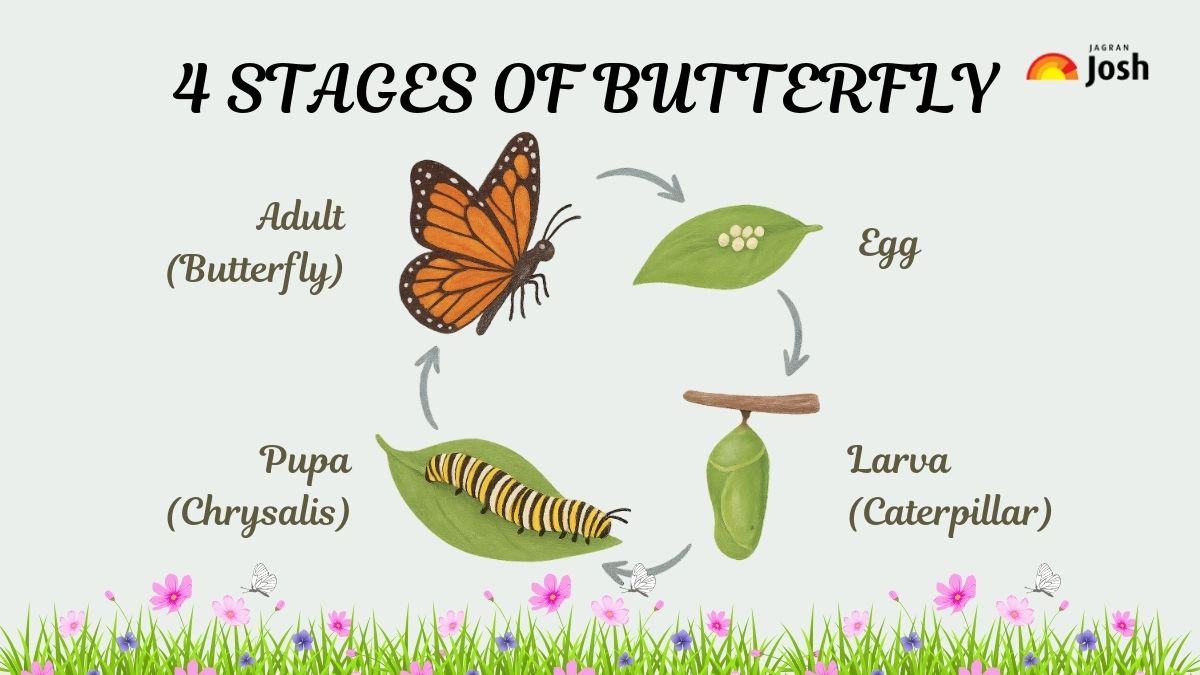
There are four stages of life for butterflies, and they go through a process called complete metamorphosis. This change is a natural wonder and is one of the most important parts of the Order Lepidoptera.
1. Egg
The life cycle begins when a female butterfly lays a small egg, which is usually oval or cylindrical, on a certain "host plant" that the larva can eat when it hatches.
2. Larva (Caterpillar)
The egg turns into a larva, which is also called a caterpillar. During this stage, the animal's main goal is to eat and grow. It sheds its skin several times (instars) before it is fully grown.
3. Pupa (Chrysalis)
Once fully grown, the caterpillar forms a chrysalis (the pupa stage for a butterfly). Inside this protective shell, a huge cellular breakdown and reorganisation happen, changing the larval body into the adult form.
4. Adult (Butterfly)
The adult butterfly emerges from the chrysalis. Its main purpose is reproduction. After its wings dry and harden, the cycle restarts with mating and egg-laying.
Check Out - What is the World’s Biggest Spider Web Discovery Known til Date?
Butterflies are important pollinators, but climate change and loss of habitat are putting their populations at risk. Scientists and fans can find better ways to protect butterflies by learning about the different types of butterflies and how they live.



![Largest Economies in the World [Updated December 2025]](https://img.jagranjosh.com/images/2025/07/09/article/image/world's-largest-economies-1752059293045.jpg)


Comments
All Comments (0)
Join the conversation