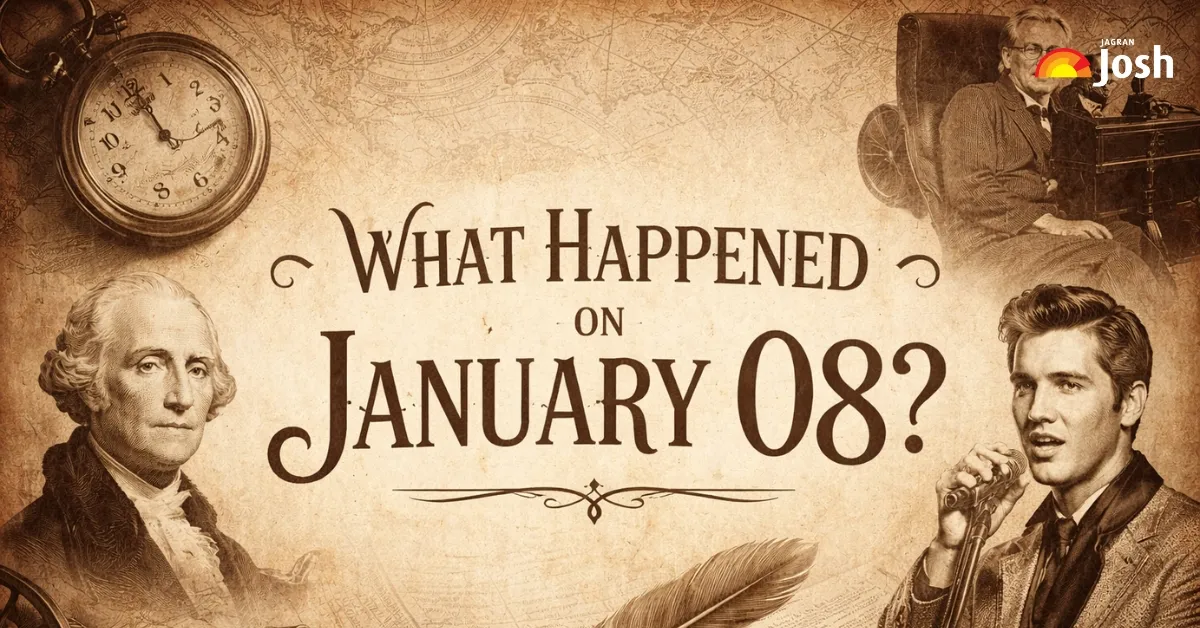
Every day in the year has a story. But what makes January 8 special in history? On this day, people around the world have seen moments that changed nations, science, culture and politics. On January 8, George Washington delivered the first State of the Union address in the United States. That same day in 1815, General Andrew Jackson won the Battle of New Orleans during the War of 1812. The African National Congress, a key force in the struggle against apartheid in South Africa, was founded in 1912. In 1964, U.S. President Lyndon B. Johnson declared a "war on poverty". Famous leaders spoke, important battles were fought, great minds were born, and historic movements began. In this article, we'll explore the remarkable events that took place on January 8 and explore why the date still matters today.
What Happened On This Day—January 8?
Here's what happened in history on January 08:
1642 – Death of Galileo Galilei
- On January 8, Galileo Galilei died in Italy at age 77.
- He is called the father of modern astronomy and physics.
- Galileo was the first to use a telescope to study the skies.
- His discoveries changed science forever.
1790 – George Washington Delivers First State of the Union
- On January 8, George Washington gave the first State of the Union address.
- The speech was delivered to Congress in New York City.
- He praised North Carolina for joining the Union.
- This speech began an important U.S. tradition.
1815 – The Battle of New Orleans
- On January 8, U.S. General Andrew Jackson won the Battle of New Orleans.
- It was the greatest American victory of the War of 1812.
- The battle happened after the Treaty of Ghent was signed.
- The victory made Andrew Jackson a national hero.
1867 – African American Men Gain the Right to Vote
- On January 8, African American men gained the right to vote in Washington, D.C.
- Congress passed the law despite a veto.
- President Andrew Johnson opposed the decision.
- This happened years before nationwide voting rights were granted.
1877 – Crazy Horse Fights His Last Battle
- On January 8, Native American leader Crazy Horse fought his final battle.
- He was a key figure in resisting U.S. government expansion.
- His leadership became a symbol of Native American resistance.
1901 – "Colorado Cannibal" Alfred Packer Paroled
- On January 8, Alfred Packer was released on parole.
- He had served 18 years in prison.
- Packer was accused of cannibalism during a mining expedition.
- His case remains one of America's most disturbing stories.
1918 – Wilson Delivers the Fourteen Points Speech
- On January 8, Woodrow Wilson addressed Congress.
- He presented his Fourteen Points peace plan.
- The plan aimed to prevent future wars after World War I.
- It influenced global peace discussions.
1940 – Mussolini Questions Hitler's War Plans
- On January 8, Benito Mussolini sent a message to Adolf Hitler.
- He warned against going to war with Britain.
- Mussolini feared risking Germany's future.
- The message showed tension within the Axis powers.
1946 – Elvis Presley Receives His First Guitar
- On January 8, Elvis Presley received his first guitar.
- It was a birthday gift from his mother, Gladys.
- Elvis had wanted a rifle or bicycle instead.
- This moment started a legendary music career.
1959 – Fidel Castro Arrives in Havana
- On January 8, Fidel Castro entered Havana.
- He had overthrown the regime of Fulgencio Batista.
- This marked the success of the Cuban Revolution.
- Castro would rule Cuba for decades.
1963 – Mona Lisa Exhibited in the United States
- On January 8, the Mona Lisa was displayed in Washington, D.C.
- The exhibit was held at the National Gallery of Art.
- The painting was created by Leonardo da Vinci.
- It was the first time the artwork was shown in America.
1972 – NCAA Grants Freshmen Eligibility
- On January 8, the NCAA allowed freshmen to play varsity sports.
- The rule applies to football and basketball.
- Earlier, freshmen were limited to separate teams.
- This changed college sports permanently.
1976 – Ragtime Wins National Book Award
- On January 8, Ragtime won the National Book Critics Circle Award.
- The novel was written by E. L. Doctorow.
- It explored race and society in early 1900s America.
- The book later became a film and a musical.
1992 – President George H. W. Bush's Japan Incident
- On January 8, George H. W. Bush became ill at a state dinner.
- He vomited during an event hosted by Japan's prime minister.
- The moment was widely reported worldwide.
- It became a famous presidential gaffe.
1996 – No Player Elected to Baseball Hall of Fame
- On January 8, the Baseball Writers' Association of America voted.
- No player received the required 75% of votes.
- Phil Niekro came closest with 68.3%.
- Niekro was inducted the following year.
2002 – No Child Left Behind Act Signed
- On January 8, George W. Bush signed the law.
- The act reformed U.S. public education.
- It focused on testing and accountability.
- The law remains widely debated.
2011 – Gabrielle Giffords Injured in Shooting
- On January 8, Gabrielle Giffords was shot in Arizona.
- Six people were killed in the attack.
- Thirteen others were injured.
- The incident sparked national debate on gun violence.
2016 – "El Chapo" Captured
- On January 8, Mexican authorities captured Joaquín "El Chapo" Guzmán.
- He was one of the world's most wanted criminals.
- This was his third major arrest.
- His influence rivalled that of Pablo Escobar.
Which Famous Personalities Were Born and Died on January 8?
January 08 marks notable birthdays and deaths of influential figures throughout history, celebrating legacies in the arts, science, and sports.
Notable Births on January 8
Elvis Presley (1935–1977)
- Singer, actor, and the "King of Rock and Roll"
- Famous for Hound Dog, Jailhouse Rock, and Don't Be Cruel
Stephen Hawking (1942–2018)
- Made major discoveries about black holes and the universe
- One of the most famous scientists in history
David Bowie (1947–2016)
- Influential glam rock artist and actor
- Known for The Rise and Fall of Ziggy Stardust
Notable Deaths on January 8
1642 – Galileo Galilei Dies
- On January 8, Italian astronomer Galileo Galilei died at age 77.
- He is known as the father of modern astronomy and science.
- His discoveries changed how we see the universe.
1713 – Arcangelo Corelli Dies
- On this day in 1713, Arcangelo Corelli, an important Italian composer and violinist, died.
- He helped shape Baroque music with his violin concertos and sonatas.
1896 – Paul Verlaine Dies
- On January 8, French poet Paul Verlaine died.
- He was a leading figure in the Symbolist movement in poetry.
1941 – Robert Baden-Powell Dies
- On this day in 1941, Robert Baden-Powell died at age 83.
- He founded the worldwide Boy Scouts movement.
1825 – Eli Whitney Dies
- On January 8, Eli Whitney died.
- He invented the cotton gin, a machine that revolutionised U.S. agriculture.




-1767891137509.jpg)
-1767882938552.png)
Comments
All Comments (0)
Join the conversation