Key Points
- Giant's Causeway in Northern Ireland formed ~60 million years ago from cooling lava.
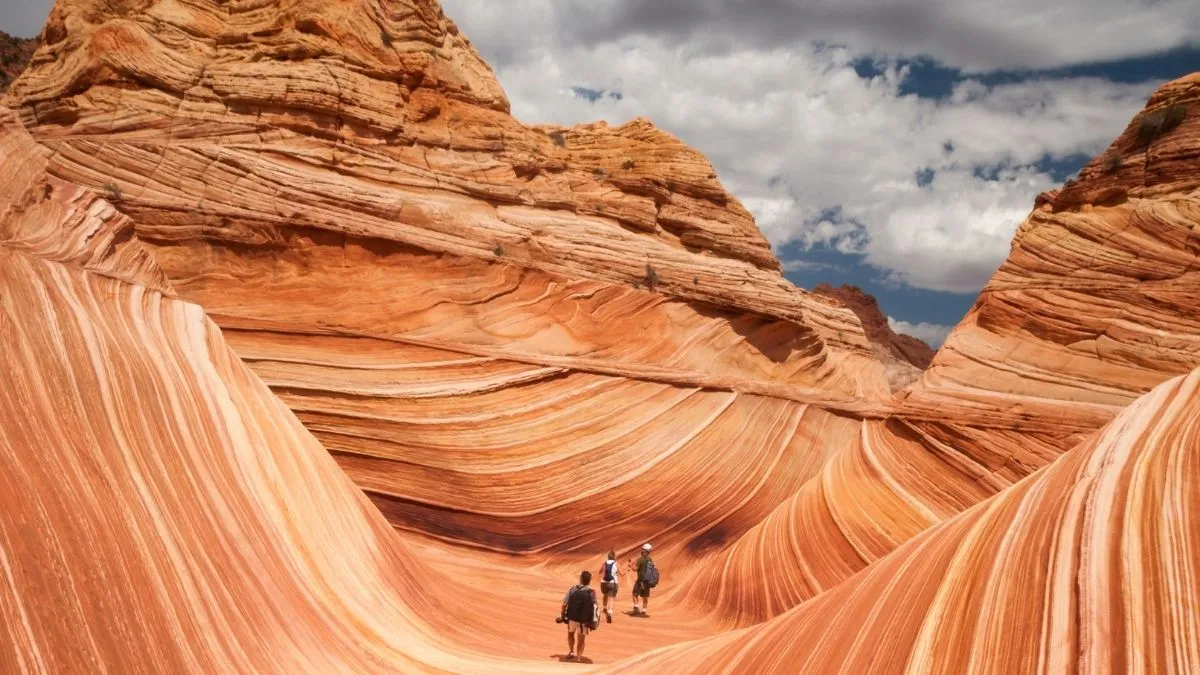
- The Wave in Arizona, USA, is Navajo Sandstone from the Jurassic period.
- Moeraki Boulders in New Zealand formed ~60 million years ago on an ancient seafloor.
Nature is often the world's most patient artist, carving landscapes that defy imagination. While we frequently marvel at man-made monuments, the natural rock formations scattered across our globe tell a story that spans billions of years.
In a recent geological twist, scientists have even identified anthropoclastic rocks, new formations created by human activity, proving that the rock cycle is more dynamic than ever.
However, the classic rock formations around the world, shaped by wind, water, and volcanic fire, remain the true heavyweights of tourism. From ancient igneous rocks cooling into perfect hexagons to soft sandstone eroded into liquid-like waves, these cool rock formations are not just photo opportunities; they are time capsules.
Below, we explore five of the most visually stunning geological wonders that you simply must see to believe.
List of Top 5 Natural Rock Formations and Their Location
This list of rock formations was selected based on their geological uniqueness, visual preservation, and popularity among travelers seeking the coolest rock formations.
| S.No. | Rock Formation | Rock Type | Location |
| 1 | Giant's Causeway | Igneous (Basalt) | Northern Ireland |
| 2 | The Wave | Sedimentary (Sandstone) | USA (Arizona) |
| 3 | Fairy Chimneys | Sedimentary (Tuff) | Turkey (Cappadocia) |
| 4 | Wave Rock | Igneous (Granite) | Australia |
| 5 | Moeraki Boulders | Sedimentary (Concretion) | New Zealand |
Also Read - List of 7 Most Active Volcanoes in the World 2025: Ranked
1. Giant's Causeway
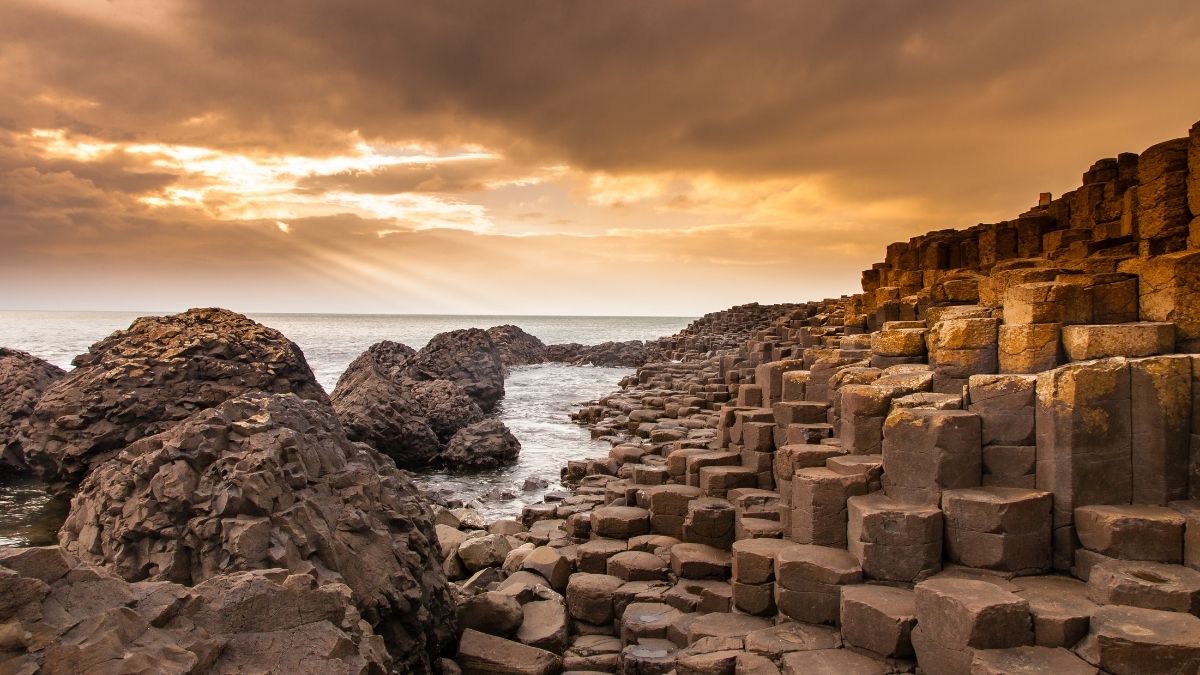
Often cited as one of the most famous natural rock formations in Europe, the Giant's Causeway looks like a puzzle laid out by giants. Located in County Antrim, it consists of roughly 40,000 interlocking basalt columns, the result of an ancient volcanic fissure eruption.
How are rocks formed here? About 60 million years ago, molten lava cooled and contracted, cracking into perfect hexagonal shapes. It is a UNESCO World Heritage site and a prime example of columnar jointing.
2. The Wave
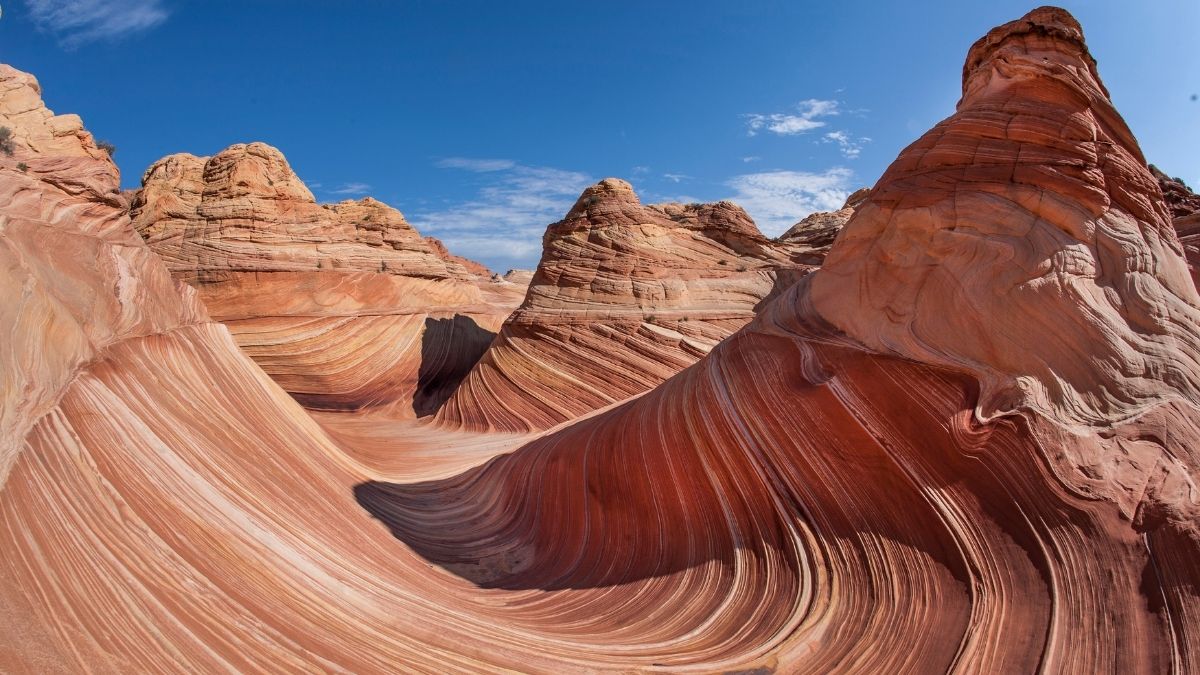
Hidden in the Coyote Buttes North area of the Arizona-Utah border, 'The Wave' is a surreal gallery of undulating U-shaped troughs. This formation is composed of Navajo Sandstone, which dates back to the Jurassic period.
The mesmerizing ribbons of color, ranging from red to orange and pink, are the result of iron oxide pigments. It is one of the coolest rock formations for photographers, though access is strictly limited via a lottery system to preserve the fragile sandstone from foot traffic.
3. Fairy Chimneys
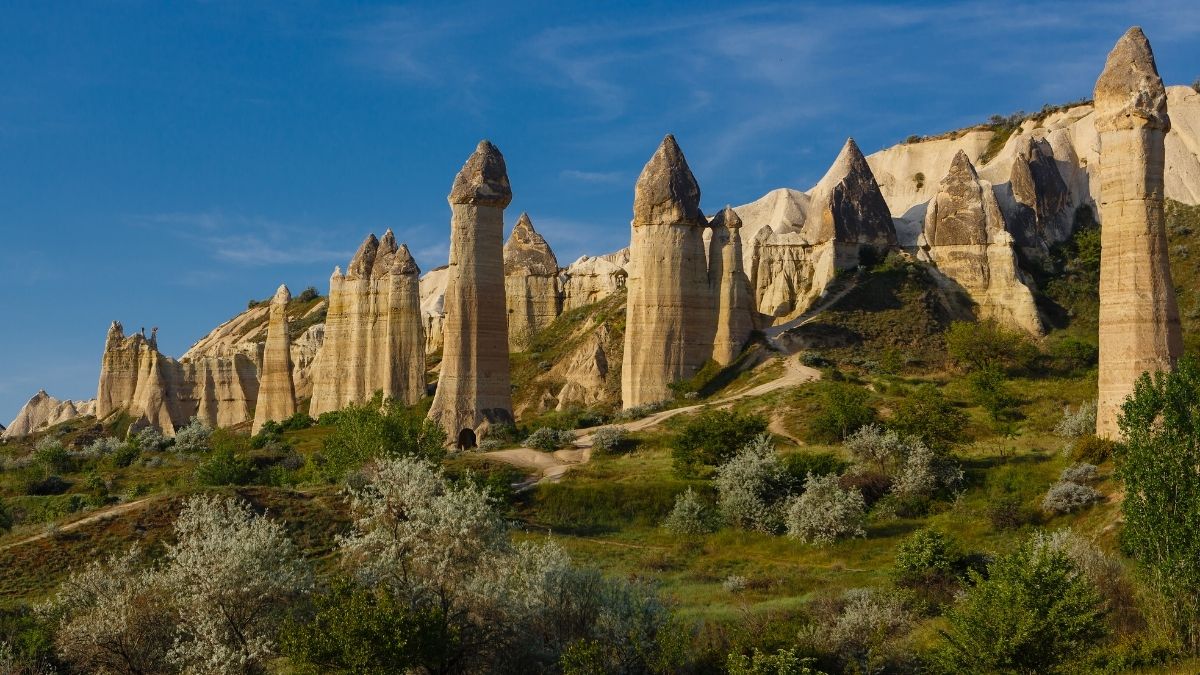
Cappadocia’s Fairy Chimneys are a testament to the power of erosion. These tall, thin spires of rock protrude from the bottom of an arid drainage basin. They were formed when lava covered the region, creating a layer of soft rock called tuff.
Over centuries, wind and rain wore away the softer rock, leaving behind harder basalt caps that sit atop the pillars like mushrooms. Humans have excavated many of these types of rocks to create homes and churches, blending history with geology.
4. Wave Rock
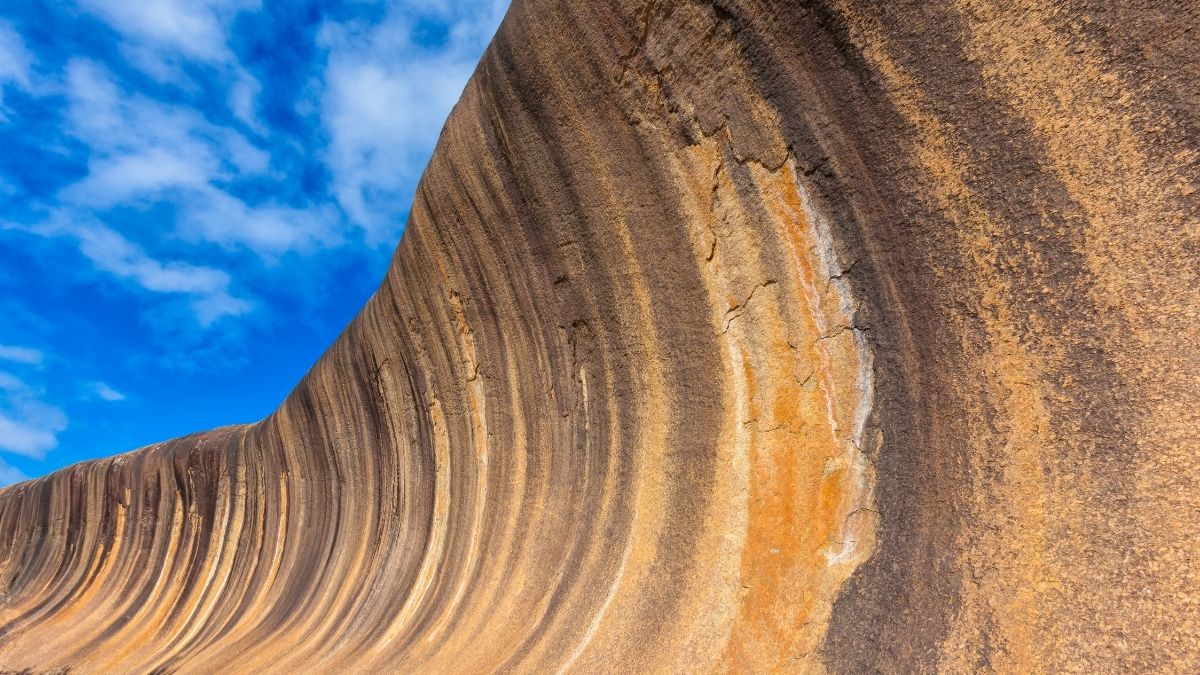
Rising 15 meters high and stretching 110 meters long, Wave Rock in Western Australia appears ready to crash onto the bushland below. Unlike the Arizona Wave, this formation is made of granite (an igneous rock).
Its curved shape was carved by the chemical weathering of the rock face below ground level before it was exposed. The vibrant vertical stripes are caused by rain washing chemical deposits (carbonates and iron hydroxide) down the face, creating a stunning, multicolored effect.
5. Moeraki Boulders
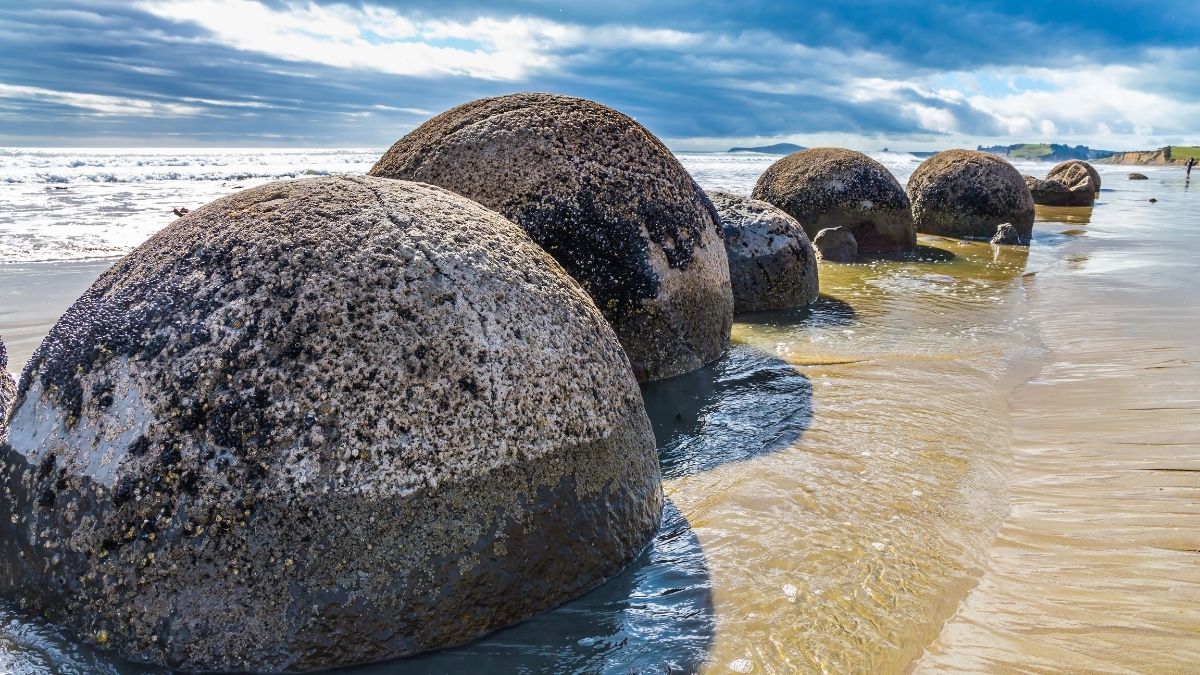
Scattered along Koekohe Beach like discarded marbles, the Moeraki Boulders are large, spherical stones that can reach up to two meters in diameter. These are not ordinary rocks but concretions, masses of mineral matter that form within layers of sedimentary rock.
They formed in ancient sea floor mud around 60 million years ago. As the surrounding mudstone eroded, these harder, cemented spheres were released onto the beach, creating one of the most unique rock formations around the world.
Check Out - List of Top 10 Youngest and Oldest Mountain Ranges in the World 2025
These geological features show us that the Earth is a living thing that changes over time. The forces that made these natural rock formations are still at work today. Going to these places gives you more than just a pretty view; it connects you directly to the ancient processes that shaped our planet.
As geotourism grows, it's important to protect these delicate landscapes so that future generations can also see these amazing natural histories.






Comments
All Comments (0)
Join the conversation