List of Top 11 Flightless Birds in the World With Their IUCN Status
Not all birds can fly. Explore some of the world's most remarkable flightless birds and find out which species are thriving and which need protection.
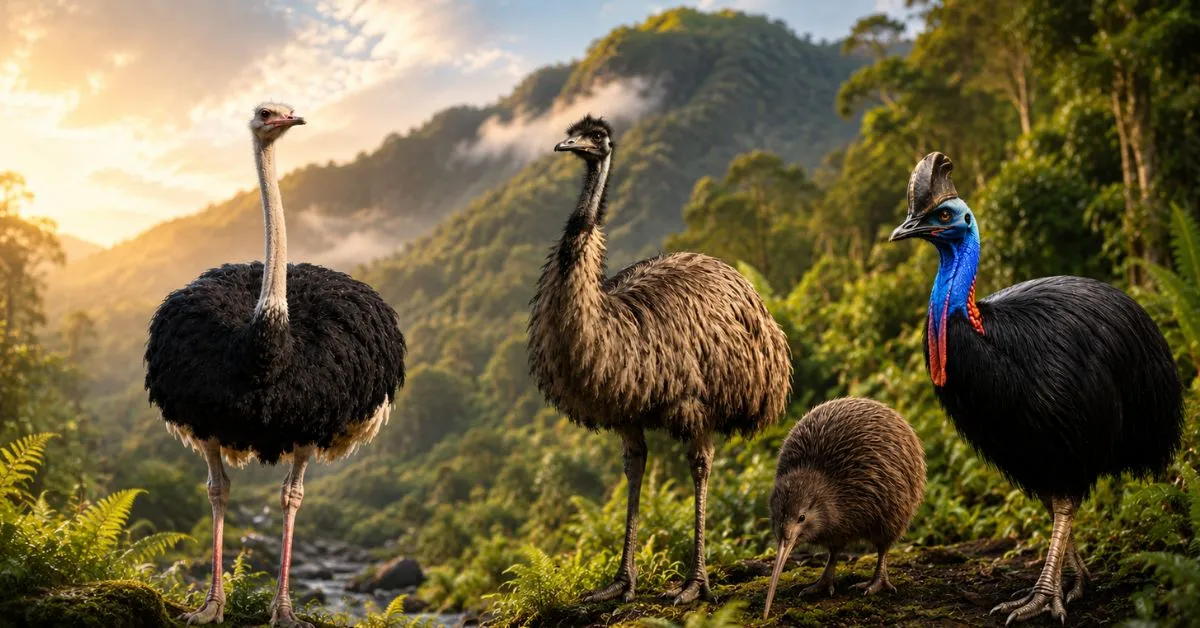
Do you know there are certain birds that can’t fly at all? You must have seen the birds in the sky every day. However, a number of birds have never taken a flight. Not because they are ill. But because they don’t have the flying ability. This happened over millions of years as these birds gradually evolved into wingless birds that live on the ground or in the water.
There are approximately 60 species of flightless birds. Flightless birds possess a number of special attributes. They have smaller wing bones, in comparison to flying birds. In addition they have either a very small or nonexistent "keel" on the chest bone. The keel is a large blade-like extension that is an anchor for powerful flight muscles.
List of 11 Flightless Birds With Their IUCN Status
| Serial Number | Name | Where it is found | Conservation Status |
| 1 | Ostrich | Africa | Least Concerned (most species) |
| 2 | Penguin | Mainly in Antarctica | Threatened or Endangered |
| 3 | Emu | Australia | Least Concerned |
| 4 | Kiwi | New Zealand | Vulnerable |
| 5 | Cassowary | Australia, Papua New Guinea, Indonesia | Endangered |
| 6 | Rhea | South America | Near Threatened |
| 7 | Kakapo | New Zealand | Critically Endangered |
| 8 | Dodo | Mauritius | Extinct |
| 9 | Takahe | New Zealand | Endangered |
| 10 | Flightless Cormorant | Ecuador | Vulnerable |
| 11 | Steamer Duck | South America | Least Concern (most species) |
1. Ostrich
Source: Shutterstock
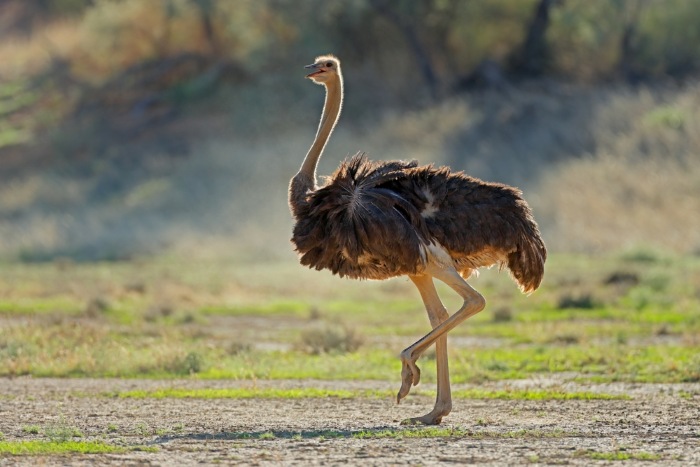
The ostrich is the world's most popular and well-known flightless bird, and the most searched too. It holds a lot of records in the animal kingdom.
The ostrich is the world's tallest and heaviest bird. Ostriches can go as tall as 2.8 metres and weigh as much as 156 kg. They are able to reach speeds of more than 70 km/h and jump distances of up to 5 metres.
The ostrich also lays the biggest eggs in comparison to any living bird. The weight of an ostrich egg is up to 1.5 kg in weight.
GK Facts:
-
Largest and tallest bird in the world
-
Fastest running bird in the world
-
Found in Africa
-
IUCN Status: Least Concern
2. Penguin

Source: Shutterstock
Penguins are perhaps the most popular flightless bird in the world! They are quite famous among children as well for their black and white "tuxedo" appearance and funny walk.
Almost all of the penguin species can’t fly. In fact they are better equipped for swimming or diving. Their walk is very peculiar because of their short legs.
Although penguins are thought of as Antarctic animals, the majority of them also inhabit higher latitudes. The emperor penguin is the largest and heaviest of all the penguins. It is majorly found only in Antarctic regions.
GK Facts:
-
There are 18 species of penguins
-
Their wings act as flippers for swimming
-
The Emperor Penguin is the largest penguin
-
IUCN Status of Emperor Penguin: Endangered
3. Emu
Source: Shutterstock
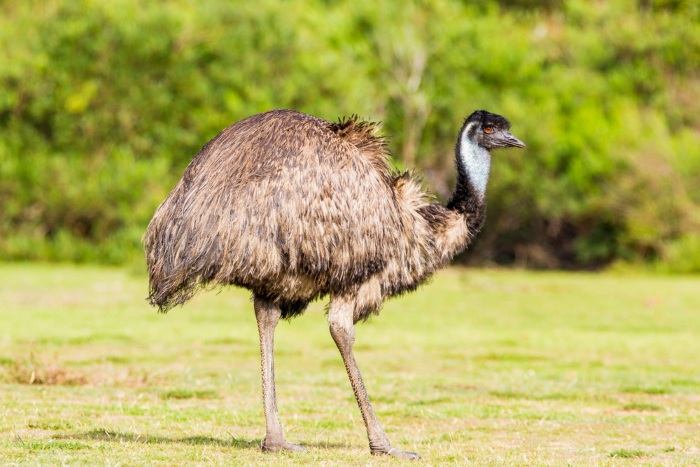
Emus are the national bird of Australia. It is a bird of great significance to Australians.
After the ostrich, Emus are the second largest birds on the planet. Emu can reach heights of up to 190 cm and weights of up to 55 kg and have strong legs that enable them to run at speeds of 50 km an hour.
An interesting fact about emus is that the male takes care of the eggs and the baby chicks. The female lays eggs and leaves.
GK Facts:
-
Second largest bird in the world
-
National bird of Australia
-
Can run at 50 km/h
-
IUCN Status: Least Concern
4. Kiwi
Source: Shutterstock
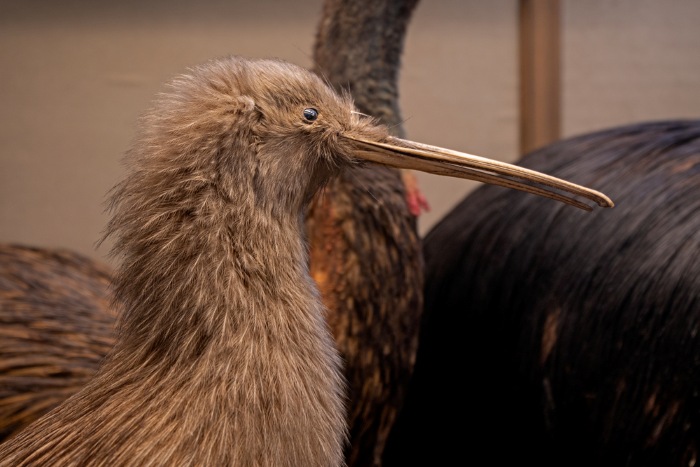
Kiwi is the national symbol of New Zealand. New Zealanders are even called the "Kiwis" due to this bird.
Kiwi is quite different from other birds. It is about the size of a chicken. As opposed to the normal feathers it has hair-like feathers. It does not have good eyesight, but has a very strong sense of smell. It has long nostrils set at the end of its long beak to assist it in sniffing insects and worms in the soil.
The kiwi lays the largest egg in comparison to its body size. Its egg can be up to 20% of the mother's body weight. The weight of the baby, in this case, would be equal to 20% of the weight of the mother.
GK Facts:
-
National symbol of New Zealand
-
Only bird with nostrils at the tip of its beak
-
Nocturnal (active at night)
-
IUCN Status: Vulnerable (most species)
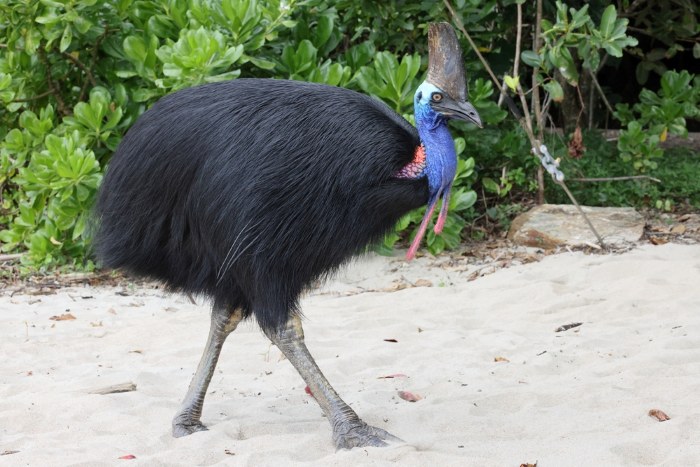
5. Cassowary
Source: Shutterstock
The cassowary resembles a dinosaur. It has a big blue and red head with a hard helmet known as casque on it. It is believed to be the most dangerous bird in the world.
It has a dagger-like claw on its inner toe which may reach a length of 12 cm. It has been known to seriously injure.
GK Facts:
-
Most dangerous bird in the world
-
Has a casque (helmet) on its head
-
Important for rainforest seed dispersal
-
IUCN Status: Least Concern globally; Endangered in Australia

Nikhil is a dedicated digital journalist and communications professional with more than five years of experience, currently working within the General Knowledge section at Jagran Josh. He has established himself as a subject matter expert in Finance, Economy, History, Technology, and Trending News, consistently delivering accurate, engaging, and easy-to-read content for a wide global audience.
Over the course of his career, Nikhil has developed deep expertise in crafting informative listicles, viral trending stories. His editorial portfolio also spans finance, historical research, and technology reporting, making him a versatile and well-rounded content professional. Every piece he produces reflects a strong balance between factual accuracy and reader engagement.


